What Does the Future Hold for Conservatism in Canada?
TL;DR
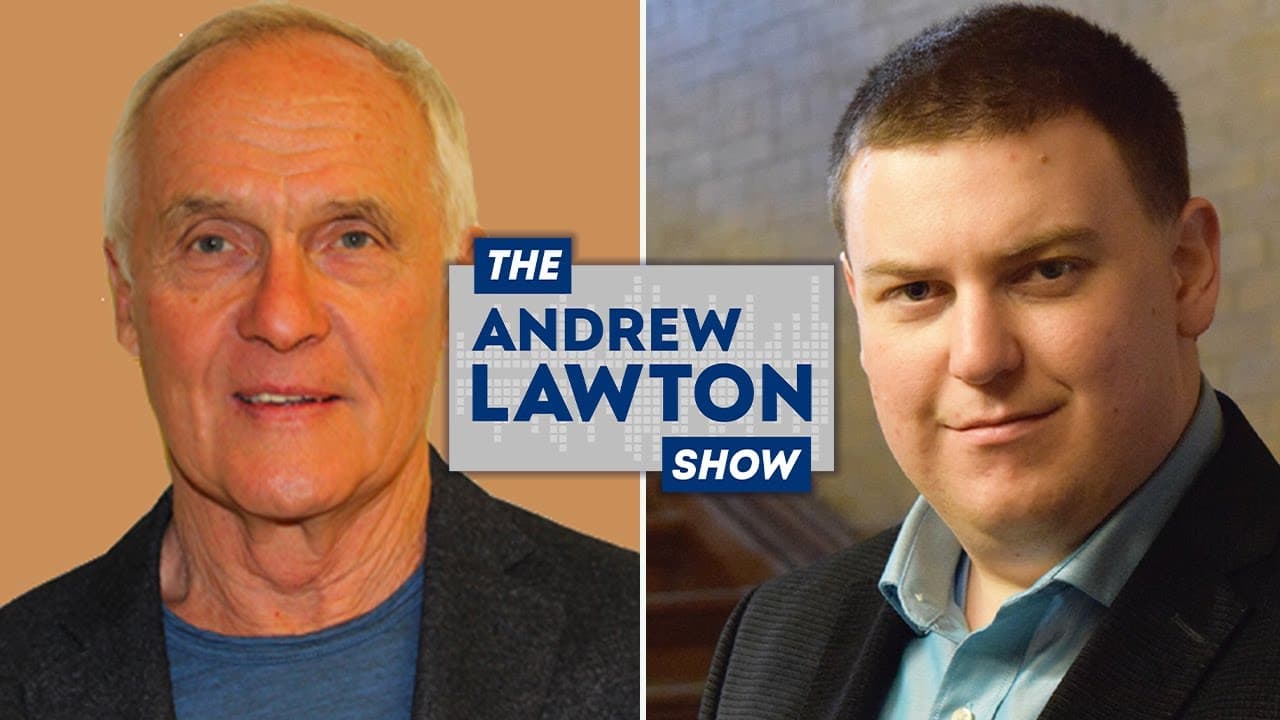
William Gairdner predicts a challenging future for conservatism in Canada as he observes a shift towards statism and declining family values. He highlights that the Canadian Charter of Rights and Freedoms fosters a model of 'libertarian socialism,' leading to increased government control over personal liberties while neglecting the importance of family as a societal foundation.
Transcript
welcome to canada's most irreverent talk show this is the andrew lawton show brought to you by true north coming up a wide-ranging conversation with william gardner about conservatism libertarianism socialism marxism all the isms you could imagine and more the andrew lawton show starts right now welcome to the andrew lawton show here on true north ... Read More
Key Insights
- 🤨 Gairdner describes the ideological landscape in Canada as having shifted significantly leftward, which raises concerns about the erosion of conservative values and societal foundations.
- 👪 The concept of the family as the central unit of society is dismissed in modern political discourse, which Gairdner believes threatens societal integrity.
- 👻 There is a noticeable divergence between Canadian and American approaches to rights, with Canada moving towards a model that allows government interference in individual freedoms for the sake of collective equality.
- 😮 The rise of "libertarian socialism" reflects a societal contradiction where personal liberties are promoted alongside significant government control over economic aspects.
- 😥 Gairdner's discourse highlights the challenges faced by conservative thinkers in Canada, pointing to a need for renewed engagement and articulation of conservative principles.
- 😯 The disconnect regarding fundamental rights, such as freedom of speech, complicates political debate and influences how conservatism is perceived and practiced.
- 🫵 Gairdner's observations about the Nordic countries challenge traditional views on socialism, prompting discussions about happiness and government roles in citizens’ well-being.
Install to Summarize YouTube Videos and Get Transcripts
Explore YouTube Video Summarizer or Get YouTube Transcript Extractor
Questions & Answers
Q: How does William Gairdner describe his view of societal change in Canada?
Gairdner likens his experience to standing on a rock in a "leftward drifting sea," noting that while he has not changed his fundamental beliefs, society has moved significantly leftward, becoming more passive and accepting of government authority, particularly highlighted during the COVID-19 pandemic.
Q: What does Gairdner believe is the fundamental building block of society?
Gairdner argues that the family is the key building block of any society, asserting that neglecting this principle has grave consequences for social cohesion. He cites historical trends, indicating that societies moving away from valuing family structures often face destabilizing effects.
Q: How does Gairdner differentiate between Canadian and American rights frameworks?
Gairdner explains that while the U.S. Constitution emphasizes negative rights, which protect individuals from government interference, the Canadian Charter focuses more on positive rights, allowing for government actions directed towards equality and economic redistribution, which he views as inherently more statist.
Q: What is the "Nordic Paradox" mentioned in the discussion?
The Nordic Paradox refers to the surprising contentment of citizens in Scandinavian countries, despite high tax rates and extensive government control. Gairdner posits that this phenomenon contradicts traditional libertarian views and questions how people could embrace a system that compromises individual freedoms.
Q: What concerns does Gairdner express about modern political discourse?
Gairdner notes an alarming decline in the ability to agree on basic principles in political discussions, such as free speech. He believes this fragmentation makes it increasingly challenging to engage in meaningful debates, a stark contrast to previous eras where ideological opponents could find common ground.
Q: How does Gairdner characterize contemporary libertarianism in Canada?
Gairdner suggests that Canada exhibits traits of "libertarian socialism," where individual rights are celebrated in personal matters, but the government exerts a high degree of control over public policies and economic equality, leading to a complex and contradictory landscape.
Q: What impacts has COVID-19 had on individual rights, according to Gairdner?
Gairdner acknowledges that the pandemic prompted a range of responses that challenged personal liberties, particularly regarding vaccination and lockdown measures. He suggests that public safety priorities have overshadowed individual rights, complicating the conversation around true liberty in the current political climate.
Q: How does Gairdner view the future of the conservative movement in Canada?
Gairdner expresses cautious optimism, arguing that conservatives must continue to advocate for higher ideals that resonate more powerfully than the narratives promoted by the left. He believes engaging in intellectual discussions can inspire shifts in attitudes and support for conservative principles over time.
Summary & Key Takeaways
-
Andrew Lawton hosts a discussion with William Gairdner, a prominent Canadian conservative intellectual, focusing on the ideological shifts in Canada over the past few decades.
-
Gairdner expresses concern regarding society's increasing acceptance of statism and the erosion of family values, which he argues are critical to societal stability.
-
The conversation examines the implications of the Canadian Charter of Rights and Freedoms, comparing it to American constitutional principles and emphasizing the trend towards "libertarian socialism" in Canada.
Read in Other Languages (beta)
Share This Summary 📚
Summarize YouTube Videos and Get Video Transcripts with 1-Click
Try YouTube Summary with ChatGPT & Claude or YouTube Transcript Generator
Explore More Summaries from True North 📚


Summarize YouTube Videos and Get Video Transcripts with 1-Click
Try YouTube Summary with ChatGPT & Claude or YouTube Transcript Generator