Is assisted suicide a cure for suffering? - Lord Richard Harries and Professor Alister McGrath
TL;DR
Assisted suicide is not presented as a cure for suffering because legalizing it could produce unintended harmful consequences and expose vulnerable people to emotional manipulation. Lord Richard Harries and Professor Alister McGrath acknowledge why some support it, but emphasize safeguarding concerns, the House of Commons vote against legalization, and the meaning people find in enduring severe affliction, reasons to read on for their ethical and practical arguments.
Transcript
um would you comment on the um issue of assisted suicide which some people see as the cure for suffering and which sorry Jo pardon that's the Holy Spirit saying something to there and uh which I fear a lot of people in the west are now seeing as an acceptable solution in places like Holland and Switzerland and Belgium do and even now with Bishop tu... Read More
Key Insights
- 💪 Assisted suicide is a complex and controversial topic that elicits strong opinions and concerns.
- 🧑🏭 The potential unintended consequences of legalizing assisted suicide are a significant factor in the opposition to it.
- 🇨🇫 Public opinion on assisted suicide does not always align with legislative decisions, highlighting the importance of considering multiple perspectives.
- 🛝 The debate extends beyond moral grounds to include practical considerations, such as emotional manipulation and safeguarding vulnerable individuals.
- 🤨 The perseverance of individuals facing great suffering raises philosophical questions about the meaning and purpose of life.
- ❓ Emotional manipulation is a real concern that must be addressed when discussing assisted suicide.
- 🧑🌾 The issue of assisted suicide is far from being a simple binary choice, as it involves navigating complex ethical dilemmas.
Install to Summarize YouTube Videos and Get Transcripts
Explore YouTube Video Summarizer or Get YouTube Transcript Extractor
Questions & Answers
Q: Is assisted suicide a cure for suffering?
The speakers do not regard assisted suicide as a satisfactory cure for suffering. Although they understand why people might desire it, they emphasize the unintended harmful consequences of legalization and the danger that vulnerable people could face emotional manipulation.
Q: Why does Lord Richard Harries oppose legalizing assisted suicide?
Lord Richard Harries says he has always been strongly opposed to assisted suicide. His objection is based less on the act itself as a moral issue than on his belief that legislation allowing it would bring unintended harmful consequences.
Q: What is Professor Alister McGrath's concern about assisted suicide?
Professor Alister McGrath acknowledges that there is a case of sorts for assisted suicide and expresses sympathy for people who support it. His deep concern is that vulnerable people could come under enormous pressure, making it difficult to safeguard them against emotional manipulation.
Q: How have UK lawmakers responded to assisted-suicide proposals?
The issue has been debated repeatedly in the House of Lords in recent years. When a bill later went before the House of Commons, it was voted against decisively.
Q: What mismatch does Lord Richard Harries identify between public opinion and Parliament?
Groups favoring assisted suicide continually claim that public opinion supports it. Lord Richard Harries contrasts that claim with the House of Commons voting decisively against an assisted-suicide bill.
Q: Which countries and public figure are mentioned in the assisted-suicide debate?
The discussion names Holland, Switzerland, and Belgium as places where assisted suicide is viewed as an acceptable solution. It also mentions Desmond Tutu, whose views in favor of assisted suicide dismayed Lord Richard Harries despite his great admiration for him.
Q: What philosophical question about suicide does Camus raise?
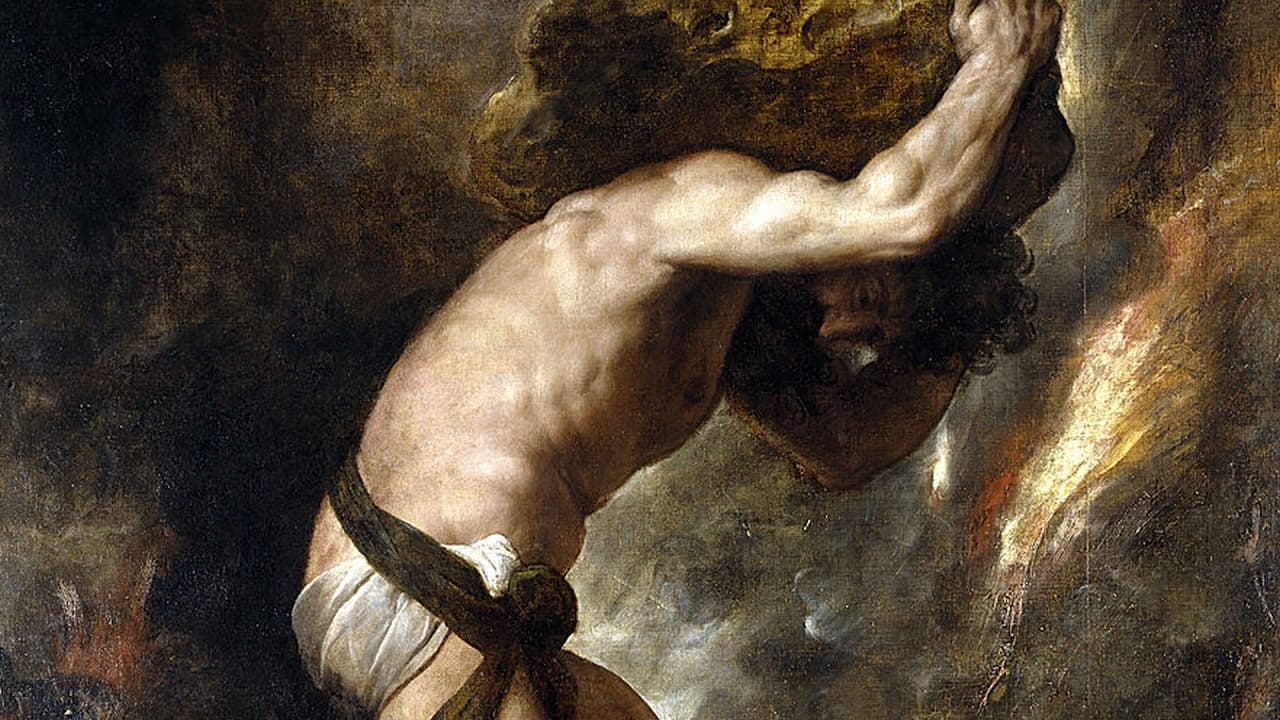
Camus is described as treating suicide as the only interesting philosophical question: why people do not commit suicide and instead keep going. His bleak answer invokes the myth of Sisyphus, whose life consists of repeatedly rolling a heavy stone uphill and watching it fall, yet finding a strange joy in continuing.
Q: Why do people continue living despite terrible affliction?
Lord Richard Harries suggests that many people endure severe affliction courageously because they sense that something great is at stake in human life. Their perseverance is presented as more than an animal will to survive or mere cowardice; they feel that life is not simply a calculation of pain and pleasure and that continuing is meaningful.
Summary & Key Takeaways
-
Assisted suicide is seen by some as an acceptable solution to end suffering, but others strongly oppose it due to unintended harmful consequences.
-
There is ongoing pressure to legalize assisted suicide, as seen in countries like Holland, Switzerland, Belgium, and even with notable figures like Bishop Tutu expressing support.
-
The debate on assisted suicide has garnered attention in the House of Lords and House of Commons, with differing views on public opinion and legislative decisions.
Read in Other Languages (beta)
Share This Summary 📚
Summarize YouTube Videos and Get Video Transcripts with 1-Click
Try YouTube Summary with ChatGPT & Claude or YouTube Transcript Generator
Explore More Summaries from Gresham College 📚


Summarize YouTube Videos and Get Video Transcripts with 1-Click
Try YouTube Summary with ChatGPT & Claude or YouTube Transcript Generator