Recession and economy explained in 10 charts by Sven Carlin, Ph.D.
TL;DR
Sven Carlin’s 10-chart analysis says recession risk was rising as Federal Reserve rate increases coincided with weaker housing, market volatility, a widening trade deficit, and limited room for fiscal stimulus. He identifies monetary tightening as the leading post-World War II recession trigger and notes that JP Morgan’s model put the four-year probability at almost 100%. Read on to see how housing, jobs, debt, and Italy fit the outlook.
Transcript
good day fellow investors I don't think I ever mentioned it but I'm subscribed to almost all out of there Bloomberg Wall Street Journal Morningstar and many others that I don't want to mention not to public publicize them because most don't deserve my money but still if even if I get a little bit from there it's good however something nice that cam... Read More
Key Insights
- 📼 Triggers for recessions include monetary policy tightening, asset price collapses, and foreign financial contagion.
- 😮 Declining home sales, widening trade deficits, and rising interest rates are indicators of a possible recession.
- 🧑🏭 The job market and trade policies are crucial factors in the economic cycle.
- ❓ JP Morgan's model suggests an increasing probability of a recession in the next few years.
- 🎚️ The US federal budget and debt levels may impact the severity of a recession.
- ✳️ Italy's economic forecast and potential political instability pose risks.
- 🛴 Kicking the can down the road by delaying necessary economic adjustments is not a sustainable strategy.
Install to Summarize YouTube Videos and Get Transcripts
Explore YouTube Video Summarizer or Get YouTube Transcript Extractor
Questions & Answers
Q: What could cause the next recession, according to Sven Carlin’s 10-chart analysis?
The leading risk is monetary policy tightening through higher interest rates, historically the top post-World War II recession trigger discussed by Carlin. Other possible triggers include an asset-price collapse, investment deleveraging, and foreign financial contagion, while rising debt costs could restrict the government’s response.
Q: Why can declining US home sales signal economic trouble?
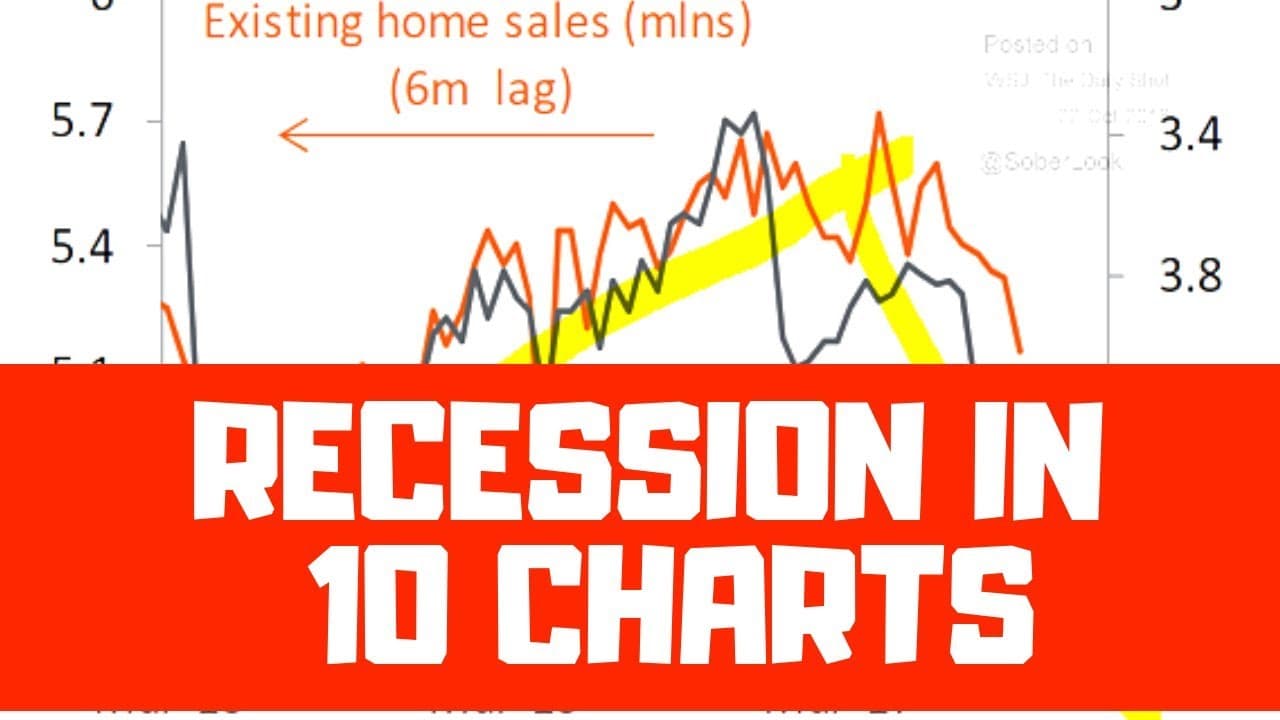
Carlin says existing home sales had risen every year since 2011 but first declined in August and September of the year discussed. As the mortgage rate returned from 3.4% to 4.6%, home sales weakened after roughly a six-month lag, making housing an early sign of trouble.
Q: Why does Sven Carlin warn against owning home-builder stocks?
He describes home builders as cyclical stocks that are vulnerable late in the economic cycle, especially when mortgage rates rise and housing activity declines. He also notes that the Bloomberg Americas Home Builders Index was severely down, although such stocks could rebound.
Q: How does the job market affect the economic cycle?
Carlin says the job market is crucial because employment cannot expand indefinitely. When the economy reaches the point where it cannot hire many more people, it has less fuel for additional growth.
Q: Why is the widening US trade deficit concerning?
The trade balance remained negative and was becoming more negative month by month. Carlin also says the real goods-trade deficit between imports and exports was widening, indicating that the trade policies discussed were not working well for the United States.
Q: What does JP Morgan’s model indicate about recession risk?
Carlin presents JP Morgan’s model as showing a one-year recession probability of about 20% to 25%. The probability rises over longer periods and reaches almost 100% over four years, supporting his view that the economy was in the late part of its cycle.
Q: Why could the US federal budget and government debt make a recession harder to manage?
Carlin says the budget was already stimulative, so a recession might require a deficit of 8%, 9%, or 10% to provide further support. He adds that 66% of US government debt had maturities below five years, about 90% below ten years, and only 10% was long-term, exposing refinancing costs to higher rates.
Q: How could Italy create a foreign financial shock?
Carlin calls Italy a potential source of trouble for Europe and the wider world. He says the Italian government forecast GDP growth 50% faster than Goldman Sachs or the IMF, presenting that gap as a sign that official expectations might be too optimistic.
Summary & Key Takeaways
-
The video reviews historical triggers for recessions and focuses on factors such as monetary policy tightening, asset price collapses, and foreign financial contagion.
-
It analyzes current indicators like declining home sales, widening trade deficits, and rising interest rates, indicating a possible recession.
-
The video emphasizes the importance of the job market, warns against owning home builder stocks, and mentions the probabilities for a recession according to JP Morgan's model.
Read in Other Languages (beta)
Share This Summary 📚
Summarize YouTube Videos and Get Video Transcripts with 1-Click
Try YouTube Summary with ChatGPT & Claude or YouTube Transcript Generator
Explore More Summaries from Value Investing with Sven Carlin, Ph.D. 📚


Summarize YouTube Videos and Get Video Transcripts with 1-Click
Try YouTube Summary with ChatGPT & Claude or YouTube Transcript Generator