How Does CRISPR Transform Cancer Research?
TL;DR
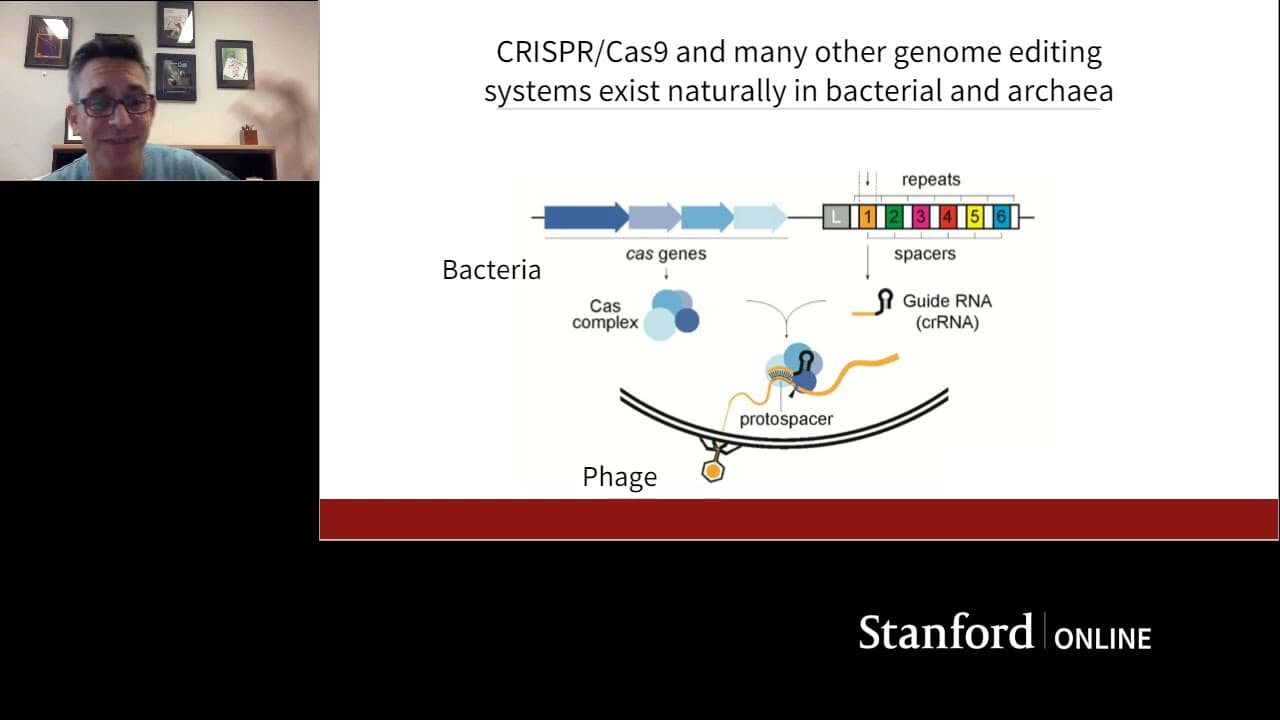
CRISPR genome editing revolutionizes cancer research by enabling precise gene manipulation to understand cancer development. It allows scientists to identify critical gene interactions and dependencies related to tumor growth, leading to potential advancements in targeted therapies and precision medicine.
Transcript
today i have professor monty winslow with me and dr winslow grew up in canada and received his undergraduate degree from the university of victoria in canada he did his phd studies in immunology working with dr jerry crabtree at stanford university before pursuing his post-doctoral training with dr tyler jacks at mit dr winslow is currently an asso... Read More
Key Insights
- ♋ Cancer is a complex genetic disease with multiple genes being altered in cancer cells.
- 🎯 Crispr genome editing enables the targeted inactivation of genes to study their role in cancer.
- 🔬 Crispr genome editing has been used to identify novel cancer dependencies and investigate gene interactions.
- 👻 Mouse models of cancer allow researchers to study the effects of gene alterations in a controlled and relevant context.
Install to Summarize YouTube Videos and Get Transcripts
Explore YouTube Video Summarizer or Get YouTube Transcript Extractor
Questions & Answers
Q: What is the focus of Dr. Winslow's research?
Dr. Winslow's research focuses on understanding the mechanisms underlying cancer development, progression, metastasis, and therapy response using Crispr genome editing.
Q: How does Crispr genome editing work?
Crispr genome editing involves using the Cas9 protein and a guide RNA molecule to target and cut specific genes in the genome, leading to their inactivation.
Q: How has Crispr genome editing contributed to our understanding of cancer?
Crispr genome editing has allowed researchers to identify genes that are essential for cancer cell growth, uncover novel cancer dependencies, and investigate the complex interactions between different genes in driving tumor behavior.
Q: What are some challenges and limitations of using Crispr genome editing in cancer therapy?
One challenge is the efficient delivery of Cas9 and guide RNA molecules to all cancer cells. Additionally, the complex nature of cancer genetics and the interactions between different genes make it difficult to determine optimal therapeutic strategies based on gene editing alone.
Summary & Key Takeaways
-
Dr. Monty Winslow, an associate professor at Stanford University, discusses the use of Crispr genome editing to understand cancer.
-
Crispr genome editing enables the inactivation of specific genes to study their effects on cancer development and growth.
-
By altering genes in mouse models of cancer, researchers can gain insights into the role of different genes in driving tumor initiation, growth, and response to therapy.
Read in Other Languages (beta)
Share This Summary 📚
Summarize YouTube Videos and Get Video Transcripts with 1-Click
Try YouTube Summary with ChatGPT & Claude or YouTube Transcript Generator
Explore More Summaries from Stanford Online 📚

Summarize YouTube Videos and Get Video Transcripts with 1-Click
Try YouTube Summary with ChatGPT & Claude or YouTube Transcript Generator