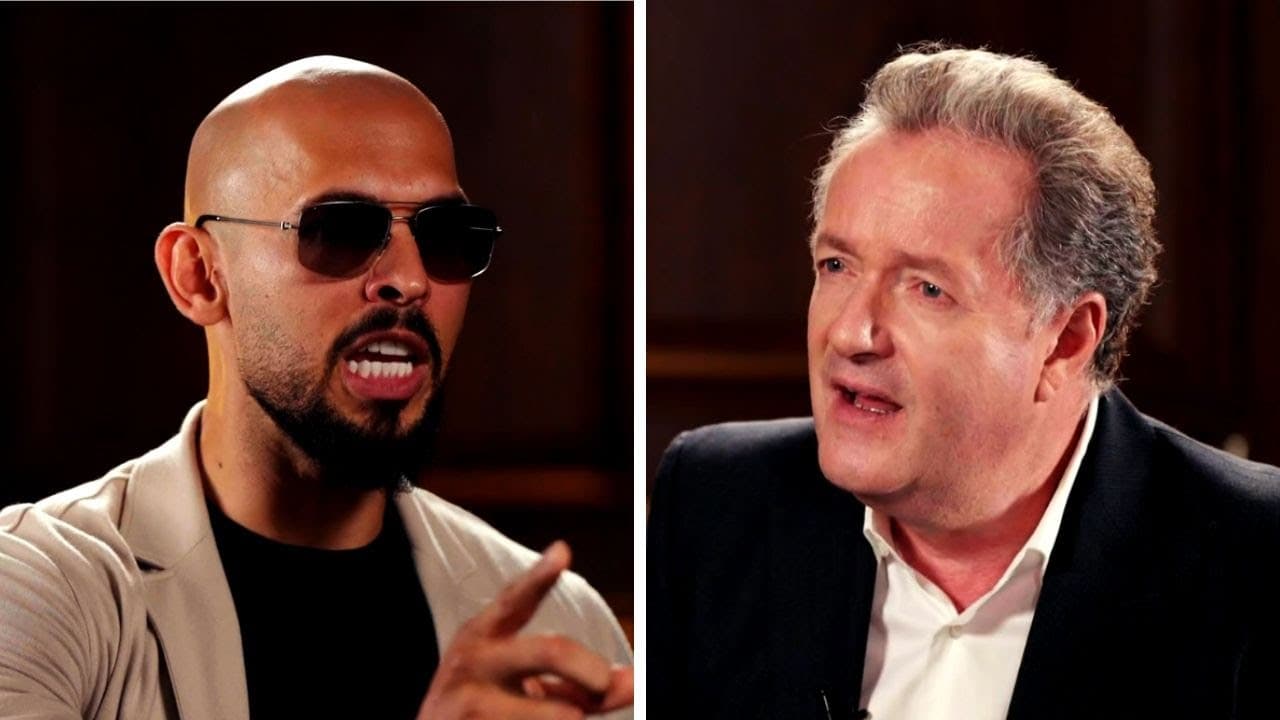
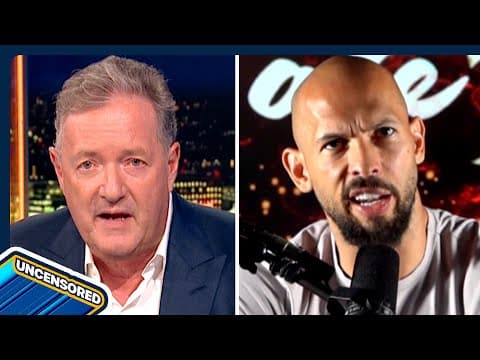
PART 2: Andrew Tate Talks Palestine and Israel With Piers Morgan | Latest Interview
TL;DR
Andrew Tate tells Piers Morgan that he views Israel’s actions in Gaza as genocide and condemns harm to civilians on either side. He argues that October 7 cannot be assessed without the preceding conditions and distinguishes outside descriptions of terrorism from what people in Gaza might regard as resistance to oppression. Read on for his answers about Hamas, civilian deaths, context, and media credibility.
Transcript
I want to turn to the war between Israel and Hamas in Gaza what is your view of this War I think when you call it a war you're doing a disservice to the people who are having their limbs blown off by some of the most advanced technical Weaponry on the planet it is a genocide and it is disgusting and it doesn't matter which side of the political Spe... Read More
Key Insights
- 🙃 The conflict in Israel and Gaza has resulted in the suffering of innocent civilians and raised questions about the justifiability of actions on both sides.
- 🪡 The interviewee emphasizes the need for understanding the complexities of the conflict and the motivations of each side.
- ✌️ Finding peaceful resolutions and avoiding violence are essential in the pursuit of long-term stability and peace.
- 😑 The interviewee expresses strong disagreement with individuals who call for war and the death of civilians, arguing for empathy and humanity in understanding the consequences of conflict.
Install to Summarize YouTube Videos and Get Transcripts
Explore YouTube Video Summarizer or Get YouTube Transcript Extractor
Questions & Answers
Q: What does Andrew Tate say about the war between Israel and Hamas in Gaza?
Tate rejects describing the situation simply as a war and calls Israel’s actions against Palestinians genocide. He says the suffering caused by advanced weaponry should disgust people regardless of their political position.
Q: Does Andrew Tate condemn what happened on October 7?
Tate says he does not condone the loss of human life on either side. He calls any action that directly harms civilians disgusting and abhorrent, while insisting that the motivations and prior context must also be examined.
Q: Does Andrew Tate call Hamas a terrorist organization?
Tate does not give an unqualified yes-or-no answer. He says an outsider in Romania could call October 7 an act of terror, but someone living under the conditions he describes in Gaza might regard it as resistance against oppression.
Q: Why does Andrew Tate say October 7 requires context?
Tate argues that beginning the story on October 7 starts it in the middle. He says events before that date and the suffering experienced by Palestinians are necessary to understand the motivations behind the attack.
Q: What does Andrew Tate say about civilian casualties?
Tate says he does not condone civilian deaths on either side. He describes any conduct that directly damages civilians as disgusting and abhorrent.
Q: Does Andrew Tate say he understands both sides’ motivations?
Yes. He says he understands why Israel is acting as it is and why Palestine is acting as it is, although he still characterizes Israel’s actions as abhorrent and genocidal.
Q: How does Andrew Tate explain the difference between terrorism and resistance?
Tate argues that labels depend partly on perspective, saying one person’s terrorist can be another person’s freedom fighter. He suggests that people living without freedom, democracy, or an adequate standard of life may understand violent action as resistance rather than terrorism.
Q: Why does Andrew Tate challenge Piers Morgan’s framing of the interview?
Tate says Morgan is reducing a nuanced and complicated issue to a single yes-or-no question. He also claims that media reports can be false and argues that questions about October 7 must include the conditions that preceded it.
Summary & Key Takeaways
-
The interview delves into the Israel-Palestine conflict, with the interviewee expressing strong views on the nature of the conflict and the suffering of innocent civilians.
-
Questions are raised about the justifiability of the actions of both sides and the potential motivations behind the conflict.
-
The interviewee emphasizes the need for understanding the complexity of the conflict and the importance of finding peaceful solutions.
Read in Other Languages (beta)
Share This Summary 📚
Summarize YouTube Videos and Get Video Transcripts with 1-Click
Try YouTube Summary with ChatGPT & Claude or YouTube Transcript Generator
Explore More Summaries from Piers Morgan Uncensored 📚

Summarize YouTube Videos and Get Video Transcripts with 1-Click
Try YouTube Summary with ChatGPT & Claude or YouTube Transcript Generator