Investigate Business Problems
TL;DR
Learn how to define and understand business problems, identify stakeholders, use active listening, ask why five times, and create how might we statements for effective problem-solving.
Transcript
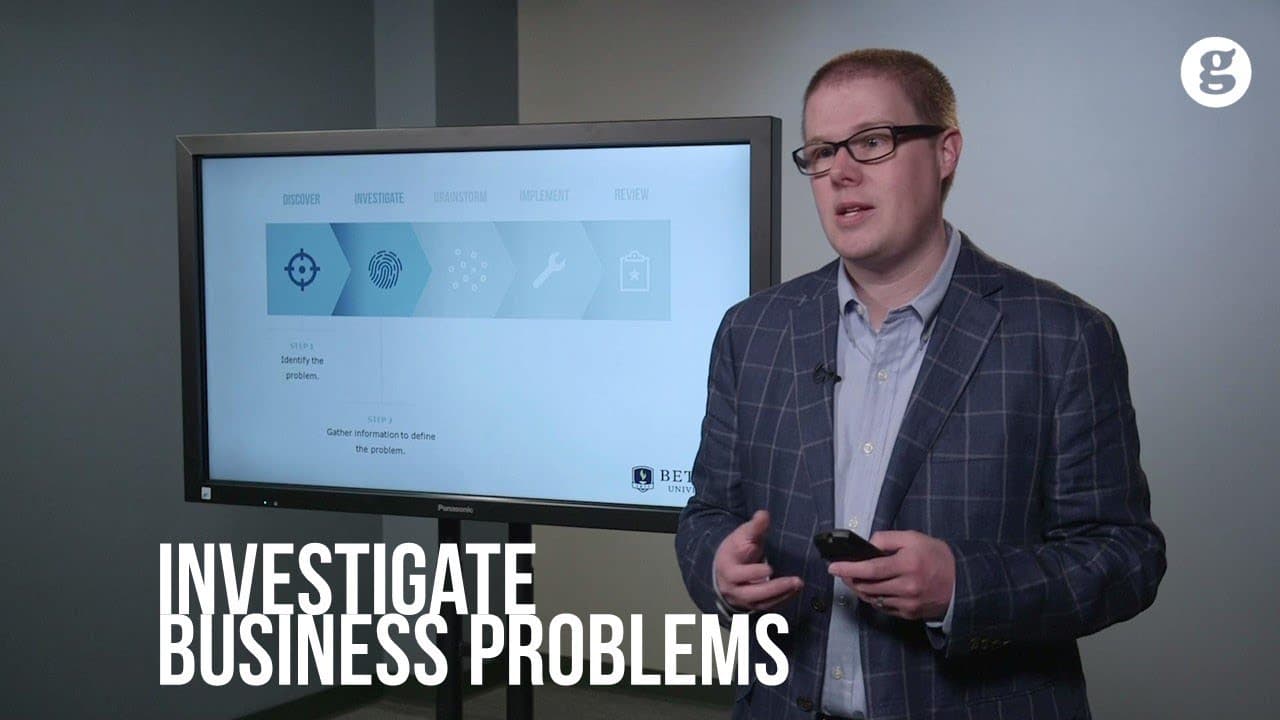
step of the business problem-solving model gather information to define the problem much of the effort of problem solving involves understanding what the underlying issues really are look for root causes related information ideas risks costs and benefits associated with problems defining the real problem is the first major milestone on the way to a... Read More
Key Insights
- 🥡 Understanding the problem is as crucial as finding the solution, often taking significant time and effort.
- 🥺 Identifying stakeholders and involving them in problem-solving can lead to more comprehensive and effective solutions.
- 🤩 Active listening, acknowledging, and inviting input from stakeholders are key elements of effective communication in problem-solving.
- ⁉️ The five whys technique helps uncover the root cause of a problem by delving deeper through a series of iterative "why" questions.
- 💁 Grounding answers in factual information rather than assumptions or guesses is crucial for problem-solving.
- 💡 How might we statements promote a collaborative and optimistic approach to problem-solving, encouraging exploration of multiple ideas and solutions.
- 🤔 Problem-solving benefits from a teamwork and collective thinking, as indicated by the "we" in how might we statements.
Install to Summarize YouTube Videos and Get Transcripts
Explore YouTube Video Summarizer or Get YouTube Transcript Extractor
Questions & Answers
Q: Why is defining the real problem important in problem-solving?
Defining the real problem is essential as it sets the foundation for finding the right solution. Without a clear understanding of the problem, any attempted solutions may address symptoms rather than the root cause, resulting in ineffective results.
Q: How can stakeholders contribute to problem-solving?
Stakeholders, being directly affected by the problem or having a stake in its resolution, can provide valuable insights and perspectives. Their input can help identify blind spots, uncover additional considerations, and ensure a collaborative approach to finding a solution.
Q: What is the purpose of asking why five times in problem-solving?
Asking why five times is a technique to dig deeper and uncover the root cause of a problem. By repeatedly asking why, we peel away surface-level issues and address the underlying factors that contribute to the problem, leading to more effective solutions.
Q: How do how might we statements help in problem-solving?
How might we statements encourage a solutions-oriented approach by acknowledging that there are multiple potential ideas and possibilities. They invite brainstorming, exploration of alternatives, and collaborative problem-solving, promoting a positive mindset towards finding solutions.
Summary & Key Takeaways
-
The first step in problem-solving involves understanding the underlying issues and identifying root causes.
-
Identifying stakeholders is crucial as their involvement and input are needed to resolve the problem effectively.
-
Active listening, asking why five times, and using how might we statements are useful techniques in problem-solving.
Read in Other Languages (beta)
Share This Summary 📚
Summarize YouTube Videos and Get Video Transcripts with 1-Click
Try YouTube Summary with ChatGPT & Claude or YouTube Transcript Generator
Explore More Summaries from GreggU 📚

Summarize YouTube Videos and Get Video Transcripts with 1-Click
Try YouTube Summary with ChatGPT & Claude or YouTube Transcript Generator