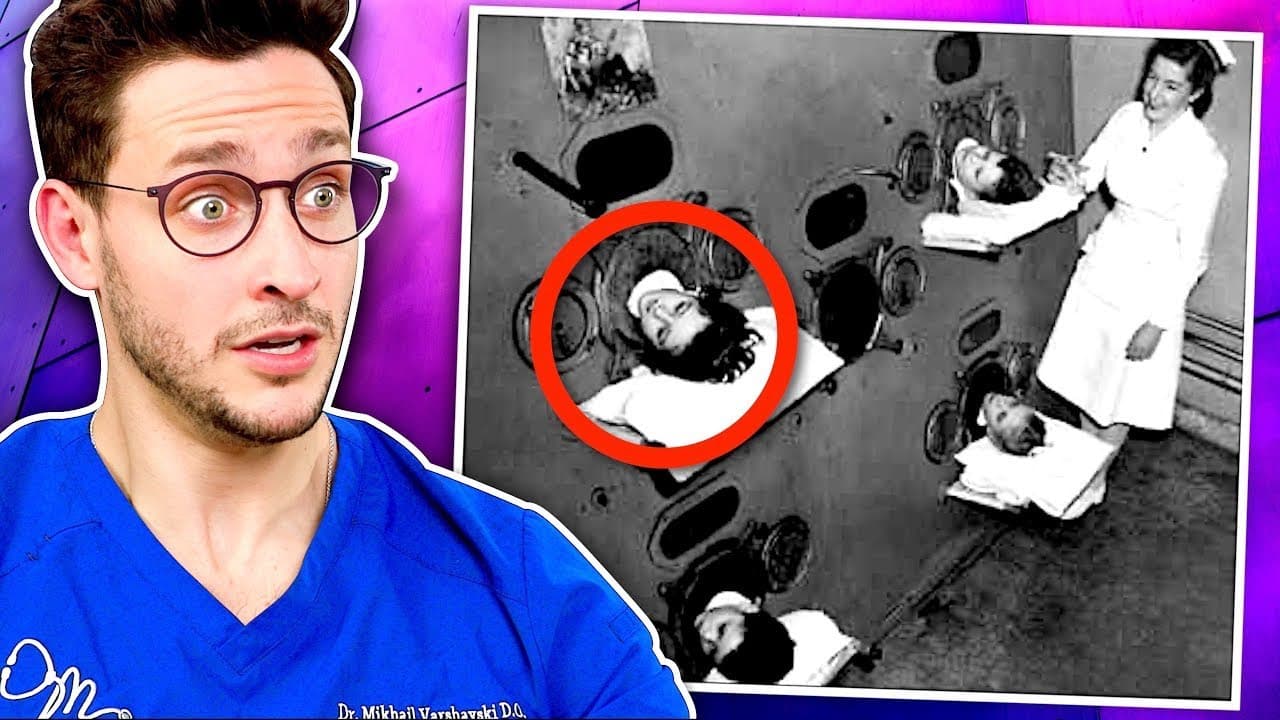
Doctor Reacts to Cringey 1950's Health Films
TL;DR
A humorous critique of outdated medical films and their inaccuracies.
Transcript
- Medicine has changed a lot over the last few decades. So for today's video, I'm not gonna be reacting to a medical drama but instead to some old-school medical films. I think this one's gonna be a blast. Let's see if we can learn something and let's see if they're accurate. Let's get started! - [Narrator] One day, Johnny was running over to see h... Read More
Key Insights
- 😷 Medical education and public health messaging have significantly evolved, highlighting historical inaccuracies and misconceptions prevalent in past films.
- 👶 The portrayal of children’s activity in the past contrasts sharply with current topics addressing childhood obesity and inactivity.
- 🖤 Historical depictions of menstruation reflect societal stigma and lack of education that persist in some forms today.
- 🧑⚕️ Outdated dietary advice in films misrepresents modern understanding of nutrition and its impact on health.
- 🎥 The film's humorous elements reveal societal shifts in language and expectations around personal hygiene over decades.
- 🧑⚕️ Public service announcements from the past often seem redundant based on current health literacy.
- 😘 The financial burden of medical education has drastically increased, with past costs being far lower than today’s expenses.
Install to Summarize YouTube Videos and Get Transcripts
Explore YouTube Video Summarizer or Get YouTube Transcript Extractor
Questions & Answers
Q: What was the narrator's main objective in reacting to the old medical films?
The narrator aimed to review old-school medical films to highlight their educational value and historical inaccuracies. By contrasting them with contemporary medical knowledge, the narrator seeks to illuminate how far medical understanding and societal views have progressed over the decades.
Q: How does the narrator critique the portrayal of child activity in the films?
The narrator humorously points out the unrealistic depiction of children playing and getting colds due to exertion, contrasting it with modern concerns about children being less active. This highlights a shift in how society perceives childhood activity and health over time.
Q: Why did the narrator find the military's PSA about washing hands amusing?
The narrator finds it amusing because a PSA emphasizing basic hygiene like washing hands seems redundant and unnecessary for the military audience. It reflects on the times and raises questions about health education standards from the past.
Q: What insights did the narrator provide about menstruation and medical education in historical context?
The narrator notes outdated beliefs around menstruation, such as it being referred to as "the curse." They also highlight how the portrayal of menstrual hygiene management lacked modern understanding and reflects the gender norms and medical practices of the time.
Q: What significance does the narrator place on the portrayal of doctors in old films?
The narrator critiques the depiction of doctors in old films, including their smoking habits, which would be considered unprofessional and unhealthy today. This reflection underscores the changes in medical practice and public health standards over the years.
Q: In what way does the content discuss evolving attitudes towards health and hygiene?
The content discusses how educational messages surrounding topics like proper diet and hygiene have evolved, moving from simplistic and exaggerated portrayals to more scientifically-grounded advice reflective of contemporary health understanding.
Q: How does the narrator relate the concept of body unity in osteopathic medicine to modern practices?
The narrator appreciates the principle of body unity in osteopathic medicine, emphasizing the importance of understanding the interconnectedness of body systems, which remains relevant in today’s holistic health approaches and patient care.
Summary & Key Takeaways
-
The content explores old medical films, contrasting them with modern medical understanding, highlighting inaccuracies in both health advice and social norms.
-
The narrator humorously reacts to various segments, from the portrayal of children’s play to the educational messages about health and hygiene.
-
Discussions about menstruation and medical education demonstrate how perceptions and medical knowledge have evolved, revealing historical sexism and outdated practices.
Read in Other Languages (beta)
Share This Summary 📚
Summarize YouTube Videos and Get Video Transcripts with 1-Click
Try YouTube Summary with ChatGPT & Claude or YouTube Transcript Generator
Explore More Summaries from Doctor Mike 📚


Summarize YouTube Videos and Get Video Transcripts with 1-Click
Try YouTube Summary with ChatGPT & Claude or YouTube Transcript Generator