When to Trust Your Gut in Startup Decisions

TL;DR
Trusting your gut as a startup founder depends on your level of expertise. If you have significant experience and insights in a particular field, your instincts can guide you effectively. However, if you're new to an industry, it's crucial to build expertise and validate your assumptions through research and feedback.
Transcript
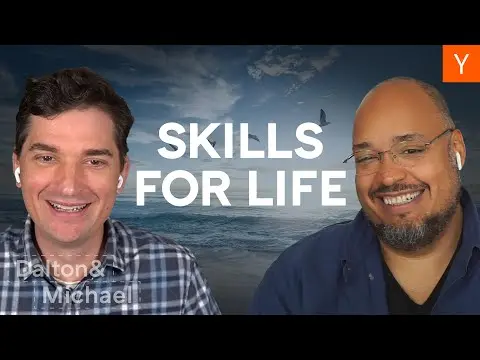
if you wanted to build a new compiler if you wanted to build something that's like really Arcane yeah but that you know a lot about and you have a lot of taste again a lot of opinions about a lot of expertise on yes often you should listen to that expertise yeah this is Dalton plus Michael and today we're going to talk about commit or validate when... Read More
Key Insights
- Trusting your gut is more reliable when you have significant expertise in a field.
- Experienced founders can often rely on their instincts to guide product development.
- Inexperienced founders should prioritize building expertise and validating assumptions.
- The 'comic book' extremes of gut-trusting and relying solely on feedback are not practical.
- Founders with expertise should not fear trusting their instincts for product ideas.
- Inexperienced founders should focus on learning and validating ideas through feedback.
- Building expertise is essential for founders without prior industry experience.
- The ideal approach varies based on the founder's background and experience.
Install to Summarize YouTube Videos and Get Transcripts
Explore YouTube Video Summarizer or Get YouTube Transcript Extractor
Questions & Answers
Q: How should experienced founders approach trusting their gut?
Experienced founders should confidently trust their instincts when developing products, as their expertise provides valuable insights. They often have a deep understanding of the market and can create solutions based on personal experiences and industry knowledge. This allows them to identify real needs and develop products that effectively address them.
Q: What should inexperienced founders focus on when starting a business?
Inexperienced founders should prioritize building expertise and validating their ideas through research and feedback. This approach helps them understand the market better, identify real needs, and develop products that meet those needs. By learning from industry experts and potential customers, they can refine their ideas and increase their chances of success.
Q: Why is it important to balance gut instinct and validation in startups?
Balancing gut instinct and validation is crucial because it allows founders to leverage their expertise while also ensuring their ideas meet market needs. Experienced founders can rely on their instincts, but should still seek feedback to refine their ideas. Inexperienced founders must validate their assumptions to avoid pursuing misguided ideas and to build products that truly resonate with customers.
Q: When should founders rely more on feedback than their instincts?
Founders should rely more on feedback than their instincts when they lack significant industry experience or expertise. In such cases, validation through research, customer interviews, and market analysis is essential to understand the market landscape and develop products that address real needs. This approach helps mitigate risks associated with assumptions based solely on limited personal insights.
Q: How can founders build expertise in a new industry?
Founders can build expertise in a new industry by conducting thorough research, networking with industry experts, and engaging with potential customers. Attending industry events, participating in online forums, and seeking mentorship are also effective strategies. By immersing themselves in the industry, founders can gain valuable insights, understand market dynamics, and identify opportunities for innovation.
Q: What are the risks of over-relying on gut instincts in startups?
Over-relying on gut instincts in startups can lead to misguided decisions and products that do not align with market needs. Without validation, founders risk developing solutions based on personal biases rather than actual demand. This approach can result in wasted resources, missed opportunities, and ultimately, business failure. Balancing instincts with feedback helps mitigate these risks.
Q: How can founders validate their business ideas effectively?
Founders can validate their business ideas effectively by conducting market research, engaging with potential customers, and testing prototypes. Surveys, interviews, and focus groups provide valuable feedback on product concepts and features. Additionally, analyzing competitors and industry trends helps founders refine their ideas and ensure they address real market needs, increasing the likelihood of success.
Q: Why is it important for founders to be self-aware of their expertise level?
Self-awareness of expertise level is important for founders because it informs their decision-making approach. Founders with significant experience can trust their instincts more, while those without should prioritize learning and validation. Understanding their expertise level helps founders adopt the right strategies, allocate resources effectively, and develop products that align with market demands, ultimately enhancing their chances of success.
Summary & Key Takeaways
-
Experienced founders should trust their instincts, as their expertise provides valuable insights into product development. They often have a unique understanding of the market and can create solutions based on personal experiences and industry knowledge.
-
Inexperienced founders should focus on building expertise and validating their ideas through research and feedback. This approach helps them understand the market better and develop products that meet real needs.
-
The decision to trust your gut or seek validation depends on your background. Founders with industry experience can rely more on their instincts, while those new to a field should prioritize learning and feedback to guide their decisions.
Read in Other Languages (beta)
Share This Summary 📚
Summarize YouTube Videos and Get Video Transcripts with 1-Click
Try YouTube Summary with ChatGPT & Claude or YouTube Transcript Generator
Explore More Summaries from Dalton & Michael 📚





Summarize YouTube Videos and Get Video Transcripts with 1-Click
Try YouTube Summary with ChatGPT & Claude or YouTube Transcript Generator