Why Are Young People More Affected by Loneliness?
TL;DR
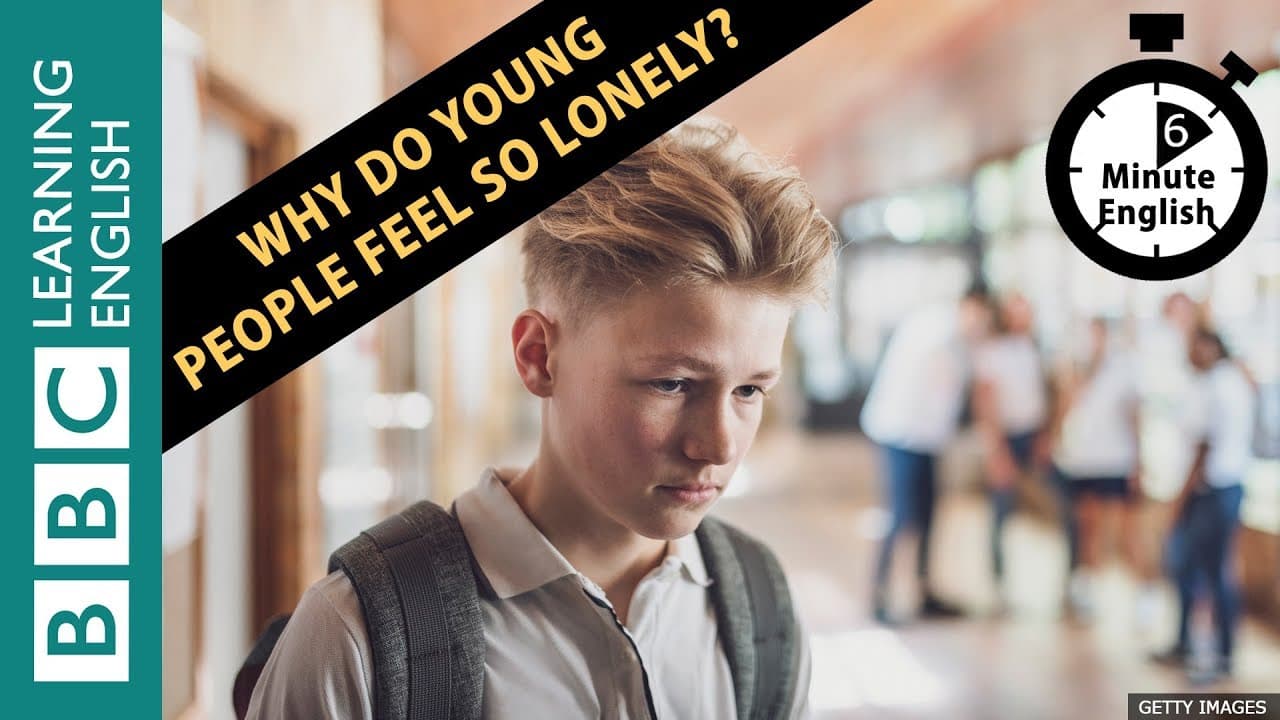
People aged 16 to 24 experience loneliness more often and more intensely than any other age group surveyed. Researchers suggest that youth can be especially difficult because it involves identity changes, figuring out one’s place in the world, and learning to regulate emotions. Loneliness reflects feeling disconnected or misunderstood, so it can occur even among crowds.
Transcript
Neil: Hello. Welcome to 6 Minute English, I'm Neil. Sam: And I'm Sam. Neil: And we are sitting here in New Broadcasting House, in the middle of London. Would you say, Sam, that this is an isolated place? Sam: Oh no, not at all. Isolated means far away from other places and people. Neil: Does that mean then, do you think, that you can't be lonely he... Read More
Key Insights
- Loneliness is a feeling of disconnection rather than simply being physically separated from other people. Someone can feel lonely in a busy crowd when they believe nobody understands them or when they lack a meaningful connection with the surrounding world.
- People aged 16 to 24 experience loneliness more often and more intensely than any other age group, according to the research discussed. This finding challenges the common assumption that loneliness is mainly a problem affecting older and physically isolated people.
- The stereotype that older people are the primary sufferers of loneliness is an overly simplistic judgment. A stereotype reduces a person or group to basic assumptions based on characteristics such as age, nationality, or profession, even when those assumptions do not describe the majority.
- Youth is a period of identity change that may make loneliness especially troubling. Young people are still trying to understand themselves, determine their place in the world, and decide what they are supposed to do with their lives.
- Emotional regulation is the ability to control emotions, and younger people may still be learning this skill. Researchers suggested that limited experience regulating strong feelings could help explain why loneliness is experienced more intensely during the ages of 16 to 24.
- Being plagued by loneliness means being troubled by it continually or repeatedly. The expression describes a problem that does not happen only once, but returns or persists and causes ongoing difficulties for the person experiencing it.
- Physical isolation means being far away from other places and people, but it does not automatically produce loneliness. A person living happily in the Scottish Highlands could feel connected, while that same person might feel lonely after moving into crowded London.
- Tristan da Cunha is identified as the most isolated inhabited place among the quiz options. The South Atlantic island has fewer than 300 residents and is accessible only through a six-day ship voyage from South Africa.
Install to Summarize YouTube Videos and Get Transcripts
Explore YouTube Video Summarizer or Get YouTube Transcript Extractor
Questions & Answers
Q: What is the difference between loneliness and isolation?
Isolation means being physically far away from other places and people, while loneliness is the feeling of being disconnected from the world or misunderstood by others. Physical location does not determine whether someone feels lonely. A person can live happily in an isolated region, yet feel lonely after entering a crowded city where meaningful connection seems absent.
Q: Which age group experiences loneliness most often?
People aged 16 to 24 experience loneliness more often and more intensely than any other age group, according to the research discussed in the programme. The result may seem surprising because a common stereotype associates loneliness mainly with older and isolated people. However, the findings show that loneliness is experienced throughout life and is especially strong among younger people.
Q: Why might young people feel loneliness more intensely?
Researchers from the University of Manchester suggested that loneliness may trouble young people because youth is a period of identity change. People at this age are still figuring out their place in the world and what they should do with their lives. They may also be learning to regulate their emotions, which can make loneliness feel more intense.
Q: Can someone feel lonely while surrounded by people?
A person can feel lonely even in a crowd because loneliness is not defined by physical separation. It can arise when someone feels disconnected from the surrounding world or believes that nobody understands them. A busy place such as central London may contain many people and activities, but it does not necessarily provide the emotional connection that prevents loneliness.
Q: What stereotype about loneliness does the research challenge?
The research challenges the stereotype that loneliness affects only, or primarily, older and isolated people. Older people can certainly experience loneliness, but the survey findings discussed show that those aged 16 to 24 feel it more frequently and intensely. The example demonstrates why simplistic assumptions based on age may fail to represent what most people actually experience.
Q: What does it mean to regulate emotions?
To regulate emotions means to control them. The researchers suggested that younger people may not yet have fully learned how to manage their emotional responses. Because the ages of 16 to 24 involve identity changes and attempts to understand one’s place in the world, developing emotional control may be particularly relevant to how strongly loneliness is experienced.
Q: What does being plagued by loneliness mean?
Being plagued by loneliness means that the feeling repeatedly or continually troubles a person and causes problems or difficulties. The phrase does not describe a single brief experience. In the discussion, it is used to suggest that loneliness may persistently affect young people while they navigate identity changes, understand their place in the world, and learn emotional regulation.
Q: What is the most isolated inhabited place named in the programme?
Tristan da Cunha in the South Atlantic is identified as the most isolated inhabited place among the three quiz choices. It has a population of fewer than 300 people and can be reached only by taking a six-day voyage by ship from South Africa. These characteristics make it more isolated than McMurdo Station or Siwa Oasis in the quiz.
Summary & Key Takeaways
-
Loneliness is not the same as physical isolation. A person can feel lonely in a crowded city when disconnected from the surrounding world or convinced that nobody understands them. Conversely, someone living happily in an isolated place may not feel lonely, showing that social and emotional connection matters more than physical proximity.
-
A BBC survey involving 55,000 people from around the world challenges the stereotype that loneliness mainly affects older, isolated people. Although older people can experience loneliness, those aged 16 to 24 reported experiencing it more frequently and intensely than any other age group included in the research discussed.
-
Researchers from the University of Manchester suggested that young people may be especially troubled by loneliness because youth is a period of identity change. During this stage, people are figuring out their place in the world and what to do with their lives while still learning how to regulate their emotions.
Read in Other Languages (beta)
Share This Summary 📚
Summarize YouTube Videos and Get Video Transcripts with 1-Click
Try YouTube Summary with ChatGPT & Claude or YouTube Transcript Generator
Explore More Summaries from BBC Learning English 📚

Summarize YouTube Videos and Get Video Transcripts with 1-Click
Try YouTube Summary with ChatGPT & Claude or YouTube Transcript Generator