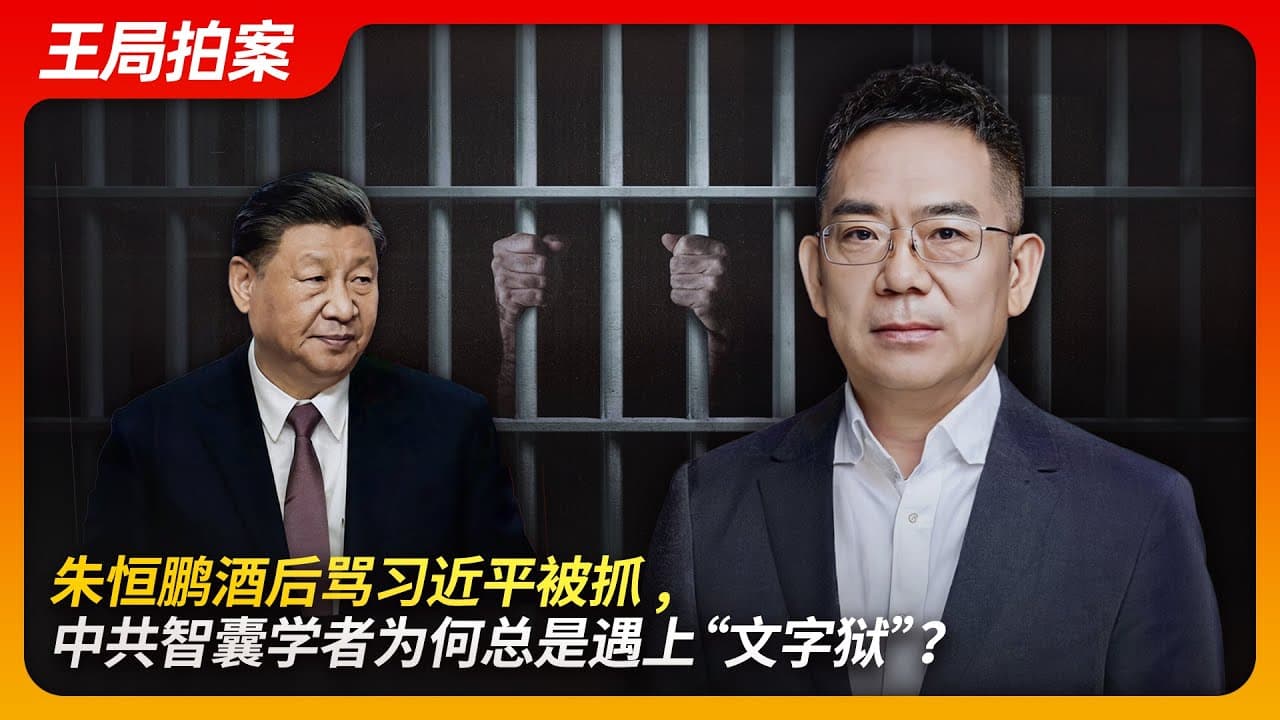
朱恒鹏酒后骂习近平被抓,中共智囊学者为何会遇上“文字狱”?|朱恒鹏|社科院|间谍|国家安全|习近平|学术研究|智囊|陆建华|金熙德|王局拍案20241010
TL;DR
Zhu Hengpeng arrested for criticizing Xi Jinping in WeChat group.
Transcript
Read and summarize the transcript of this video on Glasp Reader (beta).
Key Insights
- Zhu Hengpeng, a high-ranking scholar at the Chinese Academy of Social Sciences, was arrested for criticizing Xi Jinping in a WeChat group, highlighting the risks faced by intellectuals in China.
- The arrest was initially based on casual comments made while drunk but escalated due to Zhu's official position, leading to investigations into his research funding.
- Zhu's arrest reflects the broader systemic risks faced by scholars in China's think tanks, who navigate the dual roles of academic research and policy advising.
- The Chinese Academy of Social Sciences serves dual roles as both an academic institution and a government think tank, leading to inherent conflicts and risks for its scholars.
- Historical precedents show that scholars at the Academy have faced consequences for their views, such as the cases of Li Shenzhi and Su Shaozhi, indicating a pattern of tension between intellectual freedom and state control.
- The case of Zhu Hengpeng underscores the surveillance and control mechanisms in China, where platforms like WeChat are monitored, and dissenting voices are quickly silenced.
- Zhu's critique of China's pension system and healthcare reforms, despite being academically grounded, clashed with the CCP's policies, leading to his downfall.
- The incident signals a decline in the academic independence of the Chinese Academy of Social Sciences, as it increasingly becomes a tool for the CCP's agenda.
Install to Summarize YouTube Videos and Get Transcripts
Explore YouTube Video Summarizer or Get YouTube Transcript Extractor
Questions & Answers
Q: Why was Zhu Hengpeng arrested?
Zhu Hengpeng was arrested for making critical comments about Xi Jinping in a WeChat group. His remarks, though made while drunk, were deemed unacceptable by the authorities, leading to his arrest. The situation escalated due to Zhu's high-ranking position in the Chinese Academy of Social Sciences, prompting further investigations into his activities.
Q: What does Zhu Hengpeng's arrest signify for Chinese scholars?
Zhu Hengpeng's arrest highlights the systemic risks faced by scholars in China's think tanks. It underscores the challenges of balancing academic research with adherence to state policies. Scholars like Zhu, who are involved in policy advising, face increased scrutiny and potential consequences if their views conflict with the CCP's agenda.
Q: How does the Chinese Academy of Social Sciences operate?
The Chinese Academy of Social Sciences serves dual roles as an academic institution and a government think tank. It conducts research across various fields while also advising the CCP on policy matters. This dual function creates inherent conflicts and risks for its scholars, who must navigate between intellectual freedom and state control.
Q: What historical precedents exist for Zhu Hengpeng's case?
Historical precedents at the Chinese Academy of Social Sciences include figures like Li Shenzhi and Su Shaozhi, who faced consequences for their open-minded views. These cases reflect a pattern of tension between intellectual freedom and state control, where scholars who challenge the CCP's policies risk repercussions.
Q: How are surveillance and control mechanisms in China illustrated by this case?
Zhu Hengpeng's arrest illustrates China's extensive surveillance and control mechanisms, particularly on platforms like WeChat. The monitoring of group chats and swift action against dissenting voices highlight the state's capacity to silence criticism and maintain control over public discourse.
Q: What were Zhu Hengpeng's critiques of China's pension system?
Zhu Hengpeng critiqued China's pension system for its inequality and unsustainability. He highlighted the vast disparities between rural and urban pensions and suggested reforms based on Japan's model. However, his views clashed with CCP policies, contributing to his arrest and highlighting the risks of challenging state narratives.
Q: What does Zhu Hengpeng's case reveal about the CCP's influence on academia?
Zhu Hengpeng's case reveals the CCP's growing influence over academia, particularly in institutions like the Chinese Academy of Social Sciences. The incident underscores a decline in academic independence as the Academy increasingly aligns with the CCP's agenda, serving more as a tool for state policy than an independent research body.
Q: What impact does Zhu Hengpeng's arrest have on the Chinese Academy of Social Sciences?
Zhu Hengpeng's arrest signals a decline in the academic independence of the Chinese Academy of Social Sciences. The incident serves as a warning to scholars about the risks of dissent and marks a shift towards the Academy becoming more of a tool for the CCP's agenda, rather than an independent research institution.
Summary & Key Takeaways
-
Zhu Hengpeng, a deputy director at the Chinese Academy of Social Sciences, was arrested for criticizing Xi Jinping in a WeChat group. His arrest highlights the systemic risks faced by scholars in China's think tanks, who must balance academic research with state policy advising.
-
The arrest escalated from initial detention to formal charges of embezzlement and misuse of research funds, reflecting the intense scrutiny and control over intellectuals in China. Zhu's case is emblematic of the broader tensions between academic freedom and state interests.
-
Zhu's critique of China's pension and healthcare systems, though academically sound, conflicted with CCP policies, leading to his arrest. The incident marks a decline in the academic independence of the Chinese Academy of Social Sciences, as it aligns more closely with the CCP's agenda.
Read in Other Languages (beta)
Share This Summary 📚
Summarize YouTube Videos and Get Video Transcripts with 1-Click
Try YouTube Summary with ChatGPT & Claude or YouTube Transcript Generator
Explore More Summaries from 王志安 📚


Summarize YouTube Videos and Get Video Transcripts with 1-Click
Try YouTube Summary with ChatGPT & Claude or YouTube Transcript Generator