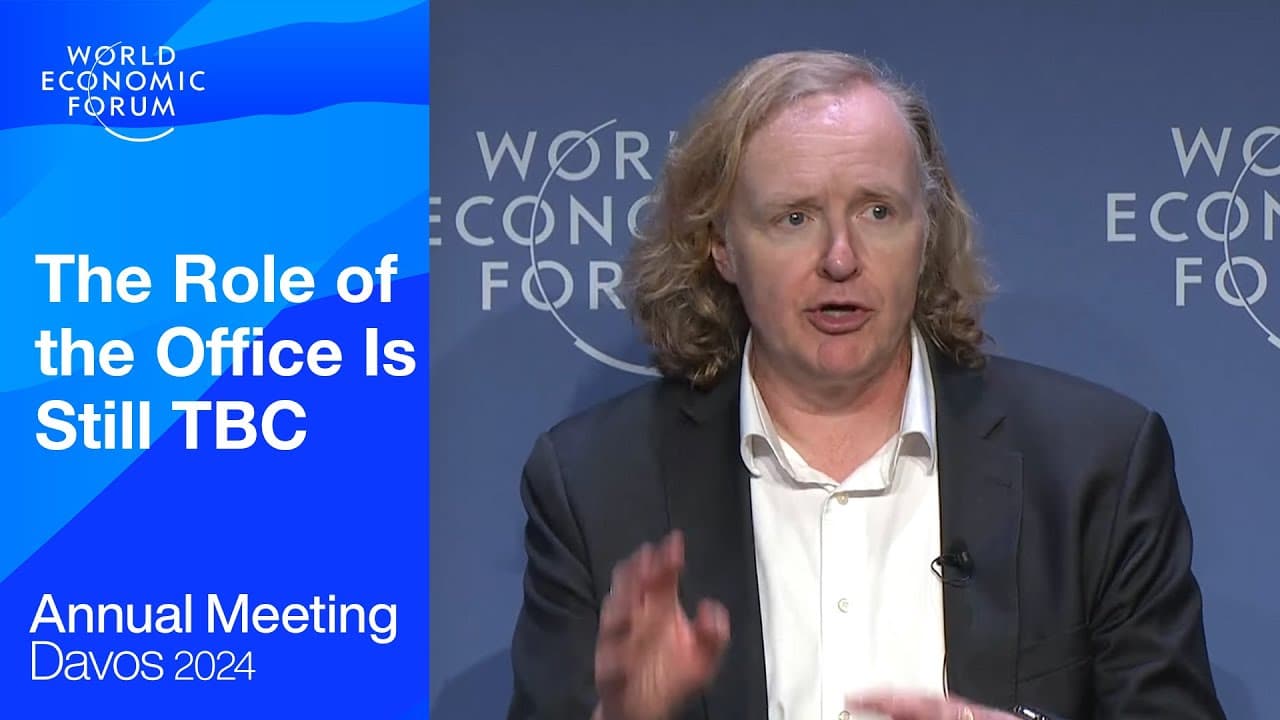
The Role of the Office Is Still TBC | Davos 2024 | World Economic Forum
TL;DR
The office plays a crucial role in building company culture and facilitating teamwork, but it must now compete with remote and hybrid work options.
Transcript
well welcome everyone uh we're all here together to discuss the role of the office as as the title of the session says it's still TBC um or to us Americans TBD um I'm Amy Bernstein and I'm the editor of Harvard Business review and I'm thrilled to be here today to moderate this conversation with and I'll start at the end with Manny mea the Chief Exe... Read More
Key Insights
- 🧑⚕️ Hybrid work models provide flexibility and attract talent, particularly among younger workers.
- 👾 The physical office space and its design play a crucial role in fostering collaboration, culture, and innovation.
- 🧑🏭 The demand for hybrid work is influenced by factors such as job function, industry, and cultural norms.
- 💦 Flexible work arrangements can contribute to higher employee engagement and satisfaction.
- 🧑💼 The role of the office extends beyond work, as it provides a sense of belonging, connection, and a space for personal growth.
- 💦 Governments can play a role in supporting hybrid work by investing in infrastructure and flexible work policies.
- 🤩 Retention of company culture and effective management are key challenges in implementing hybrid work models.
Install to Summarize YouTube Videos and Get Transcripts
Explore YouTube Video Summarizer or Get YouTube Transcript Extractor
Questions & Answers
Q: What is the current state of remote, hybrid, and in-person work?
LinkedIn's data shows that remote and hybrid roles peaked at 20% of job postings in April 2022 but have since decreased to around 8% by the end of 2023. However, employee interest in remote and hybrid work remains high.
Q: How can leaders maintain a positive office culture while embracing flexible work arrangements?
Leaders can focus on building a strong company culture by creating opportunities for team bonding and collaboration in the office. They should also empower managers to adapt to hybrid work and ensure accountability without sacrificing flexibility.
Q: How do flexible work arrangements contribute to positive outcomes for economies and societies?
Flexible work arrangements can lead to increased productivity, job satisfaction, and employee engagement. They can also attract and retain talent, particularly among younger workers and those with family responsibilities.
Q: What are the key challenges in implementing hybrid work models?
One key challenge is finding the right balance between remote and in-person work for different job functions and teams. Managers may require additional training to effectively manage remote and hybrid teams. Additionally, ensuring data security and fostering inclusivity in virtual meetings are important considerations.
Summary & Key Takeaways
-
The office serves as a hub for teams to connect, collaborate, and establish a strong company culture.
-
Hybrid work models have gained popularity, allowing employees the flexibility to work both in the office and remotely.
-
The physical environment of the office can contribute to productivity, collaboration, and employee satisfaction.
Read in Other Languages (beta)
Share This Summary 📚
Summarize YouTube Videos and Get Video Transcripts with 1-Click
Try YouTube Summary with ChatGPT & Claude or YouTube Transcript Generator
Explore More Summaries from World Economic Forum 📚
Summarize YouTube Videos and Get Video Transcripts with 1-Click
Try YouTube Summary with ChatGPT & Claude or YouTube Transcript Generator