5 great Japanese authors who will suprise you
TL;DR
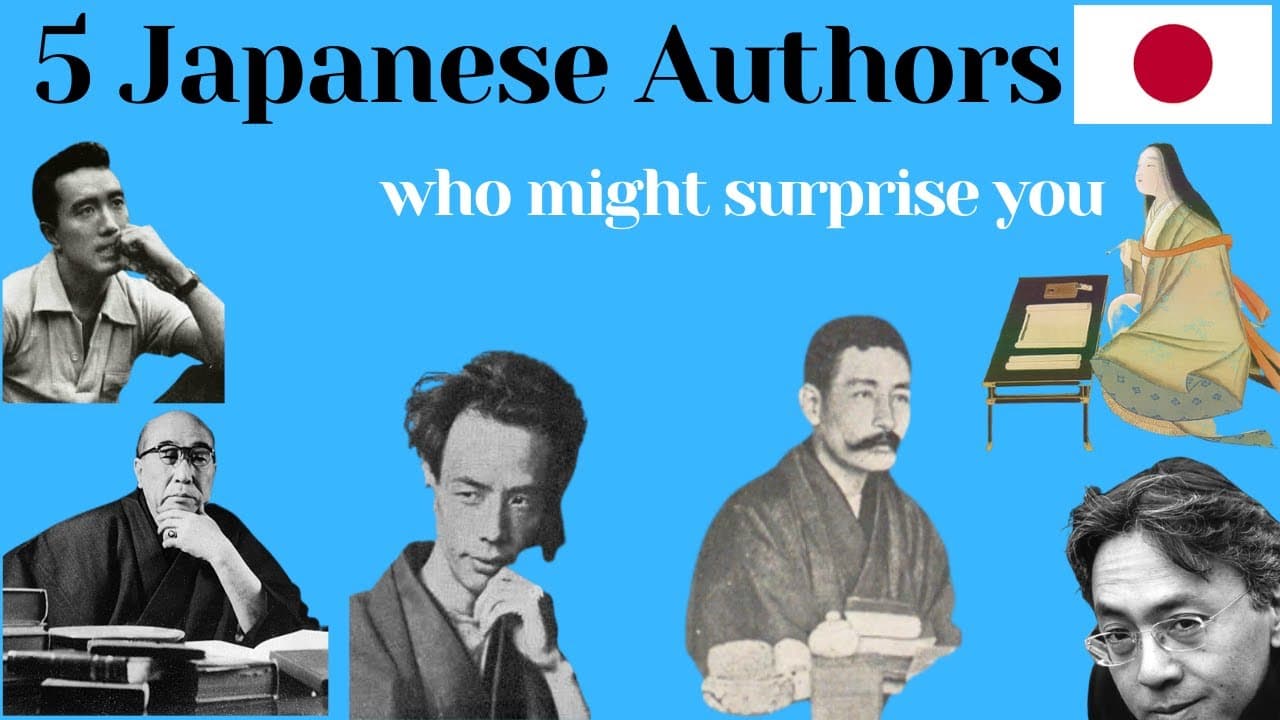
Discover five influential yet lesser-known Japanese authors.
Transcript
Read and summarize the transcript of this video on Glasp Reader (beta).
Key Insights
- Yukio Mishima was a multifaceted figure known for his literary works and controversial political actions, including an attempted coup and subsequent suicide.
- Ryunosuke Akutagawa is celebrated as the father of Japanese short stories, with works that question objective truth and inspired renowned films.
- Shikibu Murasaki, possibly the first novelist in history, wrote The Tale of Genji, a seminal work in Japanese literature despite societal restrictions on women.
- Natsume Soseki, a pioneer of modern Japanese literature, explored themes of cultural change and is honored with a museum and currency recognition.
- Edogawa Ranpo, inspired by Edgar Allan Poe, established the genre of Japanese mystery and detective stories, influencing future generations.
- Kazuo Ishiguro, though primarily writing in English, incorporates Japanese themes and has been embraced by Japanese media following his Nobel Prize win.
- These authors, while not widely known outside Japan, have significantly impacted Japanese literature and culture, each bringing unique perspectives and narratives.
- The video encourages exploration of Japanese literature to gain deeper cultural understanding and appreciation for diverse storytelling traditions.
Install to Summarize YouTube Videos and Get Transcripts
Explore YouTube Video Summarizer or Get YouTube Transcript Extractor
Questions & Answers
Q: Who is Yukio Mishima and what is he known for?
Yukio Mishima was a Japanese author, actor, and political figure known for his extensive literary works, including novels and plays. He is also infamous for his extreme political views and actions, such as his involvement in a failed coup attempt and his subsequent ritual suicide, which overshadowed his literary achievements.
Q: What is Ryunosuke Akutagawa's contribution to Japanese literature?
Ryunosuke Akutagawa is considered the father of Japanese short stories. He wrote around 150 stories, with themes that often explore the nature of truth and human perception. His work inspired the acclaimed Japanese film Rashomon, demonstrating his lasting influence on both literature and cinema.
Q: Why is Shikibu Murasaki significant in literary history?
Shikibu Murasaki is significant as the author of The Tale of Genji, which is arguably the world's first novel. Written in the early 11th century, it details the life and romances of a nobleman. Her work is remarkable not only for its literary quality but also because it was created at a time when women were typically barred from literary pursuits.
Q: How did Natsume Soseki contribute to Japanese literature?
Natsume Soseki is a key figure in modern Japanese literature, known for novels that explore the cultural transformations in Japan during the Meiji era. His works like I Am a Cat and Kokoro delve into themes of identity and modernization. Soseki's legacy is cemented by his depiction on Japanese currency and a dedicated museum.
Q: What is unique about Edogawa Ranpo's literary style?
Edogawa Ranpo is renowned for pioneering Japanese mystery and detective fiction, drawing inspiration from Edgar Allan Poe. His stories often integrate elements of the grotesque and bizarre, which have influenced subsequent generations of Japanese writers, including Haruki Murakami. His legacy includes a prestigious literary prize named in his honor.
Q: How does Kazuo Ishiguro's work reflect Japanese themes?
Although Kazuo Ishiguro writes primarily in English, his early novels set in Japan explore themes of memory, guilt, and cultural identity. His characters often embody Japanese traits, such as stoicism and acceptance of fate. Despite distancing himself from a strictly Japanese identity, his works resonate with Japanese cultural elements.
Q: What impact have these authors had outside Japan?
While these authors are not widely known outside Japan, their works have significantly influenced global literature and cinema. For instance, Akutagawa's stories inspired iconic films, and Ishiguro's novels have received international acclaim, including a Nobel Prize. Their diverse narratives offer insights into Japanese culture to global audiences.
Q: Why does the video encourage exploring Japanese literature?
The video encourages exploring Japanese literature to gain a deeper understanding of the country's culture, history, and unique storytelling traditions. By highlighting these authors, it aims to inspire appreciation for diverse literary voices and the rich narratives they offer, which can broaden readers' perspectives and enrich their literary experiences.
Summary & Key Takeaways
-
The video introduces five Japanese authors who have made a significant impact on literature but are not widely known outside Japan. It highlights their unique contributions and explores their personal and professional lives, shedding light on their influence on Japanese culture and literature.
-
Yukio Mishima is noted for his prolific writing and dramatic life, including a failed coup and ritual suicide. Ryunosuke Akutagawa's short stories, especially those questioning truth, have left a lasting legacy, influencing films and other media.
-
Shikibu Murasaki's The Tale of Genji is recognized as a pioneering novel, written despite restrictions on women. Natsume Soseki's works reflect Japan's cultural shifts, while Edogawa Ranpo's mysteries reflect his admiration for Edgar Allan Poe. Kazuo Ishiguro, though writing in English, remains connected to Japanese themes.
Read in Other Languages (beta)
Share This Summary 📚
Summarize YouTube Videos and Get Video Transcripts with 1-Click
Try YouTube Summary with ChatGPT & Claude or YouTube Transcript Generator
Explore More Summaries from Fiction Beast 📚





Summarize YouTube Videos and Get Video Transcripts with 1-Click
Try YouTube Summary with ChatGPT & Claude or YouTube Transcript Generator