How Does the Milky Way Fit Into the Universe?
TL;DR
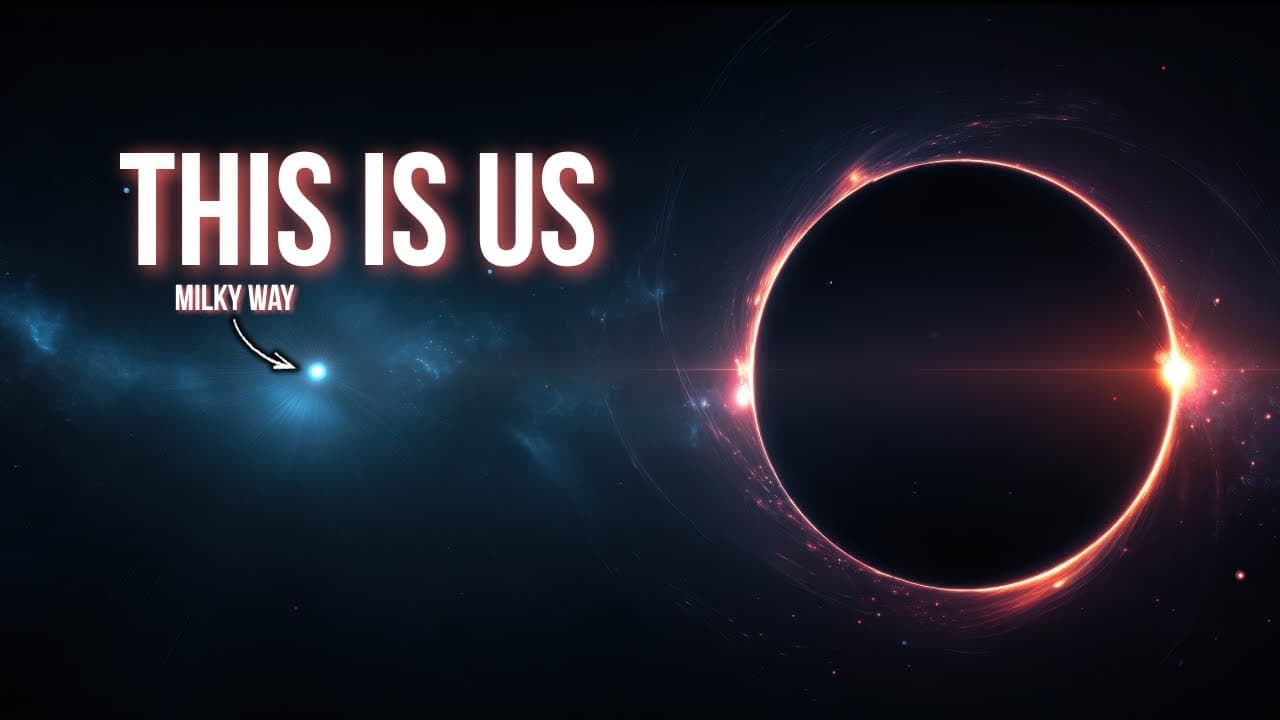
The Milky Way spans about 100,000 light-years and contains roughly 100 billion to 400 billion stars, making it larger than about 95% of galaxies. Yet it is only one member of the Local Group, which lies within progressively larger structures such as the Virgo supercluster, Laniakea, and a 93-billion-light-year observable universe containing an estimated 2 trillion galaxies.
Transcript
Tonight, we're going to take a journey that might change how you see everything. We're going to explore something that sounds simple, but is actually mindbending. We're going to discover the true scale of our home galaxy, the Milky Way, and where it really sits in the cosmic order of things. Because here's what most people don't realize. The Milky ... Read More
Key Insights
- The Milky Way is approximately 100,000 light-years across and contains an estimated 100 billion to 400 billion stars. Its exact stellar population is difficult to determine because observers are located inside the galaxy, where dust, distance, and overlapping stars obstruct much of the view.
- The Sun is located about 26,000 light-years from the Milky Way's center in a minor spiral feature called the Orion spur. This position is described as a relatively quiet galactic suburb where stars are less densely packed and supernova explosions are sufficiently uncommon for life to persist.
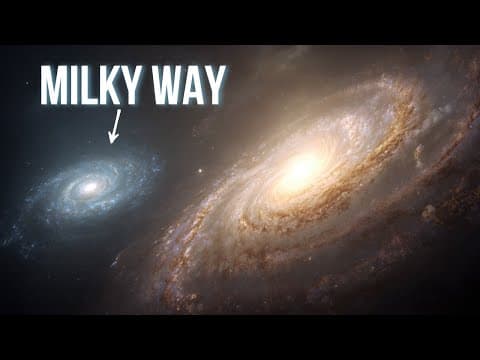
- The Milky Way is larger than about 95% of galaxies because most galaxies are dwarfs containing only a few billion stars or fewer. Its top-five-percent position by size makes it unusually large among individual galaxies, even though much larger and rarer examples also exist.
- The Local Group is a collection containing the Milky Way, Andromeda, the Magellanic Clouds, and about 50 other galaxies across roughly 10 million light-years. The Milky Way and Andromeda are its dominant members, while most of the remaining members are considerably smaller dwarf galaxies.
- Andromeda is about 2.5 million light-years away and contains around 1 trillion stars. It is expected to encounter the Milky Way in roughly 4.5 billion years, but the event should resemble a merger because the large distances between individual stars make direct stellar collisions extremely unlikely.
- The Virgo supercluster contains at least 100 galaxy clusters and groups across about 110 million light-years. It holds roughly 100 trillion stars and is about 1,100 times wider than the Milky Way, reducing our large galaxy to a tiny component of a much broader structure.
- Laniakea contains about 100,000 galaxies distributed across approximately 520 million light-years. The galaxies within it, including the Milky Way, are described as moving toward a region called the Great Attractor under the combined gravitational influence of the surrounding mass.
- The observable universe is about 93 billion light-years across and contains an estimated 2 trillion galaxies. Its diameter exceeds the universe's stated age of 13.8 billion years in light-years because space expanded while ancient light traveled toward observers, increasing the present distances to its sources.
Install to Summarize YouTube Videos and Get Transcripts
Explore YouTube Video Summarizer or Get YouTube Transcript Extractor
Questions & Answers
Q: How large is the Milky Way and how many stars does it contain?
The Milky Way stretches about 100,000 light-years from one side to the other and contains an estimated 100 billion to 400 billion stars. The broad range exists because counting stars from inside the galaxy is difficult. Dust, distance, and overlapping objects hide much of its structure, much like trees obscure one another when viewed from inside a forest.
Q: Where is the Sun located within the Milky Way?
The Sun sits approximately 26,000 light-years from the galactic center in a minor spiral feature called the Orion spur. It occupies what the narration describes as a galactic suburb rather than a central or exceptional position. Stars are not excessively dense there, and supernova explosions are rare enough that life had an opportunity to develop and survive.
Q: Is the Milky Way larger than most other galaxies?
The Milky Way is larger than about 95% of galaxies and therefore ranks within the largest five percent by size. Most galaxies are dwarf galaxies containing only a few billion stars or fewer. The Milky Way is consequently a giant compared with the typical galaxy, although rare galaxies can still be many times wider and contain far more stars.
Q: What galaxies belong to the Local Group?
The Local Group includes the Milky Way, Andromeda, the Large and Small Magellanic Clouds, and about 50 other galaxies. It spans roughly 10 million light-years. The Milky Way and Andromeda are the two dominant members, while most of their neighbors are small dwarf galaxies that orbit the larger systems or occupy the space between them.
Q: What will happen when Andromeda meets the Milky Way?
Andromeda is moving toward the Milky Way, with the encounter expected in about 4.5 billion years. The event is described as a merger rather than a conventional crash. Although the galaxies will interact, individual stars are separated by such enormous distances that direct collisions between stars are considered incredibly unlikely during the process.
Q: How does the Milky Way fit within the Virgo supercluster?
The Local Group, which contains the Milky Way, is presented as part of the Virgo supercluster. That larger structure includes at least 100 galaxy clusters and groups, spans about 110 million light-years, and contains roughly 100 trillion stars. At approximately 1,100 times the Milky Way's width, it makes our entire galaxy appear like a tiny speck.
Q: What is Laniakea and how is the Milky Way connected to it?
Laniakea is a vast structure containing about 100,000 galaxies across approximately 520 million light-years. It includes the Virgo supercluster and therefore also includes the Milky Way. Its galaxies are described as moving toward the Great Attractor, a central region influenced by the combined gravity of the enormous amount of mass distributed throughout the structure.
Q: Why is the observable universe 93 billion light-years across?
The observable universe is described as roughly 93 billion light-years across even though the universe is stated to be about 13.8 billion years old. The difference results from cosmic expansion. While light from distant galaxies traveled toward us for billions of years, space itself stretched and carried those galaxies farther away, increasing their present separation from Earth.
Summary & Key Takeaways
-
The Milky Way is about 100,000 light-years wide and contains between 100 billion and 400 billion stars. The Sun lies roughly 26,000 light-years from the galactic center in the Orion spur, a relatively quiet neighborhood where stars are not densely packed and nearby supernova explosions are comparatively rare.
-
The Milky Way and Andromeda dominate the Local Group, a neighborhood of about 50 additional galaxies spanning roughly 10 million light-years. Most members are dwarf galaxies. The group also includes the Large and Small Magellanic Clouds, smaller galaxies containing about 10 billion stars and a few billion stars, respectively.
-
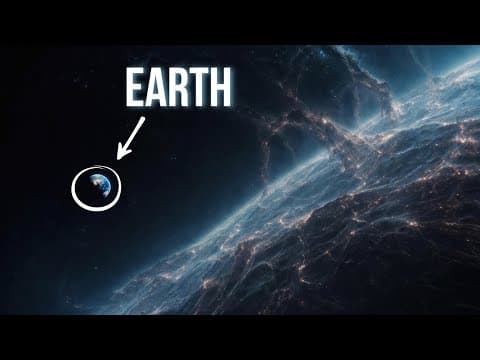
The Local Group belongs to structures of increasing scale, including the Virgo supercluster and Laniakea. Beyond them, galaxies form a cosmic web of filaments and voids. The observable universe extends about 93 billion light-years across because expanding space carried distant galaxies farther away while their light traveled toward Earth.
Read in Other Languages (beta)
Share This Summary 📚
Summarize YouTube Videos and Get Video Transcripts with 1-Click
Try YouTube Summary with ChatGPT & Claude or YouTube Transcript Generator
Explore More Summaries from Boring Space 📚




Summarize YouTube Videos and Get Video Transcripts with 1-Click
Try YouTube Summary with ChatGPT & Claude or YouTube Transcript Generator