What Financial Decisions Build Long-Term Wealth?
TL;DR
Starting to invest at 19, pursuing better-paid work, and choosing affordable education were central to Jeremy’s financial progress. He also credits track with building confidence and earning a half scholarship, while accounting, business, and psychology courses provided practical tools for investing, management, branding, and audience growth.
Transcript
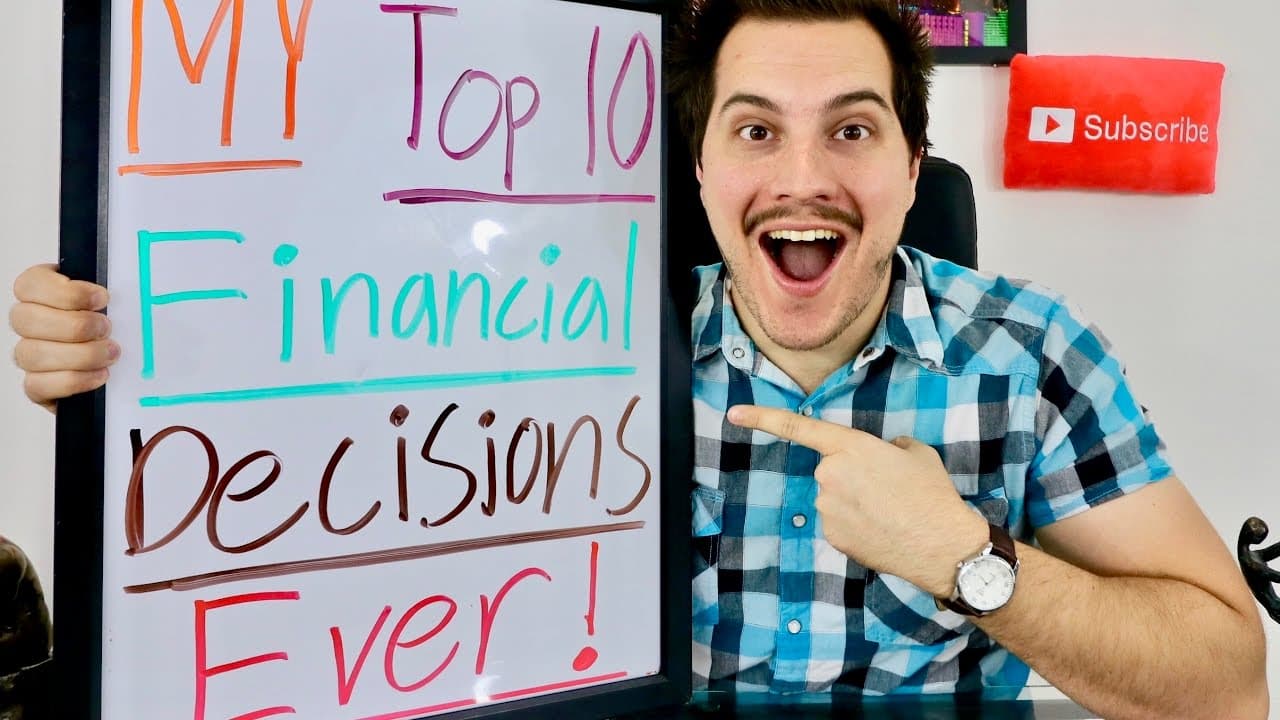
good day subscribers thank you so much for joining me today I am Jeremy this is the financial education Channel and today we're talking about my top 10 financial decisions I've ever made in my life these are not like the top 10 stocks I've ever bought or something like that these are literally the top 10 financial decisions ... Read More
Key Insights
- Running track created financial and psychological benefits by helping Jeremy earn a half scholarship during his freshman year and develop confidence. He believes confidence supports financial success because it makes people more willing to trust themselves, make decisions, pursue opportunities, and act in the world.
- Community college was an affordable route to practical knowledge in accounting, business, and psychology. Jeremy says these subjects later supported his business decisions, investment analysis, and understanding of audience behavior, while college computer labs gave him a place to conduct extensive independent research about investing.
- Accounting knowledge is essential for Jeremy’s approach to business and investing because it enables him to read income statements, balance sheets, cash flow information, and gross margins. He argues that investors and business owners face significant difficulty when they cannot understand or interpret these fundamental financial records.
- Psychology influences branding and audience growth by shaping how viewers notice, remember, and revisit content. Jeremy deliberately uses his face, expressive thumbnails, and a consistently displayed whiteboard so returning viewers can recognize his channel and occasional viewers may click again, watch more content, and eventually subscribe.
- Starting to invest at age 19 gave Jeremy practical experience before he considered himself an expert. Beginning during the 2009 Great Recession exposed him to major market fluctuations and allowed him to test developing knowledge through real decisions rather than relying only on research or theoretical practice.
- Early investing can make mistakes less financially damaging because the sums at risk may be smaller. Jeremy contrasts losing 50 dollars at age 19 with potentially losing 500,000 dollars at age 39 after entering the market without earlier experience, emphasizing practice and gradual learning.
- Applying to Quick Trip at age 20 substantially increased Jeremy’s earnings. He moved from part-time Walgreens work paying about 9 dollars and 10 cents per hour to roughly 15 or 16 dollars per hour, 46 weekly hours, overtime, bonuses, and annual earnings around 40,000 to 50,000 dollars.
- Leaving college after his sophomore year freed time and money for employment advancement and investing. Jeremy believed he had already gained the tools he needed, so completing a degree would offer less value than concentrating on work, increasing his earnings, and taking responsibility for further practical learning.
Install to Summarize YouTube Videos and Get Transcripts
Explore YouTube Video Summarizer or Get YouTube Transcript Extractor
Questions & Answers
Q: How did running track improve Jeremy’s finances?
Running track helped Jeremy financially in two connected ways. During his freshman year, he earned a half scholarship that helped pay for community college. Track also rebuilt his confidence after he had devoted himself to football without becoming the player he wanted to be. He believes that greater confidence later helped him make decisions, pursue opportunities, and take actions associated with financial success.
Q: What did Jeremy learn from community college?
Jeremy studied accounting, business, and psychology at community college while independently researching investing in the school’s computer labs. Accounting taught him to understand income statements, balance sheets, cash flow, and gross margins. Business courses informed his later management choices, while psychology helped him think about branding, emotional reactions, viewer recognition, and the behavior that turns occasional viewers into subscribers.
Q: Why is accounting important for investing and business?
Accounting provides the ability to understand the financial records used to evaluate companies and operate a business. Jeremy specifically identifies income statements, balance sheets, cash flow information, and gross margins as necessary concepts. He argues that someone who cannot read and interpret these materials will have difficulty making sound investment decisions or understanding how a business is performing.
Q: How does psychology affect Jeremy’s YouTube branding?
Jeremy uses psychological principles to attract attention and build recognition. His expressive face in thumbnails is intended to create an emotional response, while repeatedly holding a whiteboard establishes a recognizable visual pattern. A person who watched once may recognize him later, click another video, continue watching additional content, subscribe, and potentially remain a viewer for years.
Q: Why did Jeremy start investing at age 19?
Jeremy started investing at 19 even though he was still learning because he valued real experience. He began in 2009 during the Great Recession, when stock prices could rise 5 percent one day and fall 7 percent the next. That environment let him experience volatility directly, test his developing judgment, and learn lessons that research alone could not provide.
Q: Why does Jeremy recommend beginning investing early?
Beginning early gives an investor more time to gain experience and encounter mistakes while potentially handling smaller amounts of money. Jeremy illustrates this by comparing a possible loss of 50 dollars at age 19 with a loss of 500,000 dollars at age 39. His central point is that practical learning should begin before the financial consequences of inexperience become much larger.
Q: How did applying to Quick Trip change Jeremy’s income?
Applying for an assistant manager position at Quick Trip significantly increased Jeremy’s income at age 20. At Walgreens, he had worked part time for 20 to 30 hours per week and earned about 9 dollars and 10 cents per hour. Quick Trip paid roughly 15 or 16 dollars per hour, provided 46 weekly hours, overtime, and bonuses, helping him earn around 40,000 to 50,000 dollars annually.
Q: Why did Jeremy leave college after his sophomore year?
Jeremy left because he believed college had already provided the practical tools he needed. Continuing would have required more money and time while repeating or extending learning he considered less useful. Leaving allowed him to focus on his job, pursue advancement, increase his earnings, and spend more time studying and practicing investing, with responsibility for further development resting on him.
Summary & Key Takeaways
-
Jeremy presents his financial progress as the cumulative result of choices made from age 18 or 19 onward, rather than a product of individual stock selections. The discussed decisions include running track, attending community college, beginning to invest, applying for a higher-paying management job, leaving college, and relocating with his employer.
-
Running track produced both financial and personal benefits. Jeremy earned a half scholarship during his freshman year, helping pay for community college, and developed confidence after struggling to distinguish himself in football. He connects that confidence with the willingness to make decisions, pursue opportunities, and take meaningful action in financial life.
-
Community college supplied useful foundations in accounting, business, psychology, and independent investment research. Jeremy later started investing at 19 during the Great Recession, increased his income by joining Quick Trip at 20, and left college after deciding that work experience and investing deserved more of his time and money.
Read in Other Languages (beta)
Share This Summary 📚
Summarize YouTube Videos and Get Video Transcripts with 1-Click
Try YouTube Summary with ChatGPT & Claude or YouTube Transcript Generator
Explore More Summaries from Movie Recaps 📚






Summarize YouTube Videos and Get Video Transcripts with 1-Click
Try YouTube Summary with ChatGPT & Claude or YouTube Transcript Generator