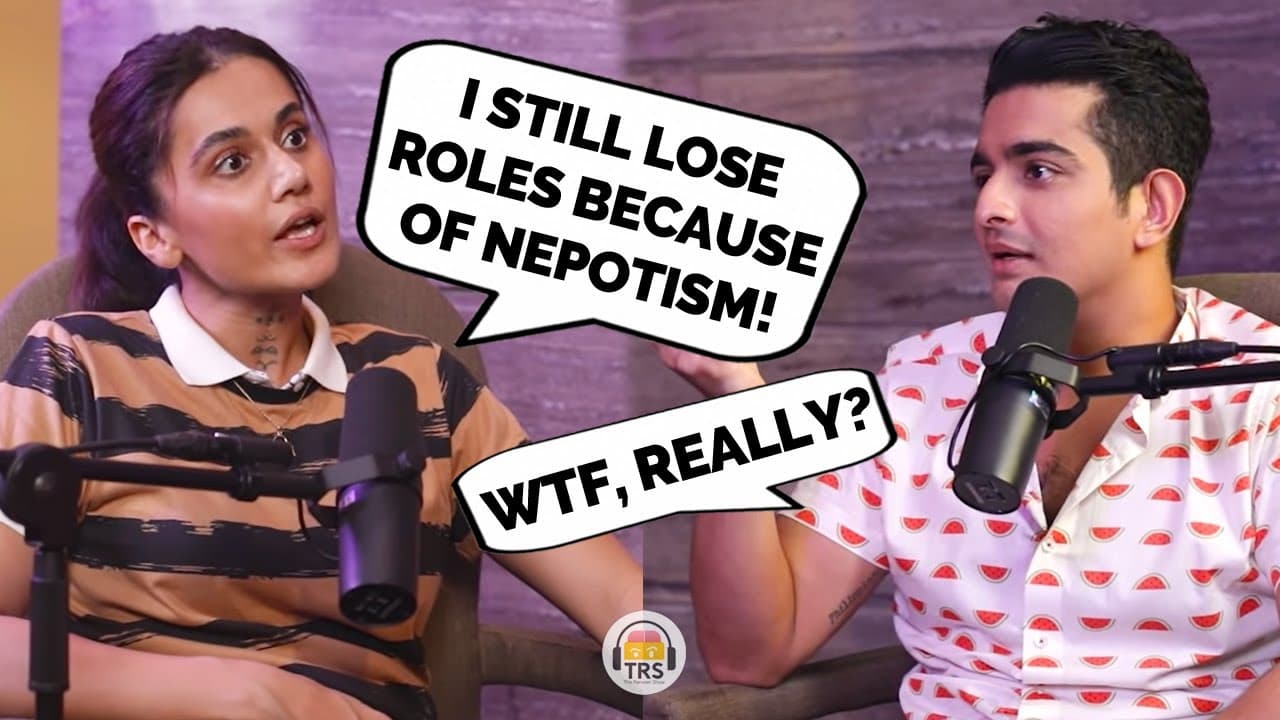
The Dark Side Of Bollywood Fame EXPOSED! ft. Taapsee Pannu | TRS Clips 985
TL;DR
An actress discusses the duality of fame and the challenges of public scrutiny.
Transcript
you know i know that there was a phase in your career where people called you a bad luck charm for films and then there was even a phase where nepotism because of nepotism you lost a few roles you know the things you were like supposed to do you still do it never goes away no matter how big you are you become yeah one thing i found fascinating was ... Read More
Key Insights
- 🥺 Actors are often unfairly judged based on their personal lives, leading to unrealistic expectations and pressures.
- ❎ Navigating fame involves understanding the dual nature of public perception, both positive and negative.
- 🫥 The line between personal identity and public persona is increasingly blurred in the age of social media.
- 🧑🏭 Trolls often act out of their frustrations, reflecting their circumstances rather than targeting the individual they criticize.
- 🧑🏭 It is important for actors to retain aspects of normalcy in their lives beyond their careers.
- 🤗 Social media allows actors to communicate directly with their audience, but it also opens them up to significant scrutiny.
- 🔉 Behavior on social media is influenced greatly by digital algorithms that amplify certain narratives and criticisms.
Install to Summarize YouTube Videos and Get Transcripts
Explore YouTube Video Summarizer or Get YouTube Transcript Extractor
Questions & Answers
Q: What does the actress mean by the term "bad luck charm" in her career?
The actress refers to a phase in her career during which her films underperformed financially, leading to a label as a "bad luck charm." This perception affected her opportunities and roles, illustrating how public opinion can unjustly impact an actor's career trajectory despite their individual talents.
Q: How does the actress differentiate between types of online trolls?
She explains that there are essentially two types of trolls: those who are paid to spread negativity, often as part of a propaganda effort, and those who express their frustrations due to personal issues. Both types illustrate different motivations behind online hate, suggesting that individuals should not take the negativity personally.
Q: What are the challenges actors face in maintaining their identities outside of their roles?
The actress reveals that actors are often placed on pedestals, expected to constantly embody perfection and positivity, which not only distorts reality but also prevents them from being seen as relatable human beings. She emphasizes the importance of acknowledging their vulnerabilities and allowing them the space to express genuine emotions.
Q: Why does the actress believe it’s important for celebrities to engage on platforms like Twitter?
She believes that speaking out on social media allows actors to share their perspectives and experiences, serving as a counter to the narrative set by critics. However, the risks of backlash are high, and those in the public eye must be prepared for intense scrutiny as they navigate these platforms.
Q: How has the evolving dynamics of social media changed the way actors perceive their fame?
The actress notes that social media has intensified the nature of fame, where public figures face amplified criticism and a wave of hatred. She acknowledges that while fame comes with many perks, it also attracts negativity that can affect mental health, making it crucial for actors to find ways to cope and maintain balance.
Q: What insight does the actress share regarding the realities of online hate?
She emphasizes that much of the hate encountered on social media is manufactured or stems from individuals projecting their issues. By realizing this, she advocates for a healthier mindset that enables public figures to detach from harmful narratives and focus on real-life connections rather than virtual hostility.
Q: How does the actress approach criticism, particularly in light of her experiences?
The actress discusses developing a thicker skin to handle criticism, particularly from platforms like Twitter. She understands the difference between constructive feedback and malicious trolling, advocating for a healthy perspective that separates her identity from public opinion while valuing helpful critiques.
Q: What does the actress say about the influence of social media algorithms on public opinion?
She warns that algorithms can shape individuals' perceptions by exposing them only to content that aligns with their beliefs, potentially creating an echo chamber. This can foster hatred and prejudice, making it essential for users to take regular breaks from social media to maintain a balanced viewpoint.
Summary & Key Takeaways
-
The actress shares her journey from being perceived as a "bad luck charm" to dealing with the pressures of nepotism and public scrutiny in the film industry.
-
She expresses her love for performing while discussing the unrealistic expectations placed on actors, emphasizing the need for them to be seen as human and make mistakes.
-
The conversation highlights the impact of social media and online trolling on public figures, underlining the importance of separating personal lives from criticism and maintaining perspective on virtual hate.
Read in Other Languages (beta)
Share This Summary 📚
Summarize YouTube Videos and Get Video Transcripts with 1-Click
Try YouTube Summary with ChatGPT & Claude or YouTube Transcript Generator
Explore More Summaries from TRS Clips 📚

Summarize YouTube Videos and Get Video Transcripts with 1-Click
Try YouTube Summary with ChatGPT & Claude or YouTube Transcript Generator