What Are the Key Components of a Rocket and How Do They Work?
TL;DR
A rocket is propelled into space by overcoming gravity through four main systems: structural, propulsion, payload, and guidance. These systems work together, with the propulsion system generating thrust. Staging is employed to reduce weight and improve efficiency during ascent, allowing rockets to reach orbit and beyond.
Transcript
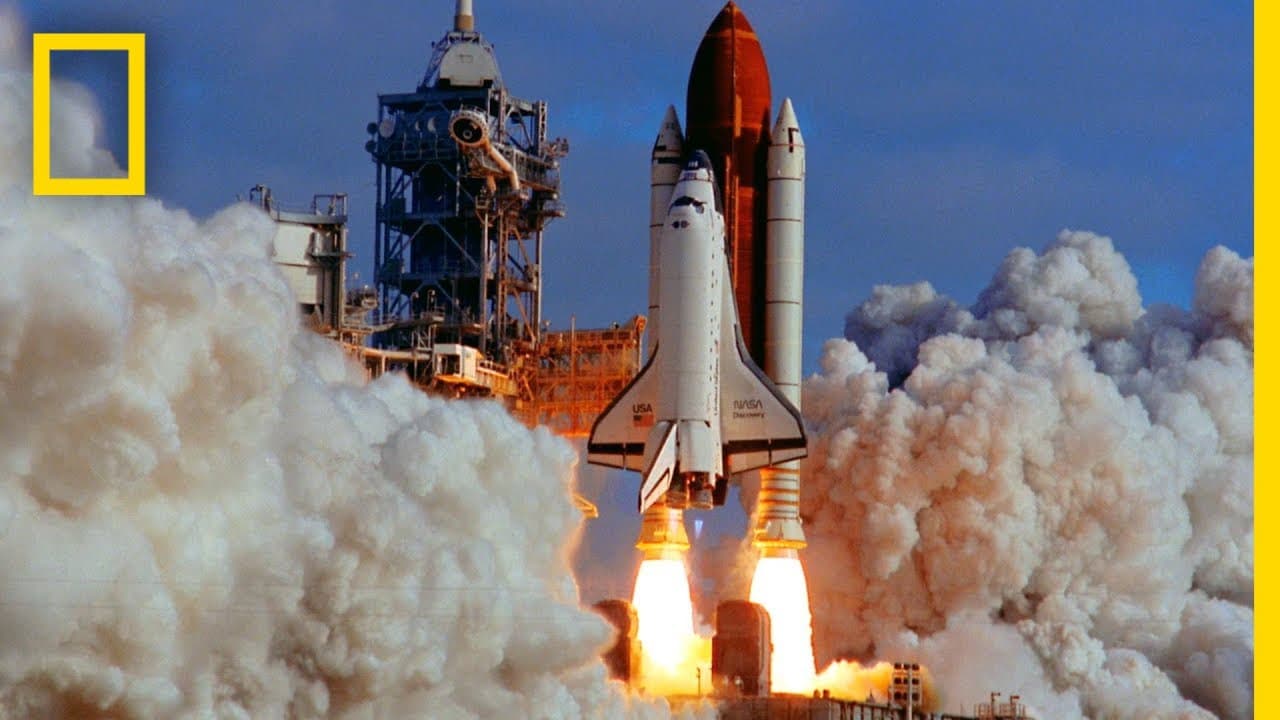
- [Narrator] The ground begins to tremble. - [Announcer] Three. - [Narrator] Massive engines roar to life. - [Announcer] Two. - [Narrator] Billowing clouds of exhaust. - [Announcer] One. - [Narrator] And then a blinding pillar of fire. - [Announcer] Liftoff. We have a liftoff. - [Narrator] A mighty voyager leaves the Earth behind to explore the vas... Read More
Key Insights
- 🚀 Rockets require coordination between their structural, propulsion, payload, and guidance systems to launch into space.
- 🚀 Staging is a technique used to enhance efficiency and reduce weight during rocket launches.
- 🚀 Rockets have a long history dating back to the 13th century and evolved from weapons to launch vehicles for space exploration.
- 🚀 Scientific advancements and technological improvements have been crucial in the development of rockets.
- 👾 Rockets have enabled significant milestones in space exploration, such as the Apollo missions to the moon.
- 👨🚀 The future of rocketry is promising, with advancements opening up possibilities for launching astronauts farther into space.
- 🚀 Gravity is the primary force that rockets must overcome during launch.
Install to Summarize YouTube Videos and Get Transcripts
Explore YouTube Video Summarizer or Get YouTube Transcript Extractor
Questions & Answers
Q: How do rockets overcome the force of gravity to launch into space?
Rockets generate a massive amount of thrust through their propulsion system, which burns fuel to produce exhaust gases that escape through the engine. Once the thrust surpasses the rocket's weight, it lifts off into the air.
Q: What is staging and why is it important in rocket launches?
Staging is a technique used to increase efficiency and reduce dead weight during space-bound launches. A large rocket is broken off into smaller rockets that fall away at different stages of the launch, allowing the remaining rocket to continue its ascent.
Q: How does a rocket's guidance system contribute to its successful launch?
The guidance system, consisting of radars and computers, provides stability for the rocket and controls its maneuvers in flight. It helps maintain balance and steers the rocket to keep its trajectory on track.
Q: How did rockets evolve throughout history to become launch vehicles for space exploration?
Rockets were first used as fire arrows in the 13th century for warfare. Scientific advancements by scientists like Isaac Newton led to their transformation into powerful weapons in the 18th century. In the 20th century, rocket science and aeronautics advancements paved the way for the modern space age, with the development of launch vehicle systems like the Atlas, Titan, and Saturn rockets.
Summary & Key Takeaways
-
Rockets are propelled by engines that produce thrust and are made up of four major systems: structural, propulsion, payload, and guidance.
-
Staging, the technique of breaking off a large rocket into smaller ones, is used to reduce weight and increase efficiency during space-bound launches.
-
The history of rockets dates back to the 13th century and has evolved through scientific advancements to become powerful weapons and launch vehicles for space exploration.
Read in Other Languages (beta)
Share This Summary 📚
Summarize YouTube Videos and Get Video Transcripts with 1-Click
Try YouTube Summary with ChatGPT & Claude or YouTube Transcript Generator
Explore More Summaries from National Geographic 📚




Summarize YouTube Videos and Get Video Transcripts with 1-Click
Try YouTube Summary with ChatGPT & Claude or YouTube Transcript Generator