A life-saving invention that prevents human stampedes | Nilay Kulkarni
TL;DR
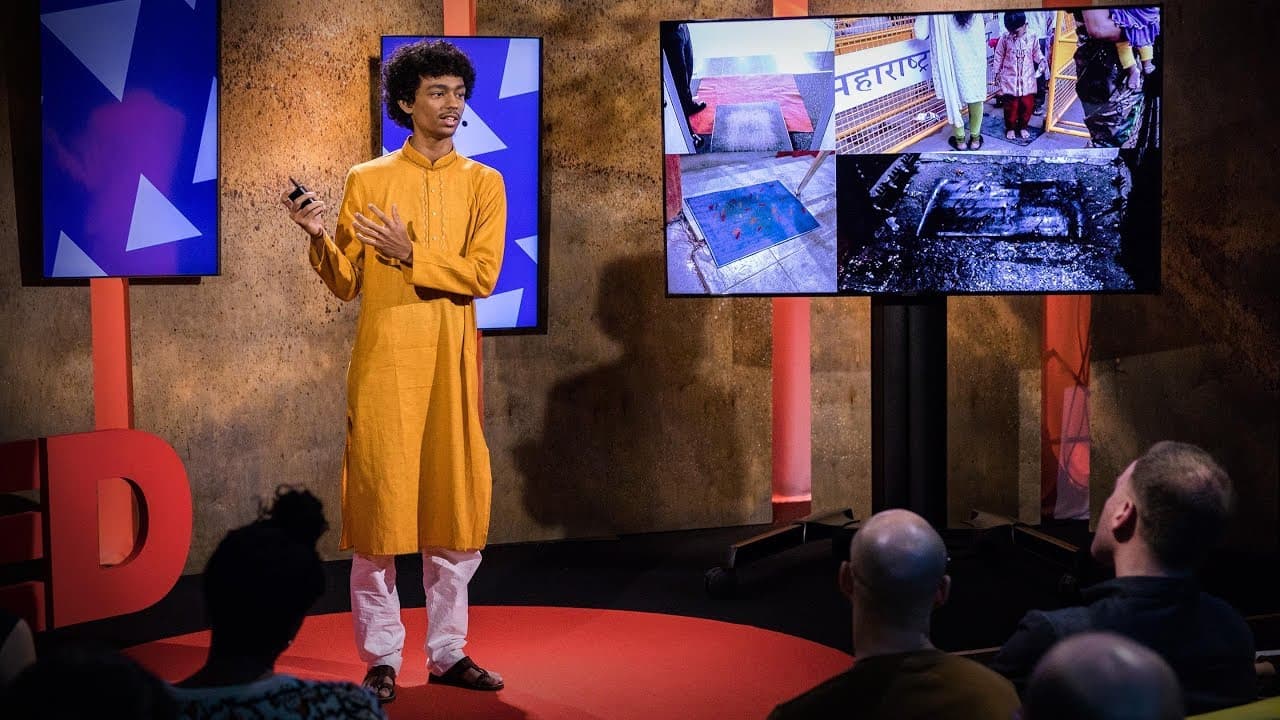
This content tells the story of a young innovator who developed a system to prevent stampedes at religious gatherings in India.
Transcript
I was only nine when my grandfather first described to me the horrors he witnessed six years earlier when human stampedes killed 39 people in our hometown of Nashik, India. It was during the 2003 Nashik Kumbh Mela, one of the world's largest religious gatherings. Every 12 years, over 30 million Hindu worshippers descend upon our city -- which is bu... Read More
Key Insights
- 🌍 Over 30 million Hindu worshippers descend upon Nashik, India every 12 years for the Kumbh Mela, resulting in a high-density crowd and a potential for stampedes.
- 🔁 Between 2001 and 2014, over 2,400 lives were lost in stampedes at religious gatherings in India.
- ⚙️ Existing technologies such as radio-frequency tokens and CCTV cameras were considered but impractical or inadequate for managing crowd flow.
- 🌐 "Ashioto," a portable mat with pressure sensors, was created to count and track the number of people walking on it, providing real-time data for crowd management.
- 💡 The Ashioto system successfully prevented stampedes and ensured the safe flow of people at the 2015 Nashik Kumbh Mela.
- 🔄 The system's design makes it adaptable to various events and gatherings worldwide.
- ⛑️ The code used for the Ashioto system will be made publicly available for anyone to use, free of charge, to enhance crowd safety.
- 🌎 The speaker's new dream is to deploy the Ashioto system globally to prevent loss of life and ensure the safety of people in events like concerts, sports events, and religious gatherings.
Install to Summarize YouTube Videos and Get Transcripts
Explore YouTube Video Summarizer or Get YouTube Transcript Extractor
Questions & Answers
Q: What is the Nashik Kumbh Mela?
The Nashik Kumbh Mela is a religious gathering held every 12 years in Nashik, India. It attracts over 30 million Hindu worshippers who come to bathe in the river Godavari and wash away their sins. The event takes place over 45 days and the city, built for 1.5 million people, becomes densely crowded.
Q: How many lives have been lost in stampedes at Kumbh Mela events between 2001 and 2014?
Between 2001 and 2014, over 2,400 lives were lost due to stampedes at Kumbh Mela events in India. These tragedies were a major concern and led to the determination of finding a solution to prevent stampedes and reduce casualties.
Q: How did the speaker attempt to solve the stampede problem at the Nashik Kumbh Mela?
The speaker joined an innovation workshop called the Kumbhathon organized by MIT Media Lab in 2014. They aimed to solve the challenges faced at the Kumbh Mela. The speaker and their team focused on developing a system to regulate the flow of people by collecting real-time data on the number of people, their location, and the rate of flow.
Q: What technology did the speaker and their team develop to tackle the stampede problem?
The speaker and their team developed a technology called Ashioto, meaning "footstep" in Japanese. It consists of a portable mat with pressure sensors that can count the number of people walking on it. The data from the sensors is sent to advanced data analysis software. Design interventions were implemented to overcome possible errors and ensure accurate data collection.
Summary & Key Takeaways
-
The Kumbh Mela is a religious gathering in India that attracts over 30 million people every 12 years, causing high-density crowds and a risk of stampedes.
-
A system called Ashioto was developed to regulate the flow of people at the Kumbh Mela by counting the number of people and monitoring crowd movement in real time.
-
Ashioto successfully reduced the occurrence of stampedes and marked the first Kumbh Mela without any casualties in recorded history. The code used for Ashioto will be made publicly available for others to use.
Read in Other Languages (beta)
Share This Summary 📚
Summarize YouTube Videos and Get Video Transcripts with 1-Click
Try YouTube Summary with ChatGPT & Claude or YouTube Transcript Generator
Explore More Summaries from TED 📚





Summarize YouTube Videos and Get Video Transcripts with 1-Click
Try YouTube Summary with ChatGPT & Claude or YouTube Transcript Generator