What is the Russian Question Today?
TL;DR
The Russian question involves the division of ethnic Russians and the loss of statehood, highlighting a historical tragedy. In contrast, the Ukrainian question now centers on maintaining Ukraine’s independence and sovereignty in the face of aggressive narratives that seek to undermine its identity.
Transcript
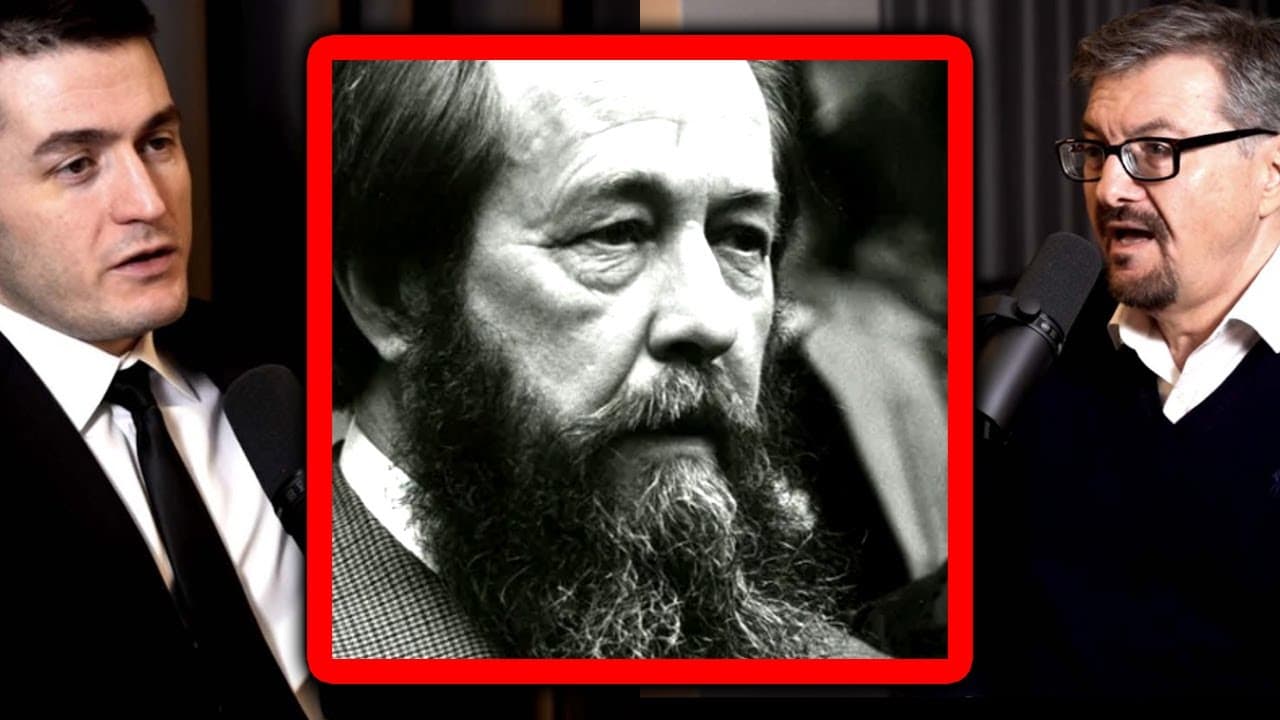
you wrote in your book titled uh the Frontline essays on Ukraine's past and present about the Russian question uh I guess articulated by soier niton first in 1994 so jitsen of course is the author of gag archipelago he's half Ukrainian what is the Russian question s clearly identifies himself as Russian and his opposition to the Communist Regime wa... Read More
Key Insights
- 🥺 The Russian question, as defined by Solzhenitsyn, encompasses the division of ethnic Russians and the loss of statehood, leading to tragic consequences in the 20th century.
- 🥺 Solzhenitsyn's original plan of creating a nation-state for Russians, Ukrainians, and Belarusians was not realized, leading to alternative strategies like the annexation of Crimea and Donbas.
- ⁉️ The Ukrainian question focuses on maintaining Ukraine's existence as an independent and sovereign state amid attempts to undermine its sovereignty.
- 🫱 The ongoing war in Ukraine has the potential to shape the country's future, but a shift towards authoritarianism or far-right influence would contradict the historical tendencies and societal values of Ukraine.
- 🚨 Ukraine has emerged as a pluralistic state with democratic elements in the last few decades, making it unlikely for a leader to deviate from this path.
- ⁉️ Understanding the Russian and Ukrainian questions requires examining historical, political, and cultural contexts.
- 🫱 The Russian-Ukrainian conflict represents a continuation of the division formulated by Solzhenitsyn, highlighting the intellectual and historical underpinnings of the ongoing war.
Install to Summarize YouTube Videos and Get Transcripts
Explore YouTube Video Summarizer or Get YouTube Transcript Extractor
Questions & Answers
Q: What is the Russian question and how did Solzhenitsyn address it?
The Russian question, according to Solzhenitsyn, is the division of ethnic Russians and the loss of statehood. His argument was that communism was detrimental to Russia, and he proposed creating a nation-state for Russians, Ukrainians, and Belarusians. However, his plan was not realized, leading to his Plan B of taking over Donbas, Crimea, and Southern Ukraine.
Q: What is the Ukrainian question in the current context?
The Ukrainian question now revolves around the maintenance of Ukraine as an independent and sovereign state. Attempts to portray Ukrainians as Russians and undermine its sovereignty pose a threat to its existence.
Q: Could the ongoing war in Ukraine lead to a shift towards authoritarianism or far-right influence?
While the prolonged war could potentially lead to such a direction, it goes against the historical tendencies of Ukraine. The country has emerged as a pluralistic state with democratic elements in the last 30 years. Radical nationalism remains a minority faith, and a move towards authoritarianism would contradict the larger part of Ukrainian history.
Q: How likely is it that the next Ukrainian leader would steer the country in an authoritarian or far-right direction?
While the possibility exists due to the influence of the war, it is unlikely. The historical realities and societal makeup of Ukraine, which values pluralism and democracy, make it improbable for a leader to deviate from these principles.
Summary & Key Takeaways
-
Aleksandr Solzhenitsyn, a half-Ukrainian and half-Russian author, defined the Russian question as the tragedy of dividing ethnic Russians between different states.
-
Solzhenitsyn's original plan was to create a nation-state comprising Russians, Ukrainians, and Belarusians, but it was not implemented in the 1990s.
-
The Ukrainian question pertains to maintaining Ukraine's existence as an independent state amid attempts to portray Ukrainians as the same as Russians and undermine its sovereignty.
Read in Other Languages (beta)
Share This Summary 📚
Summarize YouTube Videos and Get Video Transcripts with 1-Click
Try YouTube Summary with ChatGPT & Claude or YouTube Transcript Generator
Explore More Summaries from Lex Clips 📚
Summarize YouTube Videos and Get Video Transcripts with 1-Click
Try YouTube Summary with ChatGPT & Claude or YouTube Transcript Generator