Why Are Tensions Rising on US College Campuses?
TL;DR
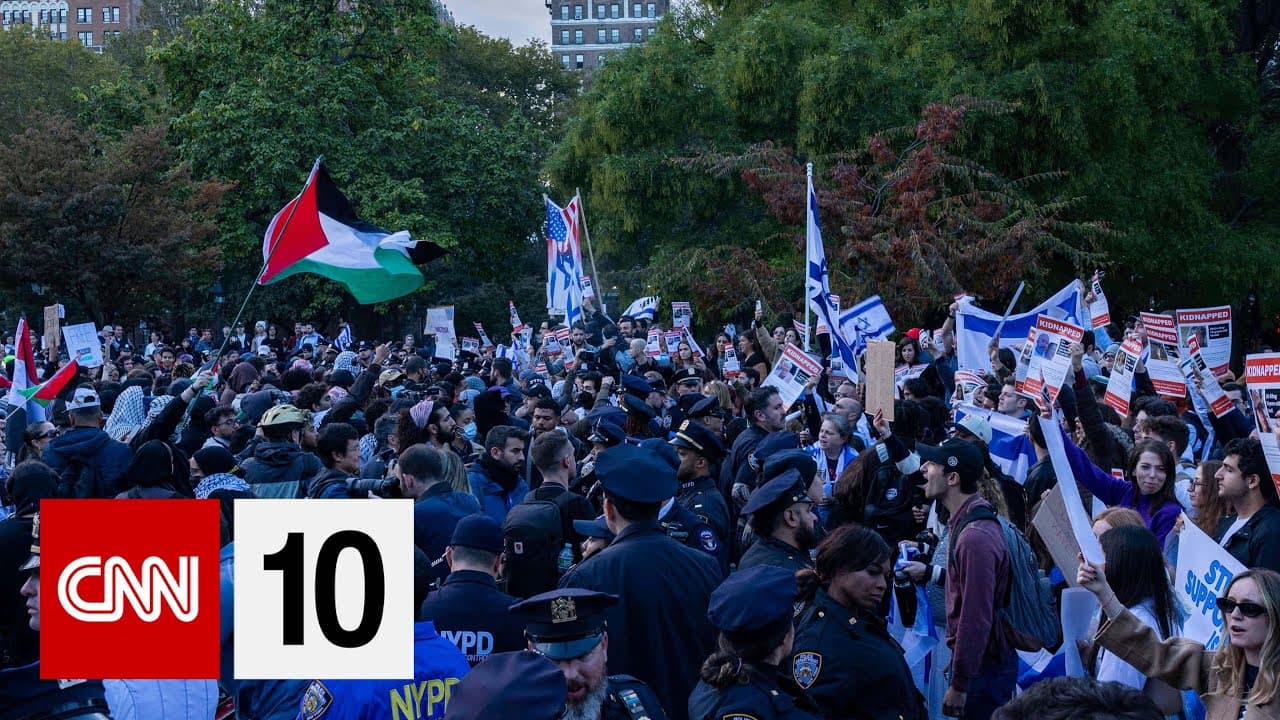
US colleges are trying to protect peaceful expression while preventing threats and violence as students respond to the Israel-Hamas war. The episode also explains that the November clock change provides an extra hour of sleep and explores Loch Ness, where sonar readings, DNA evidence, and decades of searches have not produced definitive proof of a monster.
Transcript
[Applause] what's up sunshine it's time to shine welcome to CNN 10 it's Friday rise up I'm your host Coy wire let's get dominating this day with the best 10 minutes in news we've got everything covered this week right from worker strikes to Royal visits in Kenya to AI but we start today with news regarding the ongoing war between Israel and Hamas l... Read More
Key Insights
- US college campuses are hosting rallies, vigils, and protests representing pro-Israeli, pro-Palestinian, and broadly anti-violence positions as students respond to the Israel-Hamas war and its reported death tolls in Israel and Gaza.
- Most campus demonstrations are peaceful, but competing protests have erupted into fighting at the University of North Carolina at Chapel Hill, Indiana University, and Tulane University, while Columbia University temporarily closed its campus on Thursday.
- The First Amendment protects freedom of speech, freedom of the press, and peaceful assembly, but Supreme Court decisions have established that those protections have limits and do not extend to speech that incites violence.
- Cornell University closed on Friday to ease recent stress after a student was arrested and charged in federal court for allegedly posting online threats to harm Jewish students, illustrating the distinction between protected expression and threatening conduct.
- Antisemitism and Islamophobia are both growing concerns described by students and advocacy organizations, with Jewish and Muslim people reporting harassment, hatred, or attacks amid heightened public tensions surrounding the war.
- College administrators are balancing campus safety, student support, and expressive rights, but their choices remain contentious because statements about the war have triggered further protests while institutional silence has also attracted criticism.
- Daylight saving time ends on the first Sunday in November, when clocks move back one hour and people effectively gain an hour of sleep, while the first Sunday in March brings the opposite one-hour change.
- Loch Ness remains mysterious despite extensive investigation, including bottom mapping, sonar observations, a 2018–2019 DNA survey that found large amounts of eel DNA, and the largest organized creature hunt in 50 years during August.
Install to Summarize YouTube Videos and Get Transcripts
Explore YouTube Video Summarizer or Get YouTube Transcript Extractor
Questions & Answers
Q: Why are tensions rising on US college campuses?
Tensions are rising because students are expressing sharply different responses to the Israel-Hamas war through rallies, vigils, and protests. Some gatherings support Israel, others support Palestinians, and many participants condemn violence generally. Most demonstrations have remained peaceful, but competing protests have produced fighting at several colleges, while reported antisemitic and Islamophobic harassment has increased fear and pressure on campus administrators.
Q: How are colleges responding to Israel-Hamas war protests?
Colleges are trying to ease tensions while supporting students, protecting expressive rights, and maintaining campus safety. Some institutions have issued statements about the war, but certain statements have prompted additional protests. Other universities have avoided taking a position and have also faced criticism. Columbia University temporarily closed its campus, while Cornell University closed on Friday to reduce stress following alleged threats against Jewish students.
Q: Does the First Amendment protect every form of campus speech?
The First Amendment protects freedom of speech, freedom of the press, and the right to assemble peacefully. However, the episode notes that the Supreme Court has established limits on those protections, including that they do not cover incitement of violence. This distinction matters when universities assess whether student expression remains peaceful advocacy or becomes threatening behavior that requires a safety or legal response.
Q: What happened after threats against Jewish students at Cornell University?
A Cornell University student was arrested after allegedly posting online threats to harm Jewish students. The student was charged in federal court. Cornell then closed on Friday, telling CNN that the closure was intended to ease the stress experienced during the preceding weeks. The incident occurred amid broader reports from Jewish students about increasing antisemitic actions and hatred on college campuses.
Q: How are antisemitism and Islamophobia affecting students?
Jewish students told CNN that they were seeing increased antisemitic actions and hatred, and a March survey found that more than half of Jewish student respondents had witnessed or experienced an antisemitic incident. At the same time, the Council on American-Islamic Relations and the Anti-Defamation League reported increasing harassment and attacks targeting Muslim people across the country, described as Islamophobic conduct.
Q: Do people gain or lose sleep when clocks fall back?
People effectively gain one hour of sleep when clocks move back on the first Sunday in November. Someone who normally wakes at 6:00 a.m. will be waking at what previously would have been 7:00 a.m. The reverse occurs on the first Sunday in March, when clocks move forward by one hour for the start of daylight saving time.
Q: Why do some people want to stop daylight saving time changes?
Daylight saving time has been used for more than a century and was enacted to make greater use of the day's light. However, a Monmouth University poll found that most Americans want to stop recognizing it. Some doctors say changing the clocks can be unhealthy and may cause headaches by affecting the hypothalamus, which manages the body's circadian rhythm and responses to light and darkness.
Q: What evidence has been found for the Loch Ness Monster?
Researchers and guides have not produced definitive proof of a Loch Ness Monster. A sonar mapping project appeared to find a monster-shaped object, but it was a prop built for a movie. The Deep Scan skipper reported seeing a large red dot on the echo sounder three times in ten years. A 2018–2019 DNA survey found large amounts of eel DNA, suggesting a more terrestrial explanation.
Summary & Key Takeaways
-
Student rallies, vigils, and protests about the Israel-Hamas war have increased tensions across US college campuses. Although many students condemn violence and most gatherings remain peaceful, competing demonstrations have led to fighting at several universities. Administrators must support free expression while responding to threats, harassment, safety concerns, and criticism of their public statements.
-
The first Sunday in November marks the end of daylight saving time, when clocks move back by one hour and people effectively gain an hour of sleep. The practice was introduced to make greater use of daylight, but a Monmouth University poll found that most Americans want to stop observing the clock changes.
-
Loch Ness continues to attract researchers, monster hunters, and tourists despite the absence of definitive evidence for Nessie. The lake is 23 miles long, averages one mile wide, and reaches a maximum depth of 227 meters. Sonar mapping, a DNA survey, and a major creature hunt have kept the enduring mystery alive.
Read in Other Languages (beta)
Share This Summary 📚
Summarize YouTube Videos and Get Video Transcripts with 1-Click
Try YouTube Summary with ChatGPT & Claude or YouTube Transcript Generator
Explore More Summaries from CNN 10 📚

Summarize YouTube Videos and Get Video Transcripts with 1-Click
Try YouTube Summary with ChatGPT & Claude or YouTube Transcript Generator