Did Stuart and Cliffe Knechtle Lose the Debate on Eucharist?
TL;DR
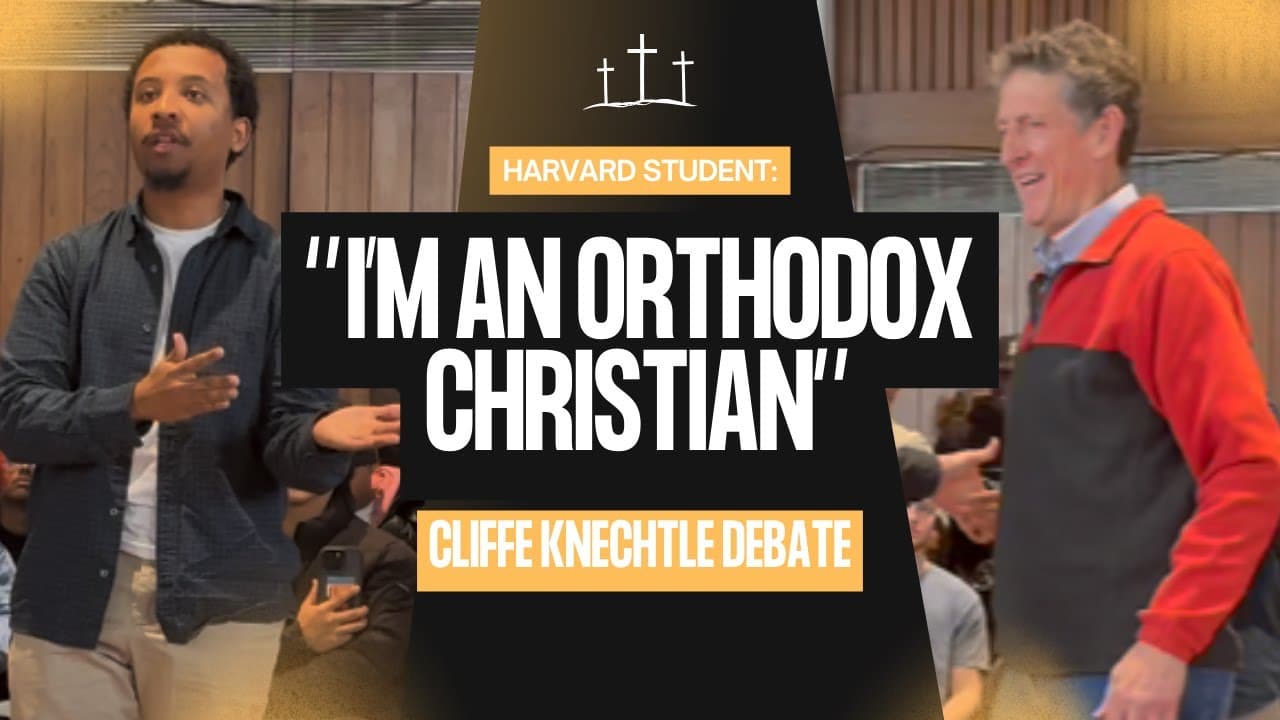
In this debate, the Orthodox student argues that baptism and the Eucharist are not merely symbolic but efficacious for salvation, based on historical consensus from early Christian writings. The discussion highlights a fundamental divide in views of salvation, with the Orthodox perspective seeing it as a process involving cooperation with God's grace, contrasting the Protestant view of salvation as a one-time event.
Transcript
Read and summarize the transcript of this video on Glasp Reader (beta).
Key Insights
- The debate centers on the differing views of baptism and Eucharist between Orthodox Christianity and Protestantism, with the Orthodox view emphasizing their efficacious nature for salvation.
- The Orthodox student argues that early Christian writings affirm the real presence of Christ in the Eucharist, contrasting with modern symbolic interpretations held by some Protestants.
- The nature of salvation is a major point of contention, with the Orthodox perspective viewing it as a synergistic process involving cooperation with God's grace.
- Stuart and Cliffe Knechtle represent a Protestant view of salvation as a one-time event, highlighting a key theological divide between the two perspectives.
- The Orthodox student emphasizes that early Christian consensus, rather than individual interpretation, should guide theological understanding.
- Historical records from the 1st to 3rd centuries are cited to support the Orthodox view of the sacraments as more than symbolic, challenging modern interpretations.
- The debate touches on the authority of the Church versus private interpretation, with the Orthodox student advocating for the former.
- The discussion includes references to St. Paul's letters and early Church Fathers, highlighting the historical roots of the Orthodox position.
- More videos with Cliffe Knechtle:
Install to Summarize YouTube Videos and Get Transcripts
Explore YouTube Video Summarizer or Get YouTube Transcript Extractor
Questions & Answers
Q: What is the main focus of the debate?
The main focus of the debate is the differing interpretations of baptism and the Eucharist between Orthodox Christianity and Protestantism. The Orthodox student argues for their real presence and efficacy for salvation, while the Protestant view represented by Stuart and Cliffe sees them as symbolic and part of a one-time salvation event.
Q: How does the Orthodox student support their argument?
The Orthodox student supports their argument by citing historical records and writings from the 1st to 3rd centuries, which they claim uniformly affirm the real presence of Christ in the Eucharist. They argue that this historical consensus should guide theological understanding, challenging modern symbolic interpretations.
Q: What is the Orthodox perspective on salvation?
The Orthodox perspective on salvation, as presented by the student, is that it is a synergistic process involving cooperation with God's grace. This view sees salvation as an ongoing journey rather than a one-time event, contrasting with the Protestant view of a singular moment of salvation.
Q: What is Stuart and Cliffe's position on the Eucharist?
Stuart and Cliffe hold a Protestant view of the Eucharist as symbolic, representing an outward profession rather than an efficacious sacrament for salvation. Their position contrasts with the Orthodox view of the real presence of Christ in the Eucharist, which is argued to have historical backing from early Christian writings.
Q: How does the debate address the authority of the Church?
The debate addresses the authority of the Church by contrasting the Orthodox student's emphasis on early Christian consensus and apostolic tradition with Stuart and Cliffe's reliance on personal interpretation of scripture. The Orthodox student argues for the authority of the Church as the body of Christ, guided by historical councils and writings.
Q: What historical references are made in the debate?
The debate references historical writings from the 1st to 3rd centuries, including those of St. Paul and early Church Fathers such as Ignatius of Antioch, Clement of Rome, and Justin Martyr. These references are used to support the Orthodox view of the real presence in the Eucharist and the process of salvation.
Q: How does the debate highlight theological differences?
The debate highlights theological differences by contrasting the Orthodox view of sacraments as efficacious and salvation as a process with the Protestant view of sacraments as symbolic and salvation as a one-time event. These differences underscore the broader divide between Orthodox and Protestant interpretations of Christianity.
Q: What is the significance of early Church writings in the debate?
Early Church writings are significant in the debate as they are used by the Orthodox student to argue for the real presence of Christ in the Eucharist and the process of salvation. These writings are presented as historical evidence that challenges modern Protestant interpretations and emphasizes the importance of apostolic tradition.
Summary & Key Takeaways
-
An Orthodox Christian student at Harvard challenges Stuart and Cliffe Knechtle on their Protestant views of baptism and the Eucharist, arguing for their real presence and efficacy for salvation. The debate delves into early Church history and the authority of apostolic tradition versus personal interpretation.
-
The Orthodox student emphasizes the importance of historical consensus from the 1st to 3rd centuries, asserting that early Christians viewed the Eucharist as the real presence of Christ, countering the symbolic interpretation held by some modern Protestants.
-
A key point of the debate is the nature of salvation, with the Orthodox perspective seeing it as a process involving cooperation with God's grace, while the Protestant view represented by Stuart and Cliffe sees it as a one-time event, highlighting a fundamental theological divide.
Read in Other Languages (beta)
Share This Summary 📚
Summarize YouTube Videos and Get Video Transcripts with 1-Click
Try YouTube Summary with ChatGPT & Claude or YouTube Transcript Generator