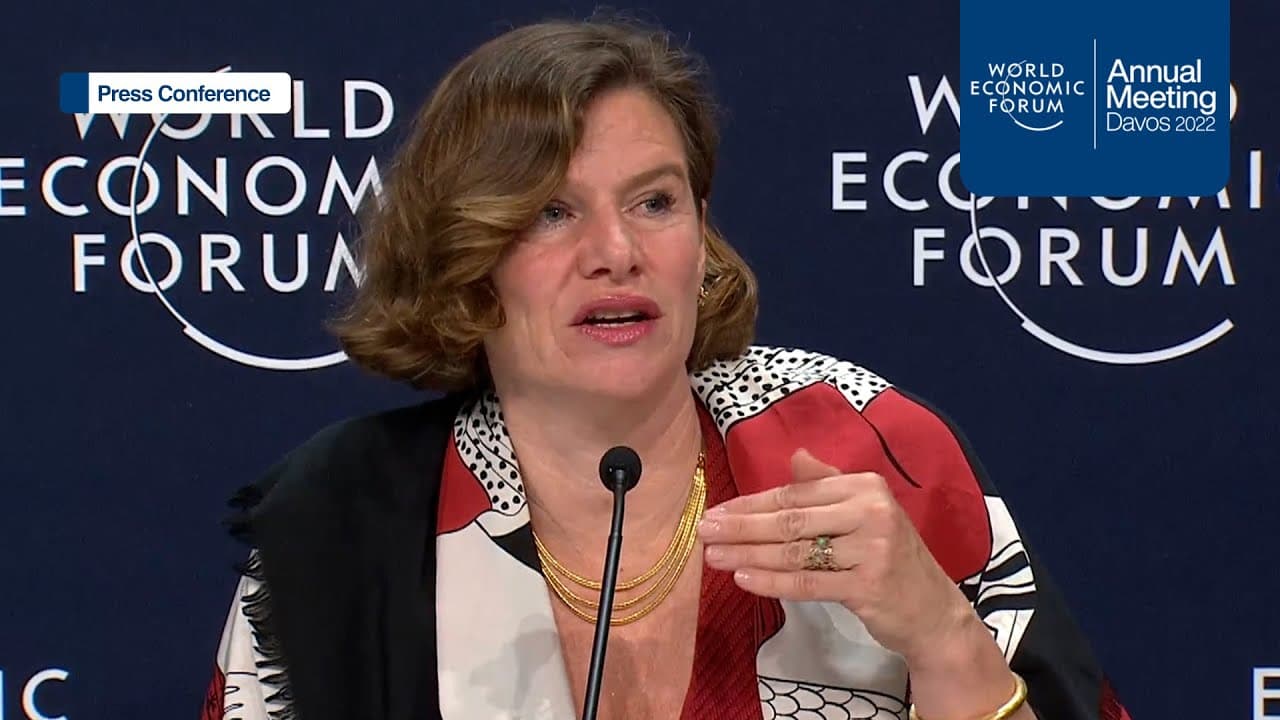
Press Conference: The New Economics of Water - Launch of Global Commission | Davos | #WEF22
TL;DR
The global commission on the economics of water highlights the urgent need to address water scarcity and manage water resources as a global commons to ensure sustainability and safeguard human well-being, economic development, and the environment.
Transcript
welcome everyone in the room and online to the new economics of water press conference at the world economic forum in davos safe clean reliable water resources plays a critical role to safeguard the health and well-being of people support the growth of industries economies and ensuring a plentiful agricultural food production and preserving our nat... Read More
Key Insights
- 🌍 Water plays a critical role in safeguarding health, supporting industries and economies, ensuring food production, and preserving the environment.
- 🔄 The complex issues of climate, energy, food, land use, health, and water are interconnected and must be addressed together.
- 💧 The global hydrological cycle is being impacted by human activity, leading to changes in rainfall patterns and water scarcity, which in turn affect food security and lead to conflicts.
- 🌧️ The management of land, including deforestation, affects the global hydrological cycle and has implications for rainfall, water availability, and water scarcity in different regions of the world.
- 💦 Freshwater should be recognized as a common good for all of humanity and managed as a broad systems approach, considering the economics, governance, and societal implications of water management.
- 💰 The economics of water should go beyond monetary values and include the recognition of water as a common good that requires collaborative, cross-sectoral approaches and collaboration between public and private sectors.
- 🚰 Access to clean water and safe sanitation is essential for human well-being and development, and it requires global action, investments, and technological solutions.
- 🌎 The global commission on the economics of water aims to mobilize action, changes in governance and finance, and the scaling up of technologies to ensure access to clean water and sanitation for all and to sustain the planet.
Install to Summarize YouTube Videos and Get Transcripts
Explore YouTube Video Summarizer or Get YouTube Transcript Extractor
Questions & Answers
Q: Why is water management considered a global commons issue?
Water management is a global commons issue because changes in the global hydrological cycle, influenced by climate change and ecosystem degradation, impact water availability and quality worldwide. The actions and policies of one region can have far-reaching consequences, making cooperative and holistic water management essential.
Q: What are some examples of solutions to address water scarcity and mismanagement?
Solutions include adopting drought-proof agricultural systems, such as soil management practices that improve water holding capacity and genetic improvements of crops with deep roots. Additionally, investment in water-efficient technologies like drip irrigation and collaborative governance models that involve public-private partnerships are key strategies.
Q: How can the economics of water be redefined to drive sustainable water management?
The economics of water should move beyond viewing water as a public good or a corrective measure, focusing on the value of water as a common good. This requires recognizing the role of government as a market co-creator and embracing collaborative financing models to ensure the availability and sustainable management of water resources.
Q: Why is it important to prioritize water management alongside climate change and other global challenges?
Water management is crucial for addressing climate change, food security, energy security, and human well-being. Failure to manage water resources effectively can have severe consequences, including droughts, floods, conflicts, and economic losses. Prioritizing water management ensures comprehensive and sustainable solutions to these interrelated challenges.
Summary & Key Takeaways
-
Water scarcity and mismanagement pose a significant threat to human well-being and economic development worldwide.
-
The hydrological cycle and climate change are interconnected, making water management crucial for mitigating the climate crisis and ensuring food security.
-
The global commission aims to advance new science, economics, governance structures, and financing approaches to address the challenges of water scarcity and promote equitable access to clean water.
Read in Other Languages (beta)
Share This Summary 📚
Summarize YouTube Videos and Get Video Transcripts with 1-Click
Try YouTube Summary with ChatGPT & Claude or YouTube Transcript Generator
Explore More Summaries from World Economic Forum 📚
Summarize YouTube Videos and Get Video Transcripts with 1-Click
Try YouTube Summary with ChatGPT & Claude or YouTube Transcript Generator