Why Is Fishing With Dynamite Still Happening Despite Its Harm?
TL;DR
Fishing with dynamite persists despite its severe ecological impacts, including the destruction of coral reef structures and a decline in fish populations. Blasting kills both target adult fish and non-target juveniles, leading to a loss of biodiversity and reduced fisheries productivity. Without intervention, this harmful practice will continue to degrade marine environments and threaten local food security.
Transcript
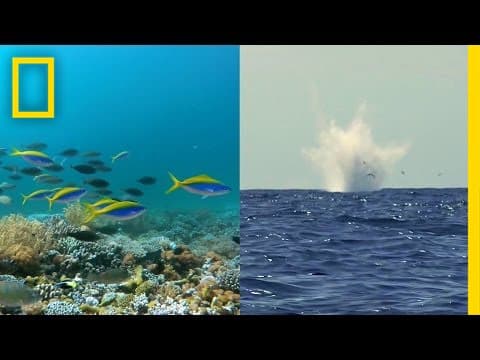
you can come out here on on a fine morning and you know there'll just be ramp and blasting in in areas where there maybe tuna feeds or if there aren't tuna feeds then they may Target the reefs I would say probably for the last 5 years it's at least as bad or or worse than it's ever been down there when an explosion occurs there's a a big pressure w... Read More
Key Insights
- 🧑 Blasting in marine environments kills adult fish, small juveniles, and other creatures, causing a loss of biodiversity and reduced Fisheries productivity.
- 😋 Reefs' three-dimensional structure is essential for habitat, food sources, and coastline protection but is destroyed by blasting, resulting in rubble fields.
- 😋 The practice of blasting has been widespread for decades, leading to declining fish stocks, degraded coral reef habitats, and decreased availability of food for local communities.
- 😒 The continued use of explosives without intervention will lead to further decline in fish stocks, degradation of habitats, and an increasing security concern.
- 🛟 Blasting impacts the attractiveness of the marine environment for both marine life and local communities, reducing catches and economic opportunities.
Install to Summarize YouTube Videos and Get Transcripts
Explore YouTube Video Summarizer or Get YouTube Transcript Extractor
Questions & Answers
Q: How does blasting impact marine ecosystems?
Blasting kills not only targeted adult fish but also small juveniles and other creatures, leading to a loss of biodiversity and reduced Fisheries productivity. It also physically destroys the three-dimensional structure of reefs.
Q: What is the ecological importance of reefs?
Reefs provide habitat and space for fish eggs, juveniles, and act as feeding grounds. They also contribute to biodiversity, Fisheries productivity, and protect coastlines from wave buffering.
Q: What are the consequences of widespread blasting?
Widespread blasting has resulted in a decline in fish stocks, degradation of coral reef habitats, and a decrease in the availability of food for local communities. It also poses a security concern due to the easy availability of explosives.
Q: How does blasting impact the attractiveness of the marine environment?
Blasting makes the marine environment less attractive for both marine life and local communities that rely on fishing. It leads to a decline in fish catches and a loss of economic opportunities.
Summary & Key Takeaways
-
Blasting in marine environments kills not only the targeted adult fish but also small juveniles and other creatures, resulting in a loss of biodiversity and Fisheries productivity.
-
The three-dimensional structure of reefs, crucial for habitat and food sources, is physically destroyed by blasting, reducing them to rubble fields.
-
The widespread practice of blasting has led to a decline in fish catches, degradation of coral reef habitats, and poses a security concern.
Read in Other Languages (beta)
Share This Summary 📚
Summarize YouTube Videos and Get Video Transcripts with 1-Click
Try YouTube Summary with ChatGPT & Claude or YouTube Transcript Generator
Explore More Summaries from National Geographic 📚



Summarize YouTube Videos and Get Video Transcripts with 1-Click
Try YouTube Summary with ChatGPT & Claude or YouTube Transcript Generator