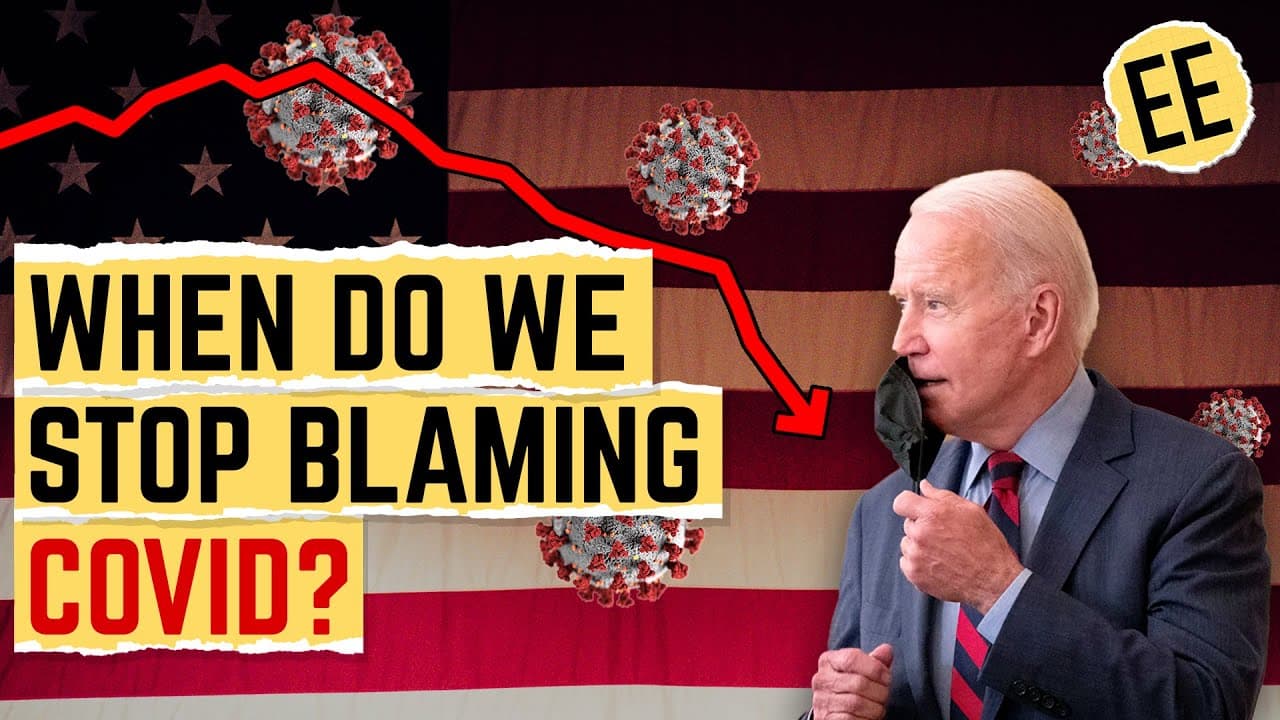
How Would US Economy Thrive Without COVID Impact?
TL;DR
Without COVID-19, the US economy might have avoided some of the immediate supply chain disruptions and inflationary pressures, but underlying issues like trade tensions and debt would still persist. The pandemic accelerated existing trends, such as remote work and the rise of 'zombie companies', while government stimulus mitigated demand-side downturns but didn't address supply-side challenges.
Transcript
- [Host] It's been three years now since the first case of Covid-19 was detected in China. Since then, it has changed the global economy in more ways than anybody could possibly imagine, from big headline issues like record government stimulus measures to small things that macro economists probably wouldn't even be able to measure, like the amount ... Read More
Key Insights
- COVID-19 accelerated existing economic trends like remote work and supply chain disruptions.
- Government stimulus measures were more aggressive during COVID-19 compared to the 2008 financial crisis.
- The pandemic highlighted the difference between demand-side and supply-side economic issues.
- Zombie companies, sustained by low interest rates, were a pre-existing issue exacerbated by COVID-19.
- US economic power is bolstered by its global currency dominance and technological leadership.
- The pandemic forced governments to apply lessons learned from the 2008 crisis, albeit on a different type of recession.
- Inflation was driven by increased demand and restricted supply during COVID-19.
- The US economy remains robust, accounting for 25% of global output, despite its challenges.
Install to Summarize YouTube Videos and Get Transcripts
Explore YouTube Video Summarizer or Get YouTube Transcript Extractor
Questions & Answers
Q: How did COVID-19 impact the US economy?
COVID-19 significantly disrupted the US economy by accelerating pre-existing trends like remote work and supply chain issues. It also led to aggressive government stimulus to counter demand-side downturns, although the pandemic primarily caused supply-side challenges, resulting in inflation as demand increased while supply was limited.
Q: What are zombie companies?
Zombie companies are businesses that are unable to cover their debt servicing costs from current profits over an extended period. They survive primarily due to low interest rates and easy access to credit. The COVID-19 pandemic exacerbated this issue, as government stimulus kept such firms afloat despite their declining viability.
Q: Why did inflation rise during the COVID-19 pandemic?
Inflation rose during the COVID-19 pandemic due to increased demand combined with restricted supply. Government stimulus measures increased consumer spending power, while supply chain disruptions and lockdowns limited the availability of goods and services, creating an imbalance that drove prices up.
Q: How did the US government respond to economic challenges during COVID-19?
The US government responded to the economic challenges posed by COVID-19 with aggressive stimulus measures, learning from the 2008 financial crisis. These measures aimed to support demand by providing financial assistance to households and businesses, although they were less effective in addressing supply-side disruptions.
Q: What role did government stimulus play during the pandemic?
Government stimulus during the pandemic played a critical role in supporting consumer demand and preventing a deeper economic downturn. By providing financial assistance to households and businesses, the government aimed to keep spending levels stable, although these measures did not fully address the supply-side challenges posed by the pandemic.
Q: How did COVID-19 accelerate existing economic trends?
COVID-19 accelerated existing economic trends such as the shift towards remote work, increased reliance on digital technologies, and the exposure of vulnerabilities in global supply chains. These trends were already underway but were significantly hastened by the need to adapt to pandemic-related restrictions and disruptions.
Q: What are the differences between demand-side and supply-side economic issues?
Demand-side economic issues occur when there is insufficient consumer demand to purchase goods and services, often addressed by increasing government spending or reducing taxes. Supply-side issues arise when there are disruptions in the production or delivery of goods and services, which are not easily mitigated by demand-side policies, as seen during the COVID-19 pandemic.
Q: How does the US maintain its economic dominance?
The US maintains its economic dominance through its global currency leadership, technological innovation, and significant share of global output. Its large, diverse economy and strong institutional frameworks support resilience and adaptability, allowing it to navigate challenges like the COVID-19 pandemic while continuing to exert influence on the global stage.
Summary & Key Takeaways
-
The US economy, without COVID-19, would have faced ongoing challenges like trade disputes and debt issues but might have avoided some immediate disruptions. The pandemic accelerated trends such as remote work and highlighted the differences between demand and supply-side economic challenges.
-
Government responses to COVID-19 were shaped by lessons from the 2008 financial crisis, focusing on aggressive stimulus to mitigate demand-side impacts. However, the pandemic primarily caused supply-side issues, leading to inflation as demand rose while supply was constrained.
-
The concept of 'zombie companies', which are sustained by low interest rates, was a pre-existing issue that COVID-19 exacerbated. Despite these challenges, the US economy remains a global powerhouse, contributing significantly to world output and maintaining currency dominance.
Read in Other Languages (beta)
Share This Summary 📚
Summarize YouTube Videos and Get Video Transcripts with 1-Click
Try YouTube Summary with ChatGPT & Claude or YouTube Transcript Generator
Explore More Summaries from Economics Explained 📚

Summarize YouTube Videos and Get Video Transcripts with 1-Click
Try YouTube Summary with ChatGPT & Claude or YouTube Transcript Generator