Should We Increase or Decrease Population?
TL;DR
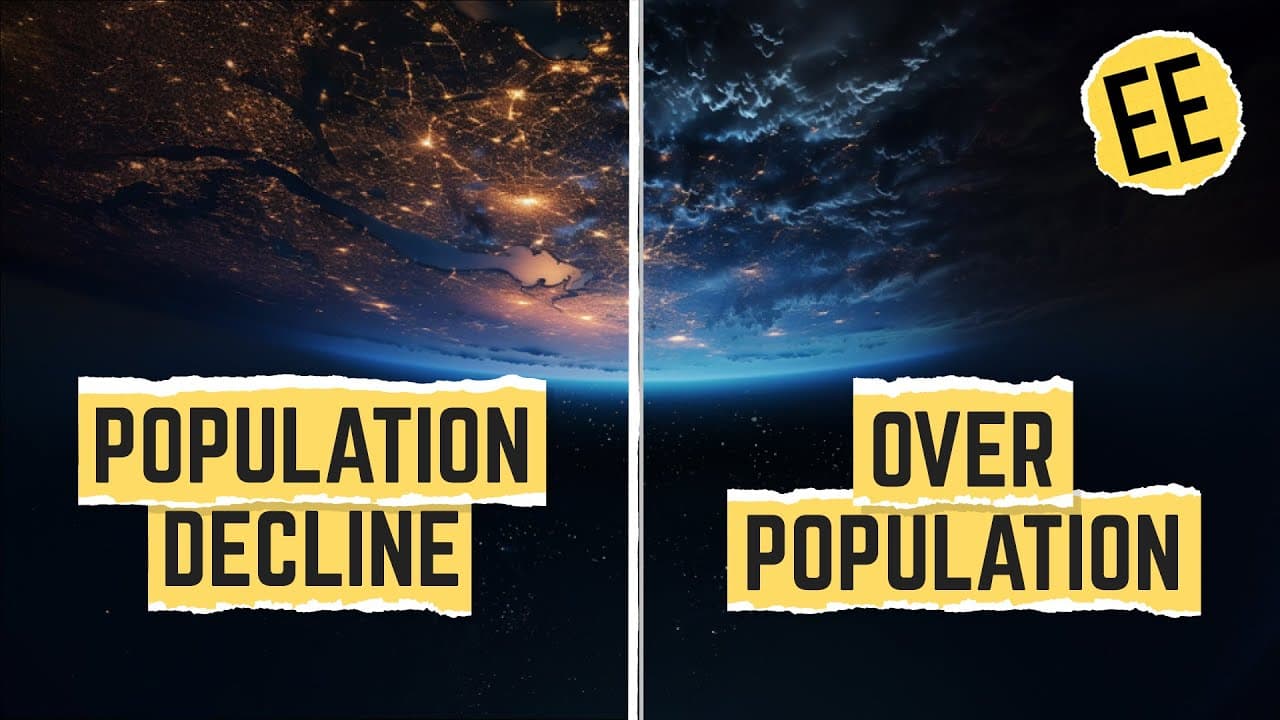
The debate on whether we need more or fewer children involves balancing overpopulation concerns with the challenges of aging populations. Fewer children could mean less strain on resources, while more children may support economic growth but strain resources. The key is finding a sustainable balance that supports economic prosperity without overwhelming the planet's resources.
Transcript
economists just can't seem to give a clear answer to the simple question do we need to have more or less children on one side of the debate people are concerned about overpopulation and the utilization of resources beyond the capacity of Earth to provide if we have less children there won't be as many people and less people means less waste less re... Read More
Key Insights
- Overpopulation concerns include resource depletion, increased waste, and lower living standards.
- Aging populations present economic challenges due to fewer young workers supporting more elderly dependents.
- Children are an economic burden initially but become contributors later, affecting economic dynamics.
- Technological advancements can enhance resource efficiency, supporting larger populations sustainably.
- Managed depopulation could lead to higher GDP per capita by reducing resource strain.
- More people increase the likelihood of technological breakthroughs, benefiting humanity.
- Population growth can drive economic success if supported by technological innovation.
- Slow population decline is safer, predicting economic challenges more accurately than rapid growth.
Install to Summarize YouTube Videos and Get Transcripts
Explore YouTube Video Summarizer or Get YouTube Transcript Extractor
Questions & Answers
Q: How does overpopulation impact resource usage?
Overpopulation leads to increased resource consumption, which can deplete finite resources, create more waste, and lower living standards. A larger population demands more water, land, and energy, potentially exceeding Earth's capacity to provide sustainably. This can result in a vicious feedback loop of resource scarcity and environmental degradation.
Q: What are the economic challenges of aging populations?
Aging populations create economic challenges by reducing the number of young workers available to support a growing number of elderly dependents. This demographic shift can lead to declining living standards, as fewer people produce goods and services while more consume without contributing. Advanced economies face significant pressure to address these challenges.
Q: Why are children considered an economic burden initially?
Children are seen as an economic burden initially because they consume more resources than they contribute. In most advanced economies, children do not become net contributors until their mid-20s, due to extended education and child labor laws. This delayed contribution impacts family finances and broader economic dynamics.
Q: How can technology support larger populations sustainably?
Technology can support larger populations by enhancing resource efficiency, allowing economies to produce more output with fewer resources. Innovations in areas like agriculture, energy, and manufacturing reduce the environmental impact of larger populations, enabling sustainable growth. Technological advancements also drive economic growth by increasing productivity.
Q: What are the benefits of managed depopulation?
Managed depopulation can lead to higher GDP per capita by reducing the strain on resources and increasing the availability of capital per person. With fewer people, resources can be shared more equitably, potentially improving living standards. Additionally, it can mitigate environmental impacts and avoid the challenges of overpopulation.
Q: How does population growth influence technological breakthroughs?
Population growth increases the likelihood of technological breakthroughs by providing more opportunities for innovation. A larger population means more potential inventors and researchers, increasing the chances of significant discoveries. Historical figures like Tesla and Einstein illustrate how individual contributions can drive technological progress, benefiting society as a whole.
Q: What is the argument for population growth in economic success?
Population growth can drive economic success by expanding the workforce and consumer base, which fuels economic activity. More people can lead to greater innovation and technological advancements, increasing productivity and output. However, this growth must be supported by sustainable resource use and technological innovation to avoid negative impacts.
Q: Why is slow population decline considered safer?
Slow population decline is considered safer because it allows for more predictable economic planning and adaptation to demographic changes. It reduces the pressure on global resources and systems, making it easier to manage challenges like aging populations. This approach prioritizes stability and sustainability over the uncertainties of rapid population growth.
Summary & Key Takeaways
-
The decision to have more or fewer children involves weighing the benefits of economic growth against the strain on resources. Economists debate whether fewer people could mean higher living standards due to less resource consumption, while a growing population could drive technological advancements and economic growth.
-
Aging populations pose a significant economic challenge, as fewer young workers must support more elderly dependents. This demographic shift can strain economies, particularly in advanced countries, where children become contributors later due to extended education.
-
Technological advancements play a crucial role in balancing population growth and resource use. With technologies enhancing resource efficiency, larger populations can be supported sustainably, but managed depopulation may offer higher GDP per capita by reducing resource strain.
Read in Other Languages (beta)
Share This Summary 📚
Summarize YouTube Videos and Get Video Transcripts with 1-Click
Try YouTube Summary with ChatGPT & Claude or YouTube Transcript Generator
Explore More Summaries from Economics Explained 📚




Summarize YouTube Videos and Get Video Transcripts with 1-Click
Try YouTube Summary with ChatGPT & Claude or YouTube Transcript Generator