How Tesla's Optimus Robot Could Transform Industries
TL;DR
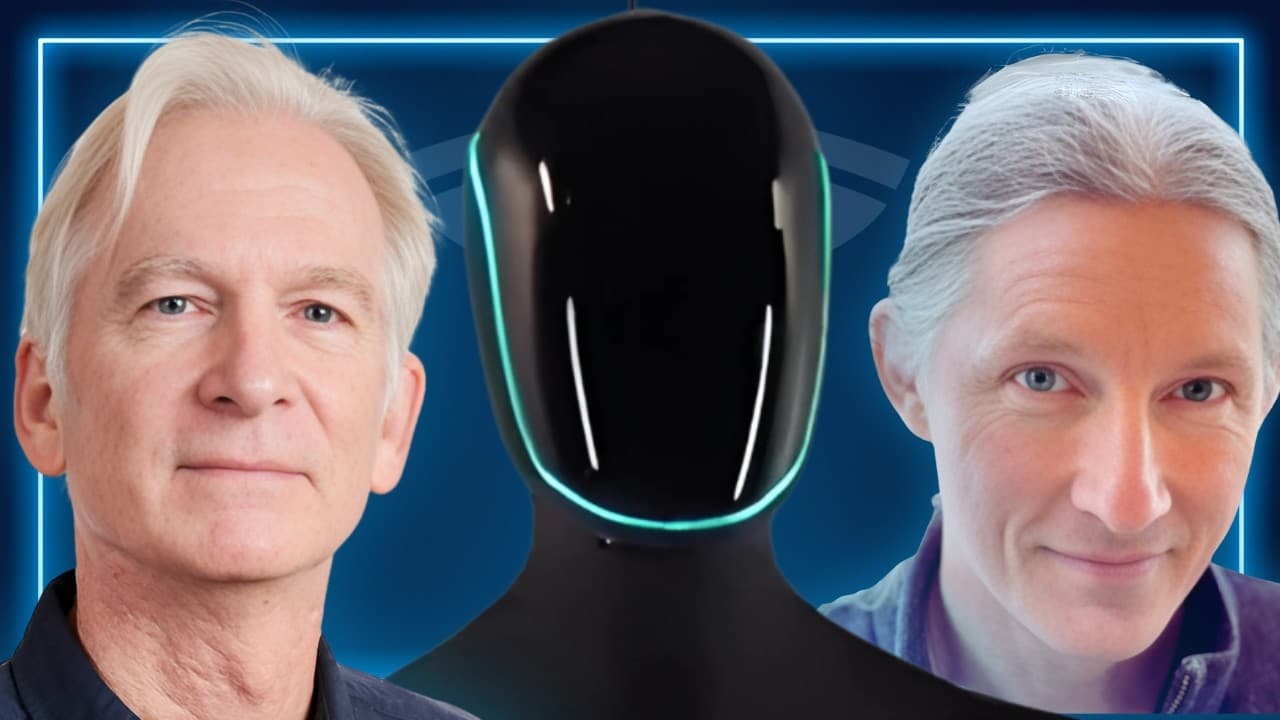
Tesla's Optimus robot represents a significant step forward in humanoid robotics, potentially becoming a major player in industrial automation. The challenges lie in scaling production and refining hardware, particularly the actuators and hands. Tesla's vertical integration and expertise in AI and motors position it uniquely to overcome these hurdles, paving the way for widespread adoption in various sectors.
Transcript
So, we've got, you know, dozens of humanoid robot startups that are that are going on. That's great. It, you know, the more people work on it, the more the state-of-the-art moves forward, the more we learn about it, the more, you know, everybody gets to understand that this is a real thing that's coming. Those are all great things. Do I think any o... Read More
Key Insights
- Tesla's Optimus robot is seen as a potential game-changer in the humanoid robotics market.
- The production of actuators, especially harmonic drives and planetary roller screws, is a bottleneck due to precision manufacturing requirements.
- Tesla's vertical integration and expertise in AI and electric motors give it a competitive edge in developing humanoid robots.
- The human-like design of Optimus, including its hands, is crucial for its ability to perform tasks traditionally done by humans.
- The market for humanoid robots is expected to be large, with Tesla positioned to capture a significant share due to its technological capabilities.
- Hardware challenges, particularly in the design and manufacturing of robot components, are seen as more significant than software challenges.
- Tesla's approach to building robots involves extensive prototyping and iteration to refine designs and manufacturing processes.
- The long-term promise of humanoid robots lies in their ability to seamlessly integrate into human-centric environments and perform a wide range of tasks.
Install to Summarize YouTube Videos and Get Transcripts
Explore YouTube Video Summarizer or Get YouTube Transcript Extractor
Questions & Answers
Q: What are the main challenges Tesla faces in scaling its Optimus robot production?
The main challenges Tesla faces in scaling Optimus robot production involve the precision manufacturing of key components like harmonic drives and planetary roller screws. These components require specialized machinery and processes, which currently limit production capacity. Tesla's vertical integration strategy and expertise in motor and actuator design are critical in addressing these bottlenecks to enable mass production.
Q: Why is the design of Optimus's hands significant for its functionality?
The design of Optimus's hands is significant because it aims to closely mimic human hands, which are mechanical marvels allowing for a wide range of tasks. This capability is crucial for the robot to perform tasks that require dexterity, such as using tools, handling delicate objects, and interacting with environments designed for human use. Achieving human-like hand functionality is a high bar but essential for maximizing the robot's applicability.
Q: How does Tesla's vertical integration give it an advantage in humanoid robotics?
Tesla's vertical integration provides an advantage in humanoid robotics by allowing the company to control the entire development and manufacturing process. This approach enables Tesla to innovate and refine components like motors and actuators in-house, reducing dependency on external suppliers and accelerating the development of solutions to manufacturing bottlenecks. It also facilitates rapid prototyping and iteration, crucial for advancing complex technologies like humanoid robots.
Q: What role does AI play in the development of Tesla's Optimus robot?
AI plays a crucial role in the development of Tesla's Optimus robot by enabling advanced functionalities such as perception, decision-making, and motion planning. Tesla's expertise in AI, honed through its work on self-driving cars, is leveraged to develop sophisticated algorithms that allow Optimus to navigate and interact with its environment effectively. AI is integral to making the robot adaptable and capable of performing a wide range of tasks autonomously.
Q: What is the potential market impact of Tesla's Optimus robot?
The potential market impact of Tesla's Optimus robot is substantial, as it could revolutionize industries by automating tasks traditionally performed by humans. Its ability to integrate into human-centric environments and perform diverse tasks could lead to significant productivity gains and cost savings. Tesla's technological leadership and manufacturing capabilities position it to capture a large share of this emerging market, potentially making Optimus a key driver of economic growth.
Q: How does Tesla's approach to prototyping benefit the development of Optimus?
Tesla's approach to prototyping benefits the development of Optimus by allowing for rapid iteration and refinement of designs. This strategy enables the company to test and improve components and systems in real-world conditions, identifying and addressing issues early in the development process. Prototyping is essential for optimizing the robot's performance, reliability, and manufacturability, ensuring that the final product meets high standards of quality and functionality.
Q: Why is the humanoid form factor important for robots like Optimus?
The humanoid form factor is important for robots like Optimus because it allows them to fit seamlessly into environments designed for humans. This design enables the robot to perform tasks using existing tools and infrastructure, minimizing the need for specialized equipment or modifications. The humanoid form factor maximizes the robot's versatility and applicability across various industries, from manufacturing to service sectors, by allowing it to perform tasks that require human-like interaction and dexterity.
Q: What are the key components of Optimus that require precision manufacturing?
The key components of Optimus that require precision manufacturing include the actuators, specifically harmonic drives and planetary roller screws. These components are critical for the robot's movement and functionality, requiring high precision and specialized manufacturing processes. The complexity and precision required in producing these components currently limit production capacity, making them a focal point for Tesla's efforts to scale up manufacturing and improve the robot's performance and reliability.
Summary & Key Takeaways
-
Tesla's Optimus robot is a major development in humanoid robotics, potentially revolutionizing industries by automating tasks currently performed by humans. The key challenges involve scaling production and refining the hardware, particularly the actuators and hands. Tesla's expertise in vertical integration, AI, and electric motors positions it uniquely to overcome these hurdles.
-
The production of components like harmonic drives and planetary roller screws is currently a bottleneck due to the precision required in manufacturing. Tesla's vertical integration strategy allows it to address these challenges more effectively than competitors, making it a strong contender in the humanoid robotics market.
-
Tesla's Optimus aims to mimic human capabilities, particularly with its hands, to perform a wide range of tasks. The company's approach involves extensive prototyping and iteration to refine designs and manufacturing processes. The long-term potential of humanoid robots lies in their ability to integrate into human-centric environments, offering significant industrial and economic benefits.
Read in Other Languages (beta)
Share This Summary 📚
Summarize YouTube Videos and Get Video Transcripts with 1-Click
Try YouTube Summary with ChatGPT & Claude or YouTube Transcript Generator
Explore More Summaries from Brighter with Herbert 📚




Summarize YouTube Videos and Get Video Transcripts with 1-Click
Try YouTube Summary with ChatGPT & Claude or YouTube Transcript Generator