What Are the Current Geopolitical Challenges for China?
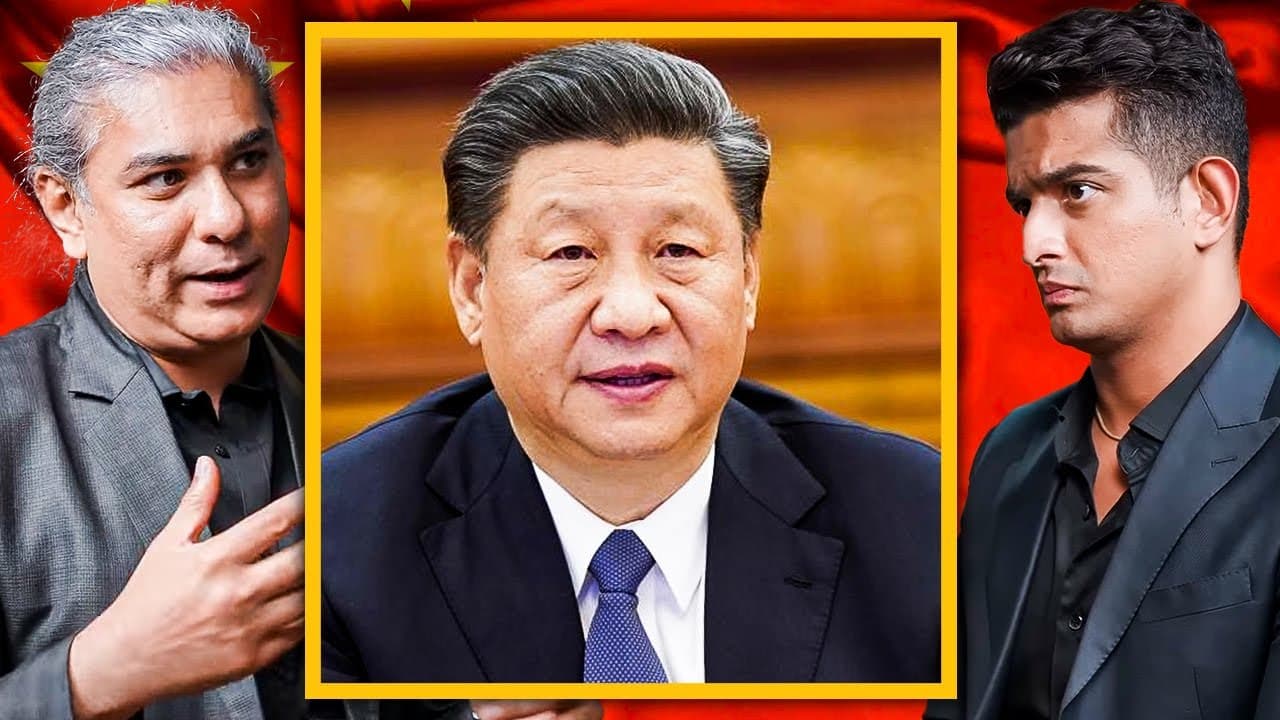
TL;DR
China faces significant geopolitical challenges, including a declining population, economic vulnerabilities, and territorial disputes with neighbors. Xi Jinping's consolidation of power raises concerns about domestic stability, while international skepticism towards initiatives like the Belt and Road impacts China's superpower ambitions. These factors contribute to rising tensions in both regional and global contexts.
Transcript
satisfy your need for happiness to your own curiosity with the r show China what's up what's up with China I mean yeah Mr Shin pig is sitting pretty as as the emperor of the the current Dynasty the current Dynasty is the Chinese Communist party so in China I mean when when historians talk about Chinese history they talk about dynastic Cycles you ha... Read More
Key Insights
- 🫨 Xi Jinping's consolidation of power has allowed him to position himself as a figure akin to an emperor, maintaining authority through the elimination of opposition.
- 🤕 The demographic time bomb in China threatens long-term social and economic stability, as an aging workforce may struggle to sustain economic productivity.
- 💖 China's territorial ambitions have sparked widespread concern among its neighboring countries, resulting in heightened militarization and regional tensions.
- 😀 The Belt and Road Initiative faces skepticism and challenges, with several partner countries re-evaluating involvement due to economic risks.
- 🌍 China's strategy in Africa exemplifies its attempt to exert influence through resource extraction, drawing parallels with historical colonial practices.
- 🌐 Economic vulnerabilities, such as property and banking crises, could impede China's superpower aspirations and reduce its global leverage.
- 🌐 The US response to China's ambitions includes strategic alliances with other nations, marking a renewed geopolitical competition in the global arena.
Install to Summarize YouTube Videos and Get Transcripts
Explore YouTube Video Summarizer or Get YouTube Transcript Extractor
Questions & Answers
Q: How does the "Mandate of Heaven" concept influence political stability in China?
The “Mandate of Heaven” is a key philosophical doctrine in Chinese history that legitimizes a dynasty's rule. When a dynasty effectively governs and gains public support, it's believed to hold this divine favor. However, when it fails, be it through corruption, natural disasters, or rebellion, it loses this mandate, leading to its downfall. Currently, the Chinese Communist Party claims this mandate through control and economic development, particularly under Xi Jinping's leadership, but the rising internal and external pressures may challenge this legacy.
Q: What demographic challenges is China facing?
China is encountering significant demographic issues, including a declining total fertility rate (TFR) and an aging population. To maintain population stability, a TFR of 2.1 is needed, yet China's current TFR is below this benchmark. As a result, the country will see a sharp population decrease, projected to fall to around 700 million by 2100, with the median age rising to the mid-60s. These shifts threaten the labor force and could hinder economic growth and military recruitment.
Q: How does China's geopolitical strategy affect its relationship with neighboring countries?
China’s assertive geopolitical strategy manifests in territorial disputes with virtually all its neighbors, causing tension across the region. The Chinese Communist Party's expansionist mindset leads to conflicts over borders and claims over territories like Taiwan. This policy fosters distrust and rivalry, particularly with countries like India and Japan, while also attempting to establish dominance over nations in the South China Sea, causing geopolitical instability.
Q: What is the significance of the Belt and Road Initiative for China?
The Belt and Road Initiative (BRI) is a hallmark of China's international strategy, aimed at enhancing its economic influence by building infrastructure and trade routes across Asia, Europe, and Africa. While the BRI seeks to position China as a global leader in trade, skepticism from various countries has grown due to issues like debt traps and unsustainable financial practices. The efficacy and impact of the BRI are under scrutiny, particularly as nations reconsider their involvement in light of these challenges.
Q: In what ways is China attempting to strengthen its relationship with Africa?
China views Africa primarily as a resource-rich continent to fuel its economy and has thus invested heavily in infrastructure and mining sectors across various African countries. This modern-day colonial approach allows China to secure vital raw materials such as minerals and hydrocarbons. Despite establishing trade relationships, the dynamics often place African nations in a vulnerable position, highlighting the need for balanced collaboration rather than exploitation.
Q: What roles do internal economic factors play in China's global ambitions?
Internally, China's economy is facing significant challenges such as slowing growth rates, property and banking sector bubbles, and growing debt levels. These economic concerns could hinder China's aspirations to supplant the US as the leading global power. Addressing these issues is critical, as an unstable economy may weaken its geopolitical influence and diminish its ability to pursue ambitious international goals.
Q: How does the US view China as a global rival?
The United States has increasingly recognized China as its primary global rival, driven by China's rapid economic growth and military expansion. Strategically, the US and its allies are focused on countering China's influence, particularly in the Asia-Pacific region, through collaborations such as the Quad and robust defense strategies. This geopolitical rivalry is reshaping alliances and international relations around the globe as countries navigate their positions between the two powers.
Q: How could the Taiwan situation escalate into a potential conflict?
The Taiwan situation remains a significant flashpoint between China and the US, with China pressuring Taiwan through military exercises and propaganda. While both sides seek to avoid war, tensions persist, especially as China's leadership asserts that reunification with Taiwan is inevitable. If diplomatic efforts fail and military escalation occurs, it could lead to a broader conflict involving the US, which aims to support Taiwan's defense, thereby complicating regional security dynamics.
Summary & Key Takeaways
-
China's political environment is characterized by the consolidation of power under Xi Jinping, who has positioned himself as a lifelong leader while eliminating opposition, resulting in a highly competitive political atmosphere.
-
Demographic and economic challenges threaten China's superpower ambitions, with a declining total fertility rate and an aging population expected to impact labor supply and economic growth significantly by 2100.
-
China's expansionist strategies are evident in its territorial disputes, influence operations in neighboring countries, and economic initiatives like the Belt and Road Initiative, which face growing skepticism from the international community.
Read in Other Languages (beta)
Share This Summary 📚
Summarize YouTube Videos and Get Video Transcripts with 1-Click
Try YouTube Summary with ChatGPT & Claude or YouTube Transcript Generator
Explore More Summaries from TRS Clips 📚





Summarize YouTube Videos and Get Video Transcripts with 1-Click
Try YouTube Summary with ChatGPT & Claude or YouTube Transcript Generator