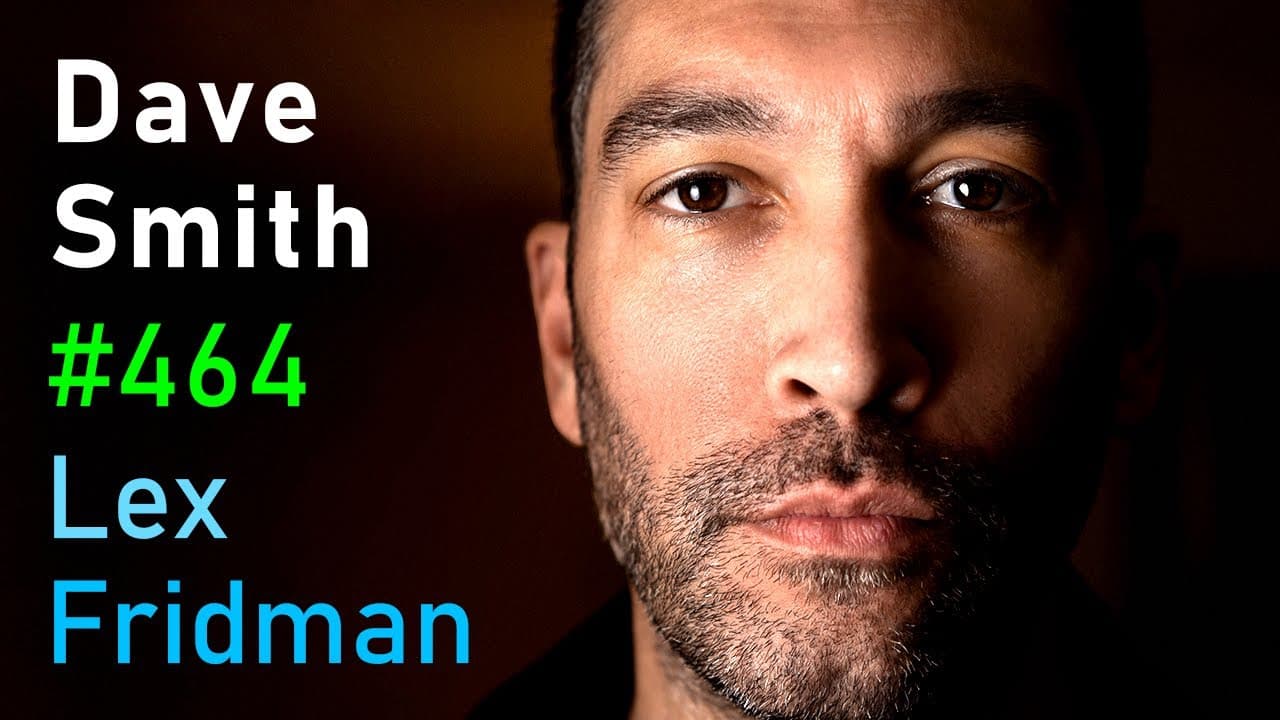
Dave Smith on Libertarianism, War, and Global Conflicts
TL;DR
Dave Smith discusses the implications of libertarianism in the context of global conflicts, emphasizing the importance of liberty and the dangers of excessive government intervention. He critiques the military-industrial complex, the U.S. foreign policy, and the role of media in shaping public opinion on wars. Smith also explores historical and current geopolitical issues, including the Israel-Palestine conflict and the influence of influential libertarian figures.
Transcript
- All the people who sold the war in Iraq, they lied us into war after a war. They've bankrupted the country, damn near destroyed the dollar. And like no one loses their job. No one even gets in trouble over any of this. If you make everybody monsters and they're not human beings, well, you can't do diplomacy with monsters. You can't make a deal. Y... Read More
Key Insights
- Libertarianism values liberty as the highest political value, opposing excessive government intervention.
- The military-industrial complex influences U.S. foreign policy, promoting conflicts for profit.
- Ron Paul is revered for his consistent anti-war stance and advocacy for limited government.
- The Israel-Palestine conflict is complex, with historical grievances and current geopolitical dynamics.
- Smith criticizes the use of historical narratives, like World War II, to justify modern military actions.
- Hamas is viewed as a radical organization, but Smith emphasizes the broader context of occupation.
- There is a rise in antisemitism on social media, complicating discussions around Israel and Jewish identity.
- Smith advocates for peaceful resolutions and critiques the current U.S. approach to international conflicts.
Install to Summarize YouTube Videos and Get Transcripts
Explore YouTube Video Summarizer or Get YouTube Transcript Extractor
Questions & Answers
Q: What is the core principle of libertarianism according to Dave Smith?
The core principle of libertarianism, as discussed by Dave Smith, is the prioritization of liberty as the highest political value. Libertarianism opposes excessive government intervention, viewing government as an instrument of force and tyranny. Smith emphasizes that more government results in less liberty, advocating for a society where individual freedoms are paramount.
Q: How does Dave Smith view the military-industrial complex?
Dave Smith views the military-industrial complex as a significant influence on U.S. foreign policy, promoting conflicts for profit. He critiques the complex's role in shaping public opinion through media and intelligence agencies, creating conflicts and public sentiment that favor military interventions. Smith argues that this system prioritizes profit over peaceful resolutions.
Q: What are Dave Smith's thoughts on Ron Paul's influence?
Dave Smith praises Ron Paul as a significant figure in libertarianism, describing him as a champion of anti-war views and limited government. Paul is admired for his integrity and consistent stance on major issues, advocating for liberty and critiquing government corruption. Smith credits Paul with laying the groundwork for questioning U.S. foreign policy and promoting libertarian ideals.
Q: How does Dave Smith approach the Israel-Palestine conflict?
Dave Smith approaches the Israel-Palestine conflict by critiquing the long-standing occupation and the role of Hamas. He emphasizes the historical grievances and the need for a peaceful resolution, criticizing the current Israeli policies and the impact on Palestinian rights. Smith calls for a shift in approach, focusing on diplomacy and ending the occupation to achieve peace.
Q: What is Dave Smith's stance on using historical narratives to justify modern wars?
Dave Smith criticizes the use of historical narratives, such as World War II, to justify modern military actions. He argues that this approach oversimplifies complex geopolitical issues and promotes aggressive policies. Smith emphasizes the need to learn from history without using it as a blanket justification for contemporary conflicts, advocating for more nuanced and peaceful approaches.
Q: What concerns does Dave Smith express about antisemitism on social media?
Dave Smith expresses concerns about the rise of antisemitism on social media, noting its impact on discussions around Israel and Jewish identity. He highlights the challenge of distinguishing between genuine criticism of policies and outright hate, emphasizing the need for nuanced conversations. Smith warns against hysteria and the misuse of antisemitism accusations, advocating for a balanced discourse.
Q: How does Dave Smith propose addressing U.S. foreign policy issues?
Dave Smith proposes addressing U.S. foreign policy issues by advocating for diplomacy and peaceful resolutions, rather than military interventions. He critiques the current approach, influenced by the military-industrial complex, and calls for a shift towards prioritizing liberty and individual freedoms. Smith emphasizes learning from past mistakes and promoting a foreign policy that values peace.
Q: What role does Dave Smith believe media plays in shaping public opinion on wars?
Dave Smith believes that media plays a significant role in shaping public opinion on wars, often parroting the talking points of the military-industrial complex. He argues that media outlets contribute to creating public sentiment that favors military interventions, rather than promoting peaceful resolutions. Smith calls for a more critical and independent media that challenges dominant narratives.
Summary & Key Takeaways
-
Dave Smith discusses the principles of libertarianism, focusing on liberty and limited government intervention. He critiques the military-industrial complex's influence on U.S. foreign policy, highlighting its role in perpetuating conflicts for profit. Smith emphasizes the importance of understanding historical narratives, like World War II, and their misuse in justifying modern military actions.
-
Smith explores the complexities of the Israel-Palestine conflict, criticizing the occupation and the role of Hamas. He highlights the rise of antisemitism on social media and the challenges it presents in discussing Jewish identity and Israel's policies. Smith calls for peaceful resolutions and critiques the U.S. approach to international conflicts.
-
The conversation touches on influential figures like Ron Paul, who is praised for his anti-war stance and advocacy for limited government. Smith underscores the need for a shift in U.S. foreign policy, advocating for diplomacy and peaceful resolutions in global conflicts, rather than military interventions.
Read in Other Languages (beta)
Share This Summary 📚
Summarize YouTube Videos and Get Video Transcripts with 1-Click
Try YouTube Summary with ChatGPT & Claude or YouTube Transcript Generator
Explore More Summaries from Lex Fridman 📚




Summarize YouTube Videos and Get Video Transcripts with 1-Click
Try YouTube Summary with ChatGPT & Claude or YouTube Transcript Generator