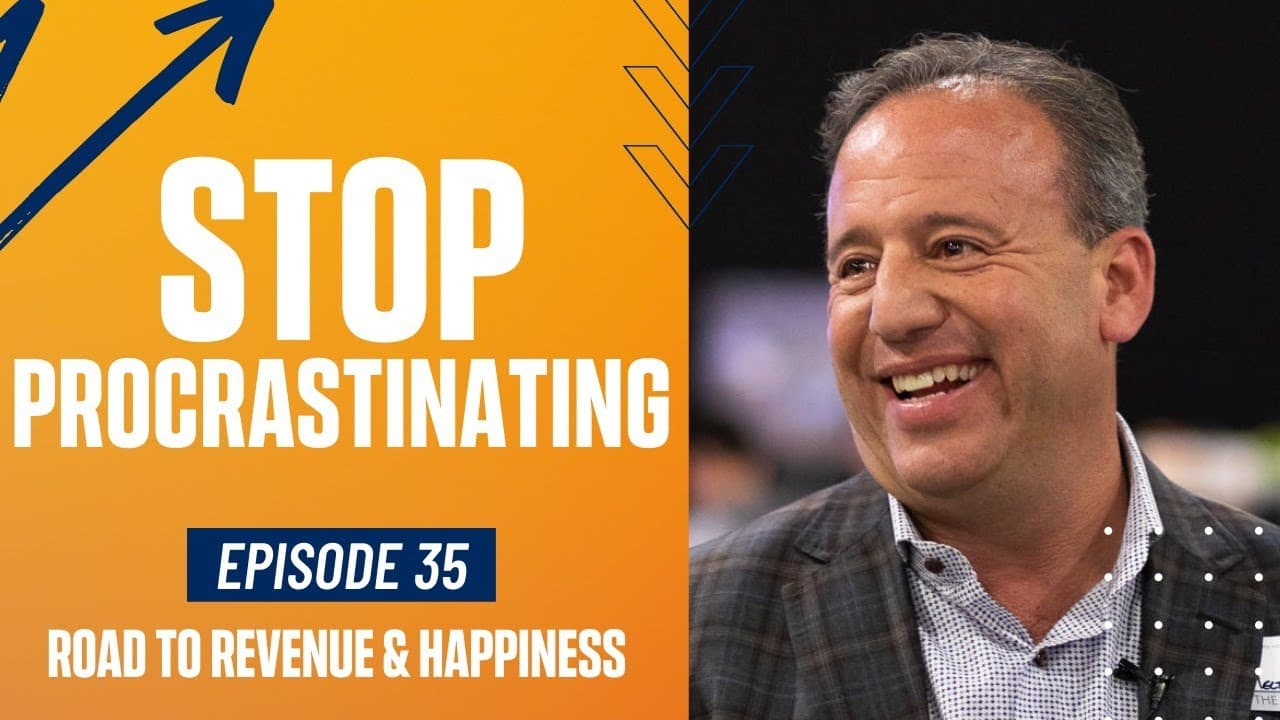
How to Stop Procrastinating and Build Momentum
TL;DR
Start earlier, lower the initial bar, and schedule both productive work and recovery so progress does not depend on last-minute pressure. Consistent action creates momentum, while adaptable routines, clear non-negotiables, and repeated refocusing help prevent exhaustion and distraction from turning procrastination into quitting.
Transcript
your questions in the q a section i'll be going over questions for half the time speaking of questions next week's training that's right the gratitude training byoq bring your own questions about gratitude i'm going to change your perspective i'm going to teach you about pain and suffering in a different way so that you'll be grateful for it pain i... Read More
Key Insights
- Procrastination is described as a stepping stone toward quitting because it interrupts movement toward a desired result. Repeatedly stopping or delaying behavior prevents the consistent and persistent pursuit that produces acceleration, improvement, and progress toward personal potential.
- Two-minute drillers are people who delay action because they believe they perform well under pressure. They shrink the available time until fear becomes strong enough to force action, but completing work this way can leave them exhausted and limit the benefits of steady effort.
- The main challenge for two-minute drillers is getting started before urgency becomes unavoidable. Moving the start time forward, lowering the bar for the first action, and focusing on beginning instead of finishing can reduce resistance and help establish momentum.
- Earlier self-imposed deadlines can create practical advantages beyond reducing stress. Moving coursework forward by a week gave the speaker access to needed materials before other students and created time to ask professors for feedback while there was still an opportunity to improve.
- Rest is presented as a proactive activity that supports consistent performance. People who refuse to acknowledge fatigue or injury can become less effective, so food, sleep, exercise, and physical, mental, and emotional recovery should be deliberately included in a routine.
- An adaptable routine is necessary because injuries, visitors, parties, and other disruptions can prevent someone from following a standard schedule. Defining minimum non-negotiable commitments allows important activities and relationships to continue even when normal conditions are unavailable.
- Third stringers are strong at opening projects but weak at closing them because new ideas and shiny objects repeatedly capture their attention. Ideas create value only when someone follows through, brings them to market, or completes the deal instead of continually switching direction.
- Focus is described as a muscle that becomes stronger through repeated refocusing. A person can attend to only one thing at a time, so apparent multitasking depends on rapid switching, while clear and focused behavior reduces the influence of distractions.
Install to Summarize YouTube Videos and Get Transcripts
Explore YouTube Video Summarizer or Get YouTube Transcript Extractor
Questions & Answers
Q: How can I stop procrastinating before a deadline?
Move your personal start and finish times earlier than the official deadline, then lower the bar for the first action. Focus on beginning rather than imagining the entire task. The speaker used this approach by moving every item on a college syllabus forward by a week, which also created time to obtain materials and request feedback before assignments were due.
Q: Why does last-minute pressure encourage procrastination?
Last-minute pressure works by shrinking the available time until fear becomes strong enough to force action. Although that fear can get someone started and help them finish, the process consumes energy and often leaves them exhausted. The speaker argues that the same pressure should be redirected toward an earlier start, allowing consistent effort to produce better and faster results.
Q: What is a two-minute driller procrastinator?
A two-minute driller is someone who repeatedly waits until the last moment because they believe pressure improves their performance. Their greatest difficulty is kickoff, or starting before time becomes scarce. The recommended response is to begin earlier, lower the initial standard, and use motivation for starting while relying on inspiration and consistent behavior to sustain progress.
Q: How does lowering the bar help someone start working?
Lowering the bar makes the beginning of a task feel easier and reduces resistance. Instead of concentrating on when the work will end or demanding an ambitious first effort, the person commits to a small kickoff action. The speaker suggests that once movement begins, people may overachieve beyond the deliberately modest starting goal and continue building momentum.
Q: Why should rest be scheduled as part of productive work?
Rest supplies the energy needed to keep work moving consistently and persistently. People who refuse to admit they are tired or hurt may remain active while accomplishing less, much like an injured player who stays in a game but performs poorly. Scheduling food, sleep, exercise, and physical, mental, and emotional rest treats recovery as a planned productive activity.
Q: What is the difference between a set routine and an adaptable routine?
A set routine establishes planned activities for work, food, sleep, recovery, health, and relationships under normal conditions. An adaptable routine preserves minimum non-negotiable commitments when injuries, visitors, parties, or other disruptions make the standard schedule impossible. Together, these routines help maintain movement instead of allowing an interruption to become prolonged procrastination or quitting.
Q: How can non-negotiables prevent procrastination during disruptions?
Non-negotiables define the smallest commitments that must continue when a normal routine cannot be followed. The speaker gives examples involving daily time for health, his wife, his children, and his mother. Maintaining these minimum actions keeps important priorities moving, even at a reduced level, and avoids the statistical inefficiency created by completely stopping and repeatedly restarting.
Q: How can I overcome shiny object syndrome and finish projects?
Recognize that starting many promising ideas does not create the same value as following through and closing them. Third stringers allow distractions and new opportunities to pull attention away from unfinished work. The proposed remedy is to practice focus as a muscle by repeatedly noticing lost attention and refocusing on one task until the intended result is completed.
Summary & Key Takeaways
-
Procrastination is presented as a step toward quitting and a sign that behavior is moving away from the desired result. The four named archetypes are two-minute drillers, do-not-take-me-out-of-the-gamers, third stringers, and fickle fans. Understanding the relevant pattern helps identify why action repeatedly stops or starts too late.
-
Two-minute drillers wait until deadlines create enough fear and pressure to force action. Their solution is to move deadlines forward, lower the bar for beginning, and redirect pressure toward starting. Earlier action supports consistent pursuit, reduces exhaustion, and creates more opportunity to ask for feedback before the actual deadline arrives.
-
Do-not-take-me-out-of-the-gamers overlook the productive value of rest, nutrition, exercise, and recovery. They need both a set routine and an adaptable routine built around non-negotiables. Third stringers face a different challenge: shiny objects weaken follow-through, so they must repeatedly refocus and practice closing what they start.
Read in Other Languages (beta)
Share This Summary 📚
Summarize YouTube Videos and Get Video Transcripts with 1-Click
Try YouTube Summary with ChatGPT & Claude or YouTube Transcript Generator
Explore More Summaries from David Meltzer 📚

Summarize YouTube Videos and Get Video Transcripts with 1-Click
Try YouTube Summary with ChatGPT & Claude or YouTube Transcript Generator