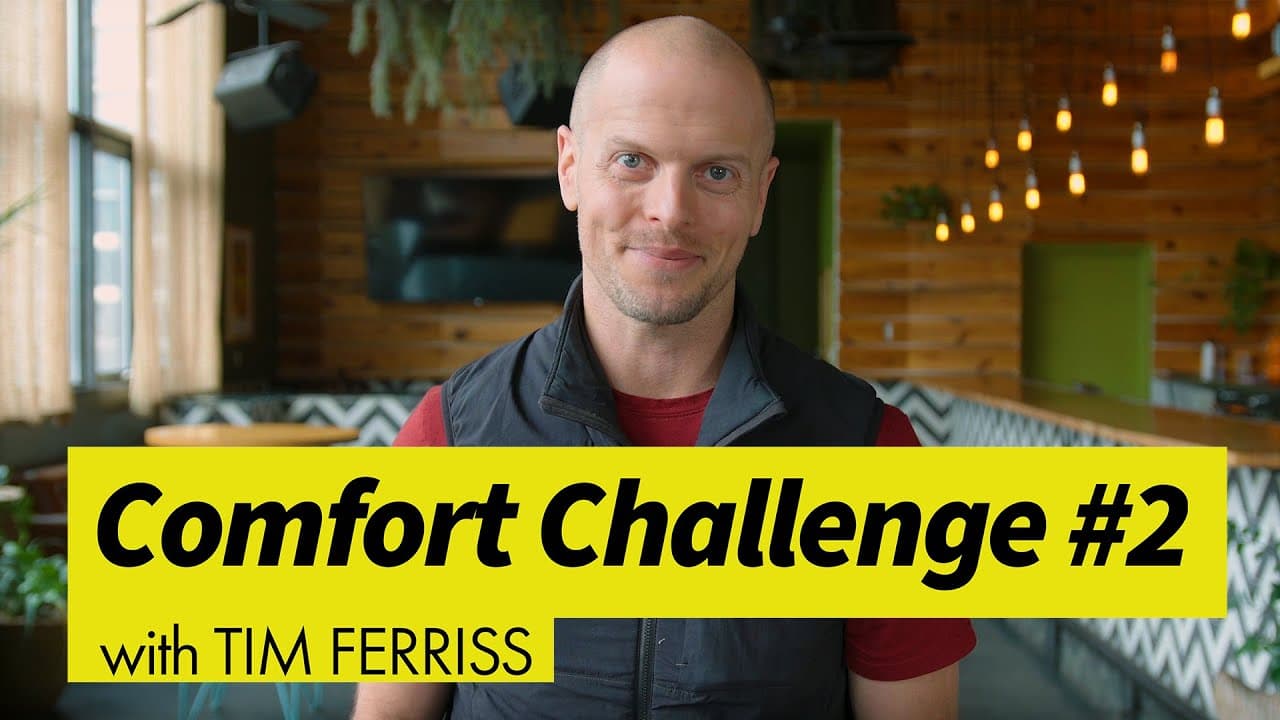
Comfort Challenge #2: Learn to Propose (Make Decisions, Offer Suggestions, Propose Solutions)
TL;DR
Improve your comfort with discomfort by learning to propose solutions instead of seeking opinions, both in personal and professional environments.
Transcript
hi Alton Faris here welcome back to the comfort challenges that we're doing in 2020 or whenever you're seeing us to launch the new year and the new decade with and improved you more comfortable with discomfort because whether it's negotiating asking for what you want saying no speaking truth the degree to which you're comfortable with discomfort ca... Read More
Key Insights
- 🛟 The degree of comfort with discomfort can impact an individual's success in various aspects of life.
- ❓ Implementing the practice of proposing solutions instead of seeking opinions can enhance assertiveness and confidence.
- 💨 Making fast decisions, even if reversible, can be a valuable skill to cultivate.
- 🆘 Proposing solutions during negotiations can help move towards mutually beneficial outcomes.
- ❓ Practicing decision-making in both personal and professional scenarios can improve comfort with discomfort.
- 💄 Contingencies can be useful, but the focus should be on making quick and decisive decisions.
- 🦻 The book "The 4-Hour Workweek" contains effective comfort challenges that aid in implementing advice.
Install to Summarize YouTube Videos and Get Transcripts
Explore YouTube Video Summarizer or Get YouTube Transcript Extractor
Questions & Answers
Q: Why is it important to learn to propose solutions instead of asking for opinions?
Learning to propose solutions demonstrates assertiveness and initiative, which can lead to increased confidence and success. By taking control of decision-making, you can avoid unnecessary back-and-forth and move forward more efficiently.
Q: How can I start implementing the practice of proposing solutions?
Begin with small decisions, such as suggesting a restaurant or activity. Use phrases like "Can I make a suggestion?" or "I'd like to propose that we try this." Practice this approach in both personal and professional settings to enhance your comfort with discomfort.
Q: Is it necessary to have contingencies when making proposals?
While contingencies can be helpful, the main focus is on making fast and decisive decisions. It's important to remember that most decisions are reversible or don't carry significant consequences. However, having contingencies for larger or more significant decisions can be wise.
Q: How can the practice of proposing solutions benefit negotiations?
By making proposals during negotiations, you can lead the conversation and outline the main deal points. This proactive approach allows you to make progress and move towards mutually beneficial outcomes. Additionally, practicing quick decision-making can give you an advantage in negotiations.
Summary & Key Takeaways
-
Week two of the Comfort Challenges focuses on practicing the skill of proposing solutions rather than asking for opinions.
-
By making decisions and offering suggestions, you can become more comfortable with discomfort and increase your success in various areas of life.
-
The practice of proposing solutions can be implemented in both personal scenarios, such as choosing where to eat or what movie to watch, and professional situations, such as negotiating deals.
Read in Other Languages (beta)
Share This Summary 📚
Summarize YouTube Videos and Get Video Transcripts with 1-Click
Try YouTube Summary with ChatGPT & Claude or YouTube Transcript Generator
Explore More Summaries from Tim Ferriss 📚






Summarize YouTube Videos and Get Video Transcripts with 1-Click
Try YouTube Summary with ChatGPT & Claude or YouTube Transcript Generator