Mitt Romney on Leadership: Know Your Values
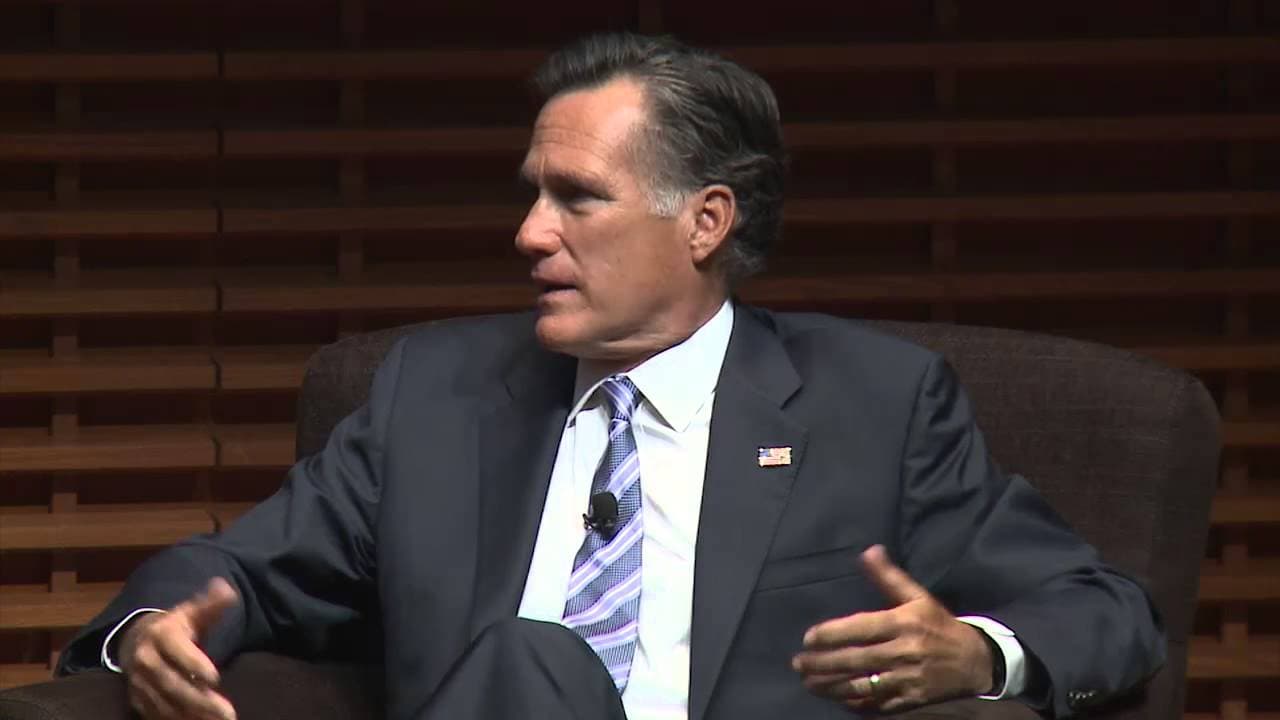
Transcript
Read and summarize the transcript of this video on Glasp Reader (beta).
Install to Summarize YouTube Videos and Get Transcripts
Explore YouTube Video Summarizer or Get YouTube Transcript Extractor
Summary
In this video, former presidential candidate Mitt Romney discusses his professional success, management skills, and commitment to personal success. He shares personal anecdotes and insights on balancing work and personal life, how he made career choices, his leadership and management principles, and the challenges he faced during his presidential campaign.
Questions & Answers
Q: How did Mitt Romney manage to strike a balance between his career, family, and community?
Mitt Romney didn't analyze how to balance his life, but he realized that spending time in one aspect of life and neglecting others would throw things out of balance. He made decisions to set aside specific times for family, worship, and personal time, such as dedicating Sundays to his family and not working when he came home at the end of the day.
Q: How did Mitt Romney manage to have a successful career and personal life simultaneously?
Mitt Romney attributes his success in balancing career and personal life to a few key decisions early on. He prioritized his family and made a commitment to spend time with them when he was home. He also set boundaries for work, such as taking Sundays off, which allowed him to fully focus on his family. These decisions helped him live a more fulfilling life and achieve success in both areas.
Q: How did Mitt Romney handle the pressure of work and personal life during his time at Harvard?
During his time at Harvard, Mitt Romney initially felt overwhelmed by the workload and the pressure to succeed. He decided to take Sundays off from studying and dedicate that day to his family and personal time. This decision relieved the constant pressure and allowed him to focus better on his studies and other aspects of his life.
Q: How did Mitt Romney manage to leave work at the end of the day and prioritize his family?
Mitt Romney decided that when he came home from work, he would close his briefcase and not work, devoting that time to his family instead. This decision allowed him to fully focus on the things that mattered most to him, such as his wife and children. While there were exceptions for important work matters, he made a regular pattern of prioritizing family time.
Q: How did Mitt Romney manage to balance work and personal life when he had to travel frequently?
Mitt Romney traveled a lot for work and when he was on the road, he would work late into the night. However, when he was at home, he made sure to be fully present with his family and avoid working. While he had to make exceptions for important work matters, he maintained a regular pattern of dedicating his time at home to his family.
Q: How did Mitt Romney get away with taking time off and not working on Sundays?
Mitt Romney was upfront with his employers and colleagues about his commitment to taking Sundays off. When he joined Bain and Company, he made it clear that he would not work on Sundays unless there was an exceptional circumstance. While this might not be possible in every organization, Romney believes that taking time off for oneself can actually increase productivity.
Q: Did Mitt Romney face any resistance or criticism for taking Sundays off and prioritizing his family?
Mitt Romney did face some resistance and criticism for his decision to not work on Sundays. However, he believes that taking time off for oneself can actually make a person more productive and effective. While some organizations may not be accepting of this practice, he believes it is important to prioritize family and personal time.
Q: What principles of leadership and management does Mitt Romney take with him in any situation?
Mitt Romney believes in having a clear vision and objective, knowing one's values, and promoting extensive participation and debate. He is focused on getting to the right answer and is non-defensive about being wrong. He also believes in helping individuals leverage their strengths rather than focusing on their weaknesses, and in hiring people who can complement his own weaknesses.
Q: How did Mitt Romney make decisions to jump into troubled situations and turn them around?
Mitt Romney did not intentionally seek out troubled situations, but he felt a sense of obligation to step in and help when he saw a need. He believes this sense of obligation comes from his upbringing and his faith. He uses his particular skills and experience to make a difference and turn things around.
Q: What led Mitt Romney to make decisions to take on leadership roles in troubled environments?
Mitt Romney did not seek out troubled situations because he enjoys them, but rather felt a sense of obligation to make a difference. He draws inspiration from his upbringing and his parents' commitment to America and the community. He believes in the importance of public service and using his skills and experience to help where he sees a need.
Q: Does Mitt Romney believe he needs to surpass his father's success and strive higher?
Mitt Romney did not feel the need to compete with his father or surpass his success. He is motivated by the values and principles his parents taught him and feels a sense of obligation to make a difference. He draws inspiration from his father's commitment to public service and uses his own skills and experience to strive for success in his own way.
Takeaways
Mitt Romney emphasizes the importance of striking a balance between career and personal life, setting clear objectives, knowing one's values, promoting extensive participation and debate, and leveraging strengths rather than focusing on weaknesses. He believes in using his skills and experience to make a difference in troubled environments and to help improve the lives of others. Romney is motivated by a sense of obligation to serve his country and sees his success as contributing to the success of his community and the well-being of the world.
Read in Other Languages (beta)
Share This Summary 📚
Summarize YouTube Videos and Get Video Transcripts with 1-Click
Try YouTube Summary with ChatGPT & Claude or YouTube Transcript Generator
Explore More Summaries from Stanford Graduate School of Business 📚

Summarize YouTube Videos and Get Video Transcripts with 1-Click
Try YouTube Summary with ChatGPT & Claude or YouTube Transcript Generator