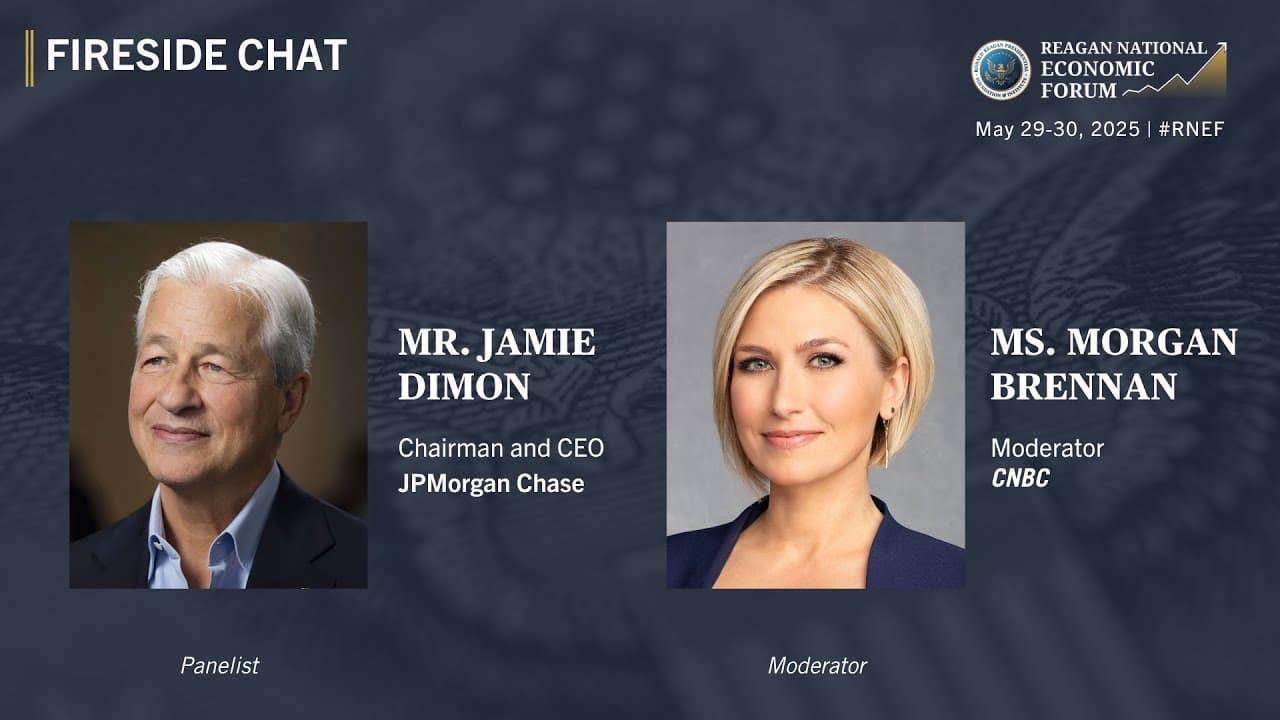
What Are Jamie Dimon's Views on U.S. Economic Challenges?
TL;DR
Jamie Dimon highlights that the U.S. faces significant economic challenges, including a 100% debt-to-GDP ratio and mismanagement at various government levels. He emphasizes the need for maintaining global alliances and efficient government spending to stimulate growth, while warning of potential market volatility due to shifts in the bond market. Dimon advocates for rethinking industrial policy with a focus on national security and critical sectors.
Transcript
Read and summarize the transcript of this video on Glasp Reader (beta).
Key Insights
- Jamie Dimon emphasizes the shifting geopolitical landscape, highlighting the threat of nuclear proliferation and the importance of global military and economic alliances.
- The U.S. faces significant economic challenges, with a debt-to-GDP ratio of 100% and a growing deficit, which could worsen in a recession.
- Dimon stresses the need for the U.S. to address internal issues, including mismanagement at state and city levels, to maintain its global economic and military preeminence.
- The conversation highlights the importance of rethinking industrial policy and national security, focusing on critical areas like rare earths and technology.
- Dimon criticizes excessive government spending and lobbying, advocating for leadership that promotes sacrifice for the greater good.
- He discusses the need for efficient government spending and the importance of demonstrating competency to maintain public trust.
- Dimon warns of potential market volatility due to shifts in the bond market and stresses the importance of market makers' ability to manage such changes.
- He advocates for deregulation and improved permitting processes to stimulate economic growth and address infrastructure challenges.
- More videos with Jamie Dimon:
Install to Summarize YouTube Videos and Get Transcripts
Explore YouTube Video Summarizer or Get YouTube Transcript Extractor
Questions & Answers
Q: What are Jamie Dimon's biggest concerns about the global economy?
Jamie Dimon is concerned about the shifting geopolitical landscape, including threats from nuclear proliferation and the need for strong global military and economic alliances. He also highlights internal U.S. challenges, such as high debt levels and mismanagement at state and city levels, which could undermine the country's economic and military preeminence.
Q: How does Dimon view the U.S. debt situation?
Dimon views the U.S. debt situation as a significant challenge, with a debt-to-GDP ratio of 100% and a growing deficit that could worsen in a recession. He emphasizes the importance of addressing these issues to maintain economic stability and prevent future crises.
Q: What does Dimon suggest regarding U.S. industrial policy and national security?
Dimon suggests rethinking U.S. industrial policy to focus on national security and critical areas like rare earths and technology. He emphasizes the importance of engaging with allies and ensuring that industrial policies support national security interests, particularly in areas vulnerable to foreign influence or control.
Q: What are Dimon's views on government spending and lobbying?
Dimon criticizes excessive government spending and the influence of lobbying groups, which he believes are damaging to the country. He advocates for leadership that promotes sacrifice for the greater good and calls for a reduction in special interest group influence to ensure more efficient and effective government spending.
Q: How does Dimon propose to improve government efficiency?
Dimon proposes improving government efficiency by embedding accountability within each department, requiring them to publish annual reports on their spending and outcomes. He believes this transparency would demonstrate competency and help restore public trust in government operations.
Q: What are Dimon's thoughts on market volatility and the bond market?
Dimon warns of potential market volatility due to shifts in the bond market, emphasizing the importance of market makers' ability to manage such changes. He believes that allowing market makers more flexibility to intermediate in the market could help mitigate the impact of such volatility.
Q: What role does Dimon see for deregulation in economic growth?
Dimon sees deregulation as a key driver of economic growth, advocating for improved permitting processes and a pro-growth attitude. He believes that reducing bureaucratic red tape and fostering a business-friendly environment can stimulate economic activity and lead to sustained growth.
Q: What leadership qualities does Dimon emphasize for policymakers and business leaders?
Dimon emphasizes the importance of humility, curiosity, and engagement for leaders. He encourages policymakers and business leaders to actively listen, learn from opposing views, and maintain a focus on the greater good. He believes that these qualities can help leaders navigate complex challenges and build successful organizations.
Summary & Key Takeaways
-
Jamie Dimon discusses the shifting geopolitical and economic landscape, emphasizing the need for the U.S. to address internal mismanagement and maintain global alliances. He highlights the importance of efficient government spending and deregulation to stimulate growth.
-
Dimon warns of potential market volatility due to shifts in the bond market and stresses the importance of market makers' ability to manage such changes. He advocates for industrial policy that focuses on national security and critical areas like rare earths and technology.
-
The conversation underscores the need for leadership that promotes sacrifice for the greater good and highlights the importance of demonstrating government competency to maintain public trust. Dimon also discusses the challenges of excessive lobbying and government spending.
Read in Other Languages (beta)
Share This Summary 📚
Summarize YouTube Videos and Get Video Transcripts with 1-Click
Try YouTube Summary with ChatGPT & Claude or YouTube Transcript Generator
Explore More Summaries from Ronald Reagan Presidential Foundation & Institute 📚
Summarize YouTube Videos and Get Video Transcripts with 1-Click
Try YouTube Summary with ChatGPT & Claude or YouTube Transcript Generator