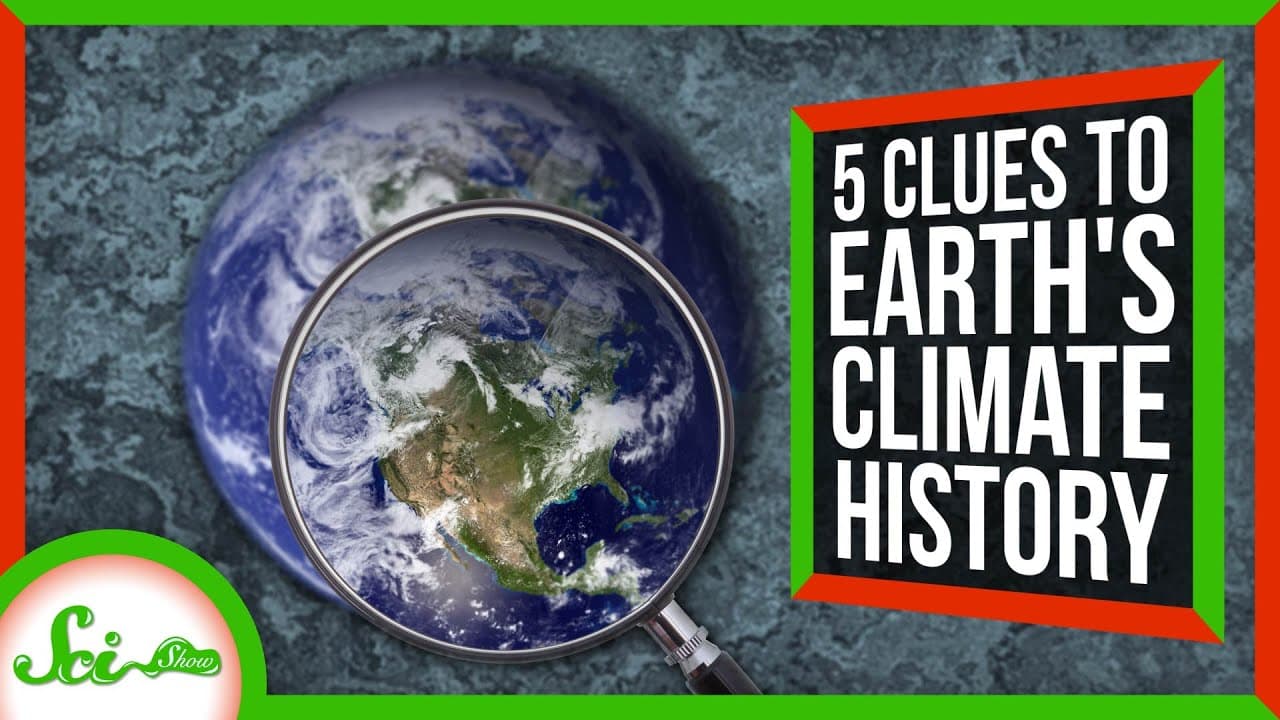
What Clues Do Scientists Use to Understand Earth's Climate History?
TL;DR
Scientists analyze various natural materials, such as calcium carbonate shells from foraminifera and corals to estimate past temperatures, while speleothems reflect historical rainfall. Additionally, bat guano reveals climate conditions through isotopic analysis, and fossilized leaves indicate atmospheric moisture, all helping to reconstruct Earth's climate history.
Transcript
as Earth's climate changes one of the hardest things to figure out is exactly how the planet will change in response like how weather patterns will shift and how species may or may not adapt and while we can't know the future for sure we can get a lot of good clues from the past our planet has been through a lot of changes in understanding differen... Read More
Key Insights
- 🐚 Calcium carbonate shells of foraminifera and corals can indicate past temperatures based on magnesium and strontium levels.
- 🍝 Oxygen isotopes in speleothems can help determine past rainfall patterns.
- 💁 Bat guano can provide information about past climate conditions, including temperature and rainfall.
- 🍃 Fossilized leaves offer insights into past weather patterns through the analysis of atmospheric moisture content.
- 🧑🔬 By combining data from different sources, scientists can construct a more comprehensive understanding of Earth's climate history.
- 🍝 The analysis of gypsum can measure the severity of droughts in the past.
- 🏝️ Calcium carbonate minerals are valuable tools for studying climate change on both land and in the ocean.
Install to Summarize YouTube Videos and Get Transcripts
Explore YouTube Video Summarizer or Get YouTube Transcript Extractor
Questions & Answers
Q: How do scientists estimate past temperatures using calcium carbonate shells?
Scientists measure the levels of magnesium and strontium in foraminifera shells and corals. Higher levels of magnesium indicate higher temperatures, while lower levels of strontium suggest higher temperatures.
Q: How can speleothems provide information about past rainfall?
Oxygen isotopes in speleothems can indicate the abundance of rainfall during certain periods. The ratio of light to heavy isotopes changes based on the availability of water, allowing scientists to reconstruct past rainfall patterns.
Q: What information can be obtained from analyzing bat guano?
Bat guano preserves information about past climate conditions. By measuring different elements and isotopes in guano samples, scientists can infer past temperature, rainfall, and even human activities.
Q: How can fossilized leaves help in reconstructing past climates?
Fossilized leaves contain lipids that record climate data, specifically atmospheric moisture content. By observing differences in lipid chain length, scientists can deduce past atmospheric moisture levels and infer weather patterns.
Summary & Key Takeaways
-
Scientists can analyze calcium carbonate shells of foraminifera and corals to estimate past temperatures based on the levels of magnesium and strontium present.
-
Speleothems, such as stalactites and stalagmites, formed by calcium carbonate deposits in caves, provide information about past rainfall based on oxygen isotopes.
-
Bat guano preserved in caves offers clues about past climate conditions through the analysis of different elements and isotopes.
-
Fossilized leaves can be used to determine atmospheric moisture levels and infer past weather patterns.
Read in Other Languages (beta)
Share This Summary 📚
Summarize YouTube Videos and Get Video Transcripts with 1-Click
Try YouTube Summary with ChatGPT & Claude or YouTube Transcript Generator
Explore More Summaries from SciShow 📚

Summarize YouTube Videos and Get Video Transcripts with 1-Click
Try YouTube Summary with ChatGPT & Claude or YouTube Transcript Generator