What Is Monothinking and How Does It Limit Reasoning?
TL;DR
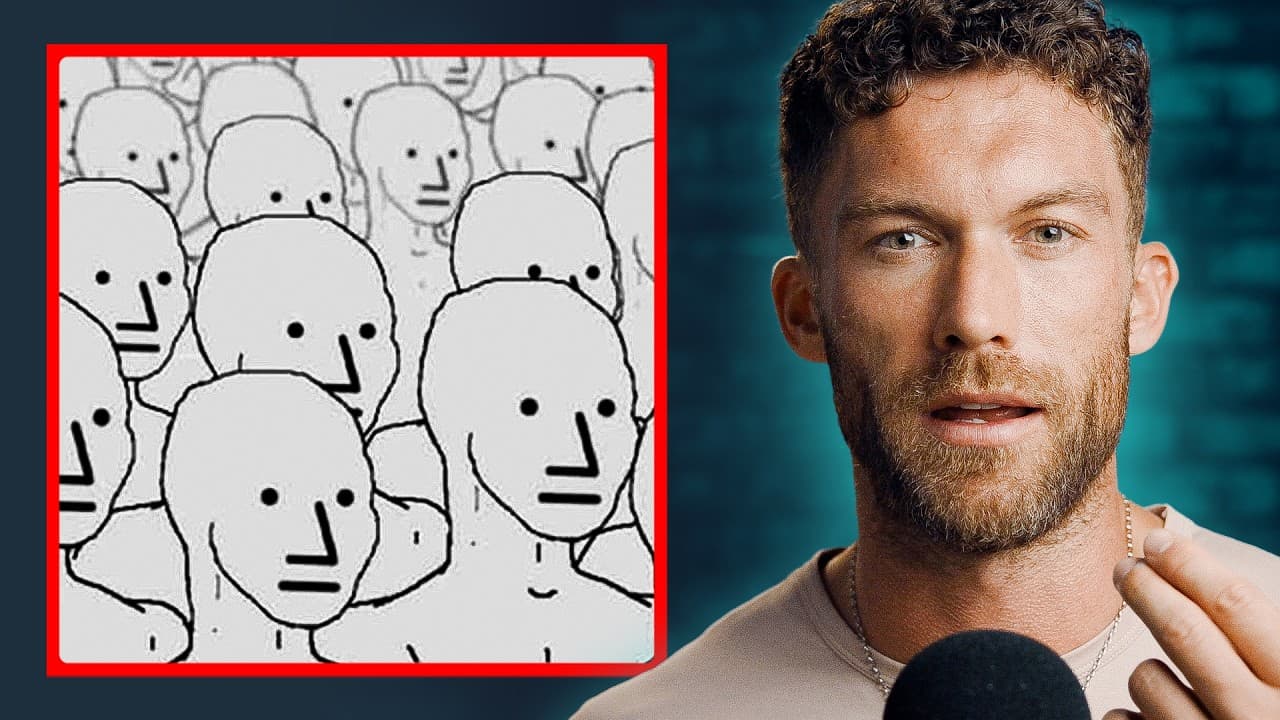
Monothinking occurs when individuals attribute various complex issues to a single cause, limiting their critical thinking abilities. This predictable ideology fosters a lack of independent thought, leading to a group mentality where people's beliefs become uniform and oversimplified. Those who challenge these norms often face skepticism, as group dynamics prioritize consistent members over honest thinkers.
Transcript
Read and summarize the transcript of this video on Glasp Reader (beta).
Key Insights
- Monothinking occurs when people attribute multiple issues to a single cause, indicating a lack of critical thinking and diverse perspectives.
- Predictable ideologies arise when individuals adopt a complete suite of beliefs from a group without independent thought.
- Outsourcing one’s worldview to a group leads to predictability in responses to new social movements or campaigns.
- Unreliable allies, who do not adhere to a single ideology, face skepticism and exclusion from tribal groups.
- Groupthink values reliable members over honest adversaries, even if it means accepting insincere beliefs.
- Feeling excluded for independent thinking is a reassurance that one is not compromising personal beliefs for group acceptance.
- The promotion of Element, an electrolyte drink, highlights the importance of proper hydration and its benefits.
- Element offers a no-questions-asked refund policy, emphasizing customer satisfaction and confidence in their product.
Install to Summarize YouTube Videos and Get Transcripts
Explore YouTube Video Summarizer or Get YouTube Transcript Extractor
Questions & Answers
Q: What is monothinking, and why is it problematic?
Monothinking is the tendency to attribute multiple issues to a single cause, such as blaming capitalism for war, poverty, and pollution. This approach is problematic because it indicates a lack of critical thinking, as individuals recycle explanations instead of considering diverse perspectives. It results in a limited understanding of complex issues.
Q: How does groupthink affect individual beliefs?
Groupthink affects individual beliefs by encouraging people to adopt a complete suite of beliefs from a group without independent thought. This leads to predictable ideologies, where individuals' responses to new social movements or campaigns mirror the group's stance, indicating a lack of personal critical evaluation and diverse perspectives.
Q: Why are unreliable allies treated with skepticism in group dynamics?
Unreliable allies are treated with skepticism in group dynamics because they do not adhere to a single ideology, making them unpredictable and less trustworthy in the eyes of the group. Tribal warfare values reliability, so individuals who think independently and do not conform to group norms face exclusion and skepticism.
Q: What reassurance does independent thinking provide?
Independent thinking provides reassurance that one is not compromising personal beliefs for group acceptance. Feeling excluded for not adhering to a single ideology indicates a commitment to personal values and critical thinking, as opposed to blindly following group norms for the sake of belonging or acceptance.
Q: What are the key benefits of Element, the electrolyte drink?
Element is a zero-sugar electrolyte drink that provides essential sodium, potassium, and magnesium in the right ratio for the body. Its benefits include improved hydration, reduced muscle cramps, and enhanced overall well-being. The drink contains no artificial additives, making it a healthier alternative to traditional sugary sports drinks.
Q: How does Element ensure customer satisfaction?
Element ensures customer satisfaction through a no-questions-asked refund policy, allowing customers to try the product risk-free. If they are not satisfied, they can receive a full refund without returning the product. This policy, along with free shipping in the US, highlights the company's confidence in their product's quality and effectiveness.
Q: What is the significance of predictability in group ideologies?
Predictability in group ideologies signifies a lack of independent thought, where individuals adopt a complete set of beliefs from a group without critical evaluation. This predictability makes it easy to anticipate responses to new social movements, indicating that individuals have outsourced their worldview to the group rather than forming their own opinions.
Q: How can one identify if someone has outsourced their worldview?
One can identify if someone has outsourced their worldview by observing if their beliefs on various issues are consistent with a single ideological group. If knowing one of their views allows you to accurately predict their stance on unrelated issues, it suggests that they have adopted a suite of beliefs from the group without independent analysis.
Summary & Key Takeaways
-
The content discusses monothinking, where individuals explain diverse issues with a single cause, indicating a lack of critical thinking. It highlights how predictable ideologies emerge when people adopt beliefs from groups without independent thought, resulting in unreliable allies facing skepticism.
-
The speaker explains that outsourcing one's worldview to a group leads to predictability in responses to new social movements. Groupthink values reliable members over honest adversaries, preferring insincere compatriots over honest associates, which reassures those who feel excluded for independent thinking.
-
Additionally, the content promotes Element, a zero-sugar electrolyte drink, emphasizing its benefits for proper hydration. Element's no-questions-asked refund policy and free shipping offer demonstrate their confidence in customer satisfaction and product quality.
Read in Other Languages (beta)
Share This Summary 📚
Summarize YouTube Videos and Get Video Transcripts with 1-Click
Try YouTube Summary with ChatGPT & Claude or YouTube Transcript Generator
Explore More Summaries from Chris Williamson 📚






Summarize YouTube Videos and Get Video Transcripts with 1-Click
Try YouTube Summary with ChatGPT & Claude or YouTube Transcript Generator