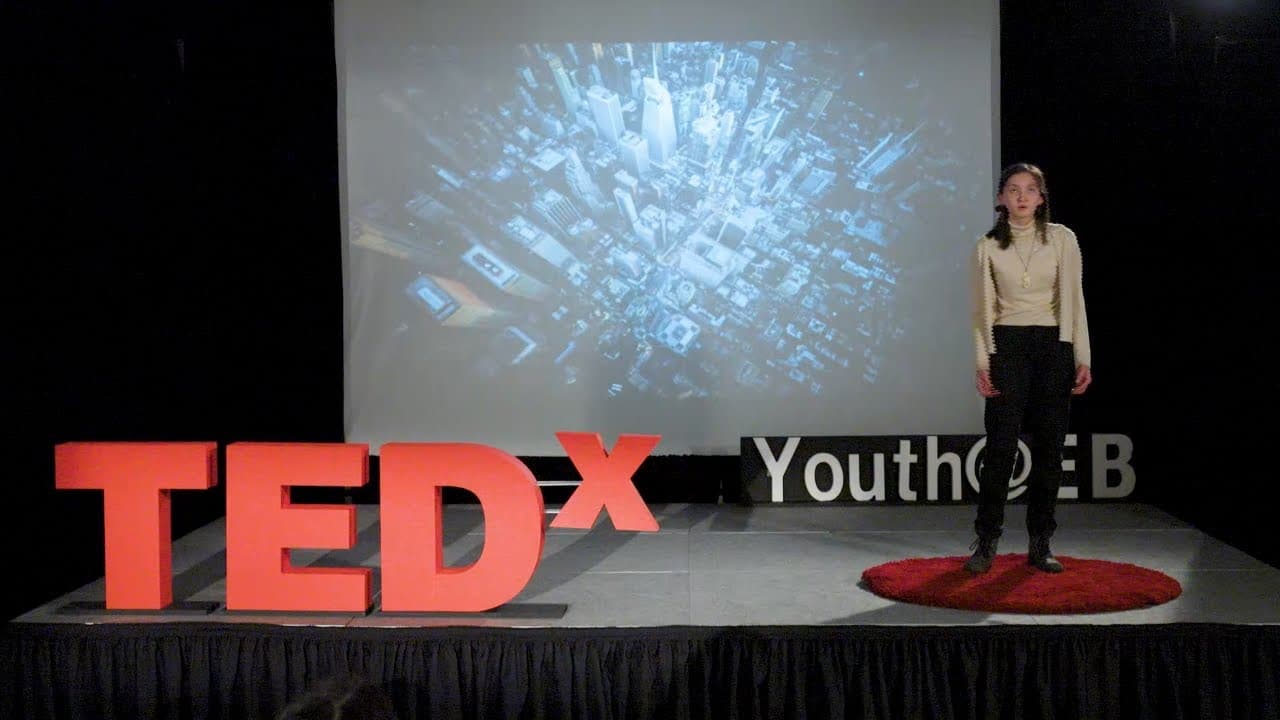
Why Do Cities Need More Green Space? | Victoria Dudley | TEDxYouth@EB
TL;DR
Cities need more green space because vegetation can improve air quality, address climate change, support urban food production, reduce stress, and make neighborhoods more livable. Victoria Dudley highlights Salesforce Park and more than 10 urban gardens at UC Berkeley as practical examples, while noting that concrete production accounts for about 8% of CO2 emissions. Read on for specific ways cities and residents can replace gray spaces with greenery.
Transcript
okay I need your help imagine a big city let's Place ourselves in the middle of San Francisco concrete Towers rows of houses and pavement cars driving loud noises people the only sources of green Billboards and traffic lights or at least that's what I see all big cities like this I had rushed onto Google Earth to find out so many of the Great City ... Read More
Key Insights
- 👾 Green spaces make urban areas more livable, providing a connection to nature in bustling cities.
- 👾 Urban farming in green spaces helps communities become more self-sufficient and supports sustainable practices.
- 👳 The presence of greenery in urban areas promotes mental well-being and reduces crime risks.
- 👾 The concrete industry's carbon emissions highlight the need for replacing concrete with green spaces.
- 👾 Green spaces contribute to cleaner air and combat climate change by absorbing carbon dioxide.
- 😒 The imaginative use of real estate, as seen in Salesforce Park, offers innovative solutions for incorporating green spaces in cities.
- 😋 Urban gardens and food forests offer opportunities to grow food sustainably and combat hunger.
Install to Summarize YouTube Videos and Get Transcripts
Explore YouTube Video Summarizer or Get YouTube Transcript Extractor
Questions & Answers
Q: Why do cities need more green space?
Green spaces make urban areas more livable by connecting people with nature amid concrete, roads, apartments, and parking lots. They can also improve air quality, support urban farming, reduce stress, and help address climate change.
Q: How can green spaces help combat climate change and improve urban air quality?
More trees can help reduce the greenhouse effect, while additional vegetation can improve air quality. Trees may also clear smog and improve visibility, making city air cleaner and clearer.
Q: What is Salesforce Park an example of?
Salesforce Park in San Francisco demonstrates an imaginative use of urban real estate. Its trees and other vegetation bring greenery into the middle of the city and enhance the experience of residents and visitors.
Q: How can cities create green space when land is limited?
Cities can look beyond conventional parks by adding rooftop green spaces, urban gardens, edible gardens, and food forests. These alternatives use existing urban property to create more opportunities for people to connect with nature and grow food.
Q: How does urban farming support communities?
Urban gardens allow communities to grow food locally and help address hunger. UC Berkeley has more than 10 urban gardens, and much of the food harvested from them is donated to food banks.
Q: Can trees and vegetation help reduce crime risks?
A 2022 University of Edinburgh article cited by Victoria Dudley suggested that more trees could reduce crime risks in neighborhoods. Vegetation may also reduce precursors to crime, including aggression and stress.
Q: How can urban greenery affect mental health and productivity?
Plants and green areas can reduce stress and may help people become more patient, enthusiastic, productive, and motivated. More trees in urban areas could therefore improve mental well-being and make daily life more enjoyable.
Q: What environmental concern does concrete create for cities?
The concrete industry is responsible for about 8% of CO2 emissions, according to the talk. Replacing some concrete-covered areas with more vibrant green spaces could begin addressing that environmental burden while making cities more livable.
Summary & Key Takeaways
-
Many of the great cities in the world lack green spaces due to the abundance of concrete, roads, and buildings.
-
Green spaces not only add color to cities but also help combat climate change, improve air quality, and support urban farming.
-
Green areas can also reduce crime risks, promote mental well-being, and increase productivity in urban communities.
Read in Other Languages (beta)
Share This Summary 📚
Summarize YouTube Videos and Get Video Transcripts with 1-Click
Try YouTube Summary with ChatGPT & Claude or YouTube Transcript Generator
Explore More Summaries from TEDx Talks 📚

Summarize YouTube Videos and Get Video Transcripts with 1-Click
Try YouTube Summary with ChatGPT & Claude or YouTube Transcript Generator