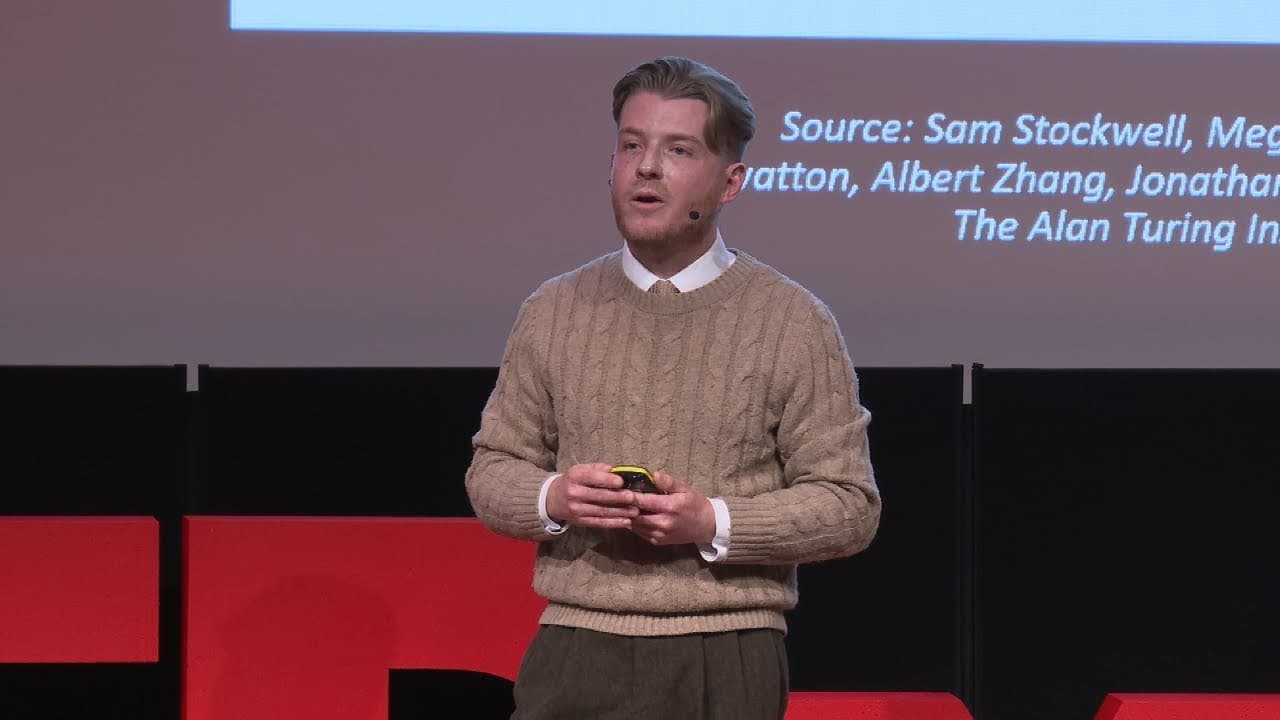
Can You Identify AI-Generated Images? Sam Stockwell on AI and Information Integrity | TEDxLondonBusinessSchool
TL;DR
You may not be able to reliably identify AI-generated images by sight as they become more realistic, so critically evaluate suspicious content and cross-reference it with verified sources. Sam Stockwell’s six-image quiz included four AI-generated images, and only about two audience members achieved full marks. Read on to understand how deepfakes threaten information integrity and how AI can also help counter misinformation.
Transcript
Now, I imagine that some of you with all of the fantastic talks we've had so far today on this topic would have seen AI up there and thought, "Bloody hell, not another one." [laughter] But with energy levels perhaps dipping a little bit with the afternoon session, I thought I would make this a little bit more interactive. Um, can I get a quick show... Read More
Key Insights
- AI is becoming more sophisticated in generating hyper-realistic content, blurring the lines between real and fake.
- The spread of AI-generated misinformation can influence democratic processes and crisis events.
- Deep fakes have not yet significantly impacted election outcomes but pose a long-term threat to democratic systems.
- AI democratizes access to misinformation tools, allowing anyone with a computer to create realistic fake content.
- AI chatbots are increasingly used for information gathering, but they often provide inaccurate or misleading information.
- AI tools can be repurposed to combat misinformation, such as using chatbots to debunk conspiracy theories.
- Users must critically evaluate AI-generated content by cross-referencing with verified sources to ensure accuracy.
- AI's role in information integrity is dual-faceted, with potential for both harm and benefit depending on its application.
Install to Summarize YouTube Videos and Get Transcripts
Explore YouTube Video Summarizer or Get YouTube Transcript Extractor
Questions & Answers
Q: How can you identify AI-generated images and content?
Visual inspection alone is becoming unreliable because AI-generated images are increasingly realistic. Sam Stockwell recommends critically evaluating AI content and cross-referencing its claims with verified sources rather than assuming that seeing is believing.
Q: What did Sam Stockwell’s AI-image quiz reveal?
Stockwell showed six images, giving the audience about 10 seconds to judge each one. Four were AI-generated, including both final images, and only about two audience members said they achieved full marks.
Q: Why will spotting AI-generated images become more difficult?
Stockwell expects AI-generated content to become more realistic and sophisticated over the next two, three, or five years. He warns that people may soon find it virtually impossible to distinguish AI-generated content using only their eyes.
Q: Why do deepfakes threaten information integrity?
As AI-generated and human-created content become harder to distinguish, the boundary between fact and fiction becomes less clear. Deepfakes can replicate not only celebrities and politicians but potentially almost anyone.
Q: How has AI changed the creation of misinformation?
AI tools have democratized access to producing harmful false content. According to Stockwell, someone with a computer and some creativity can create hyper-realistic material at a speed and scale that was previously inconceivable.
Q: How can AI-generated content affect elections and democracy?
AI-generated misinformation can spread confusion during critical democratic periods and, in some cases, contribute to real-world violence. The long-term risk is that increasingly convincing false content may erode trust and blur the distinction between facts and fiction.
Q: What election context did Sam Stockwell highlight from 2024?
He described the beginning of 2024 as a “super election year.” More than 70 countries and nearly two billion people were expected to vote, prompting widespread concern about deepfakes and AI’s effects on election processes.
Q: How can AI help combat misinformation?
AI can amplify verified information and rapidly challenge false narratives. The existing page highlights Debunkbot as an example that uses counter-narratives to reduce belief in conspiracy theories, showing how the same technology can support information integrity.
Summary & Key Takeaways
-
AI-generated content is becoming indistinguishable from real images, posing risks during elections and crisis events. The ability to create hyper-realistic fakes democratizes misinformation, allowing widespread access to these tools. Despite short-term impacts being minimal, the long-term threat to democracy is significant as misinformation blurs the lines between fact and fiction.
-
While AI's negative potential is concerning, it also offers opportunities for positive applications. Tools like Debunkbot show promise in reducing belief in conspiracy theories by providing effective counter-narratives. AI can enhance information integrity by amplifying verified content and quickly debunking false information, offering a proactive approach to misinformation.
-
Users should remain cautious of AI-generated content's accuracy. AI tools are not inherently fact-checking experts; they predict language and scrape data, often leading to inaccuracies. Critical evaluation and cross-referencing with verified sources are essential to ensure the reliability of information consumed from AI outputs.
Read in Other Languages (beta)
Share This Summary 📚
Summarize YouTube Videos and Get Video Transcripts with 1-Click
Try YouTube Summary with ChatGPT & Claude or YouTube Transcript Generator
Explore More Summaries from TEDx Talks 📚


Summarize YouTube Videos and Get Video Transcripts with 1-Click
Try YouTube Summary with ChatGPT & Claude or YouTube Transcript Generator