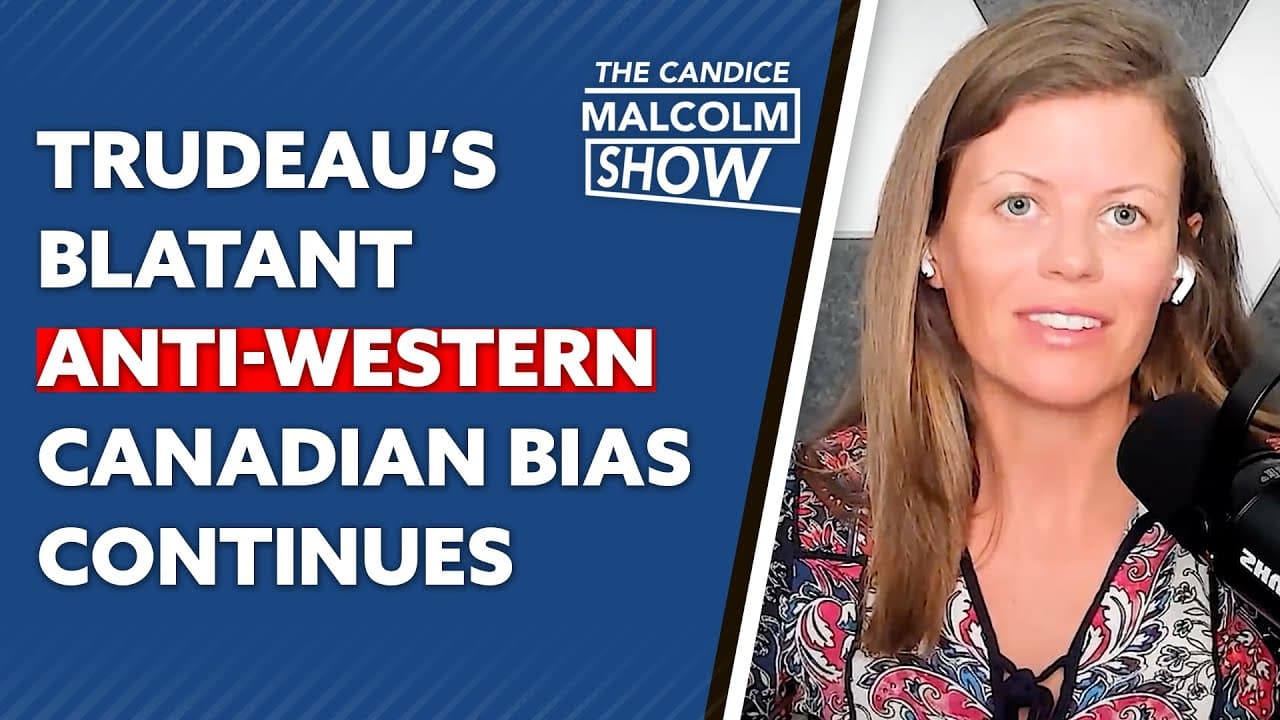
Trudeau’s blatant anti-Western Canadian bias continues
TL;DR
Quebec becomes the first region to ban oil and gas exploration while Trudeau's government approved a major oil project.
Transcript
quebec has become the first jurisdiction in the world to ban oil and gas exploration and development meanwhile the trudeau government has approved a massive oil project in eastern canada while at the same time they continue to block energy projects in western canada what is with this blatant anti-western canada bias i'm candace malcolm and this is ... Read More
Key Insights
- 🧘 Quebec's decision positions it uniquely worldwide, indicating a significant policy shift in energy management focused on environmental concerns.
- 🫢 Advanced technologies in oil and gas could possibly outperform renewable solutions in terms of emissions reduction, suggesting a misunderstood narrative regarding energy production.
- 🇨🇫 Public opinion in Quebec largely favors local resource development, highlighting a disconnect between government policy and citizen preferences.
- 🫢 The potential economic impacts of oil and gas development are vast, with opportunities for job creation and enhanced energy security for Canada.
- 🌍 Federal versus provincial dynamics complicate the ability to formulate a coherent national energy policy that aligns with local interests and environmental goals.
- 🤨 Recent federal approvals of oil projects raise questions regarding consistency in Canada's energy strategy, particularly for western provinces feeling neglected.
- 🤕 The ban in Quebec presents a unique challenge for First Nations communities that could have benefitted economically from resource extraction projects.
Install to Summarize YouTube Videos and Get Transcripts
Explore YouTube Video Summarizer or Get YouTube Transcript Extractor
Questions & Answers
Q: What does Quebec's ban on oil and gas exploration mean for Canada's energy future?
Quebec's ban signifies a shift in energy policy, which may hinder the province and Canada's ability to leverage its vast energy resources, especially in a context where global demand for oil and gas is rising. It might drive the country’s energy strategy towards a greater reliance on imported energy rather than utilizing domestic resources, impacting energy independence.
Q: How does Michael Binion perceive the public sentiment in Quebec towards oil and gas development?
Binion claims that most Quebec citizens support resource development, with polls indicating around 75% approval for oil and gas projects. He argues that the political elite's decision to ban these activities does not reflect the public’s wishes and represents entrenched interests opposed to competition from lower-emission energy sources.
Q: What potential economic benefits could Quebec gain from oil and gas development according to Binion?
Binion suggests that developing Quebec's oil and gas resources could replace significant volumes of imports, especially from countries like Russia, and create thousands of jobs, particularly for First Nations communities. He highlights a natural gas discovery that could make Quebec self-sufficient and bolster the local economy significantly.
Q: How does the federal government's role influence provincial decisions on energy resources?
The federal government has limited power over provincial resource management since natural resources fall under provincial jurisdiction. However, Binion mentions that the federal government could encourage cooperation and development in provincial policies through funding and incentives, especially regarding a national energy strategy.
Q: What arguments does Binion provide against the notion that oil and gas production is inherently harmful to the environment?
Binion emphasizes technological advancements that allow for near-zero emissions in oil and gas production, stating that capturing emissions during production and conversion can significantly mitigate environmental impacts. He believes that the industry is at the forefront of developing sustainable technologies, contrary to the public's perception.
Q: How does the approval of the Bay du Nord project contrast with the ban in Quebec?
The Bay du Nord project represents a significant investment in oil and gas production by the Trudeau government, showcasing a willingness to develop energy resources despite Quebec's ban. Binion highlights that this double standard in policy creates frustration among energy producers in western Canada who feel marginalized and left behind.
Q: What long-term impacts could Quebec's decision have on First Nations communities?
Binion warns that the ban could prevent economic opportunities for First Nations communities who would benefit from job creation and economic development associated with resource extraction. He stresses that this decision fails to consider the long-term poverty issues faced by these communities and could deprive them of substantial growth opportunities.
Q: What is Michael Binion’s vision for a balanced approach to energy and the environment?
Binion advocates for a "third option" where Canada can innovate within the oil and gas sector to produce energy with zero emissions while also incorporating renewable sources. He emphasizes the need for a forward-thinking approach that leverages technology to meet energy demands sustainably rather than choosing between traditional energy production or complete bans.
Summary & Key Takeaways
-
Quebec has officially banned oil and gas exploration, becoming the first jurisdiction globally to take such a step after significant advocacy from environmental groups and citizens.
-
The decision has raised concerns about Canada's energy leadership globally, especially as technology advances towards zero-emissions in oil and gas production.
-
The guest, Michael Binion, argues that there are opportunities for developing Quebec's resources while simultaneously reducing emissions and enhancing economic benefits for local communities, including First Nations.
Read in Other Languages (beta)
Share This Summary 📚
Summarize YouTube Videos and Get Video Transcripts with 1-Click
Try YouTube Summary with ChatGPT & Claude or YouTube Transcript Generator
Explore More Summaries from True North 📚


Summarize YouTube Videos and Get Video Transcripts with 1-Click
Try YouTube Summary with ChatGPT & Claude or YouTube Transcript Generator