How to Calculate Differences in Water and Blood Pressure
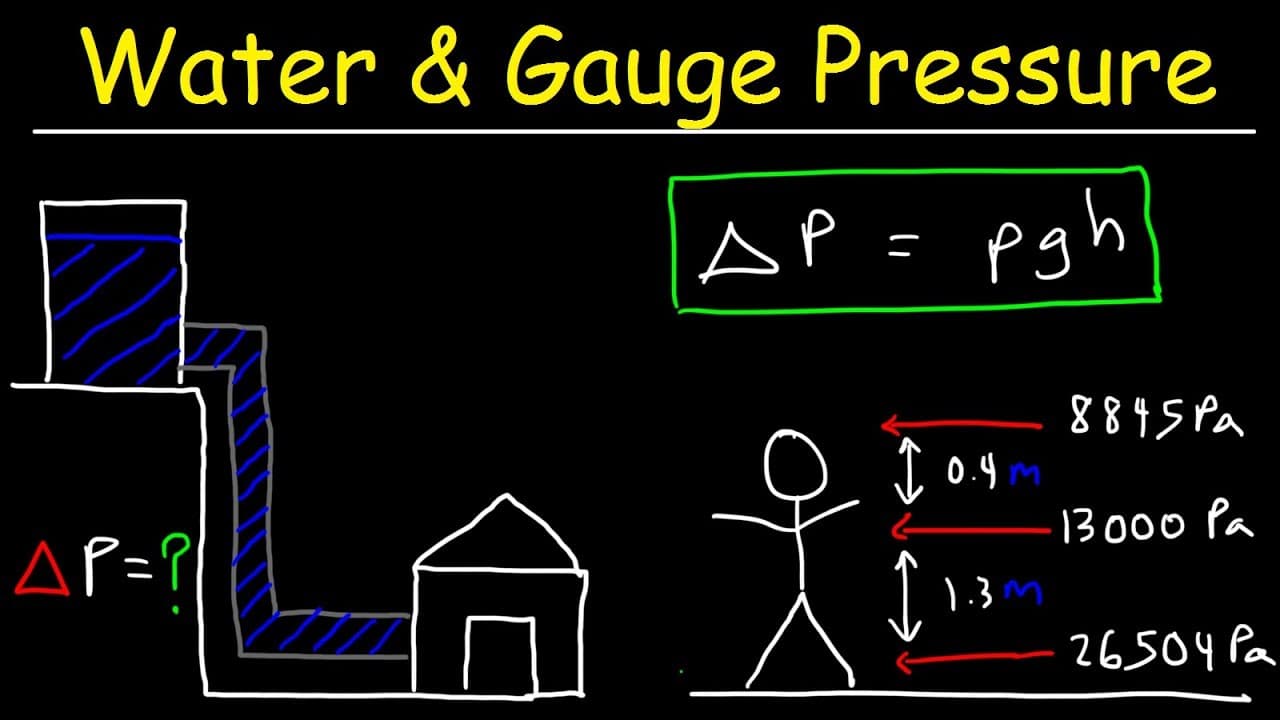
TL;DR
To calculate the difference in water pressure between two heights, use the formula: pressure difference = density × gravitational acceleration × height difference. For blood pressure differences, apply the same concept, factoring in the density of blood and the height change between the heart, head, and feet. Conversion from kilopascals to millimeters of mercury is done using the factor of 101.3 kPa = 760 mmHg.
Transcript
consider this problem what is the difference in the water pressure between the faucet at the bathroom of a house and the top surface of a water tank located 70 meters above the faucet so if we're given the height only how can we calculate the difference in the water pressure between these two points point a and b well we know that pressure is defin... Read More
Key Insights
- 😥 Pressure is defined as force over area and can be calculated using the weight of the fluid above a certain point.
- 😥 The difference in pressure between two points can be determined using the density of the fluid, gravitational acceleration, and height difference.
- 🧑🏭 Kilopascals can be converted to millimeters of mercury using the conversion factor of 101.3 kilopascals = 760 millimeters of mercury.
- ❓ Pressure decreases as you go up in height and increases as you go down.
- 🖐️ Density plays a crucial role in calculating pressure, as it affects the weight of the fluid.
- ❓ Gravitational acceleration is a constant value used in pressure calculations.
- 🩸 The density of blood is commonly used in calculating blood pressure differences.
Install to Summarize YouTube Videos and Get Transcripts
Explore YouTube Video Summarizer or Get YouTube Transcript Extractor
Questions & Answers
Q: How do you calculate the difference in water pressure between two points based on height?
The difference in pressure is equal to the density of the fluid times the gravitational acceleration times the difference in height.
Q: How can you convert pressure from kilopascals to millimeters of mercury?
Use the conversion factor of 101.3 kilopascals = 760 millimeters of mercury.
Q: What is the density of blood used in the calculations?
The average density of whole blood is 1060 kilograms per cubic meter.
Q: How does pressure change as you go up or down in height?
Pressure decreases as you go up and increases as you go down in height.
Summary & Key Takeaways
-
Pressure is defined as force over area, and the force is based on the weight of the water above the point.
-
The difference in pressure between two points is equal to the density of the fluid times the gravitational acceleration times the difference in height.
-
To convert pressure from kilopascals to millimeters of mercury, use the conversion factor of 101.3 kilopascals = 760 millimeters of mercury.
Read in Other Languages (beta)
Share This Summary 📚
Summarize YouTube Videos and Get Video Transcripts with 1-Click
Try YouTube Summary with ChatGPT & Claude or YouTube Transcript Generator
Explore More Summaries from The Organic Chemistry Tutor 📚






Summarize YouTube Videos and Get Video Transcripts with 1-Click
Try YouTube Summary with ChatGPT & Claude or YouTube Transcript Generator