Hitler vs Bin Laden | Robert Crews and Lex Fridman
TL;DR
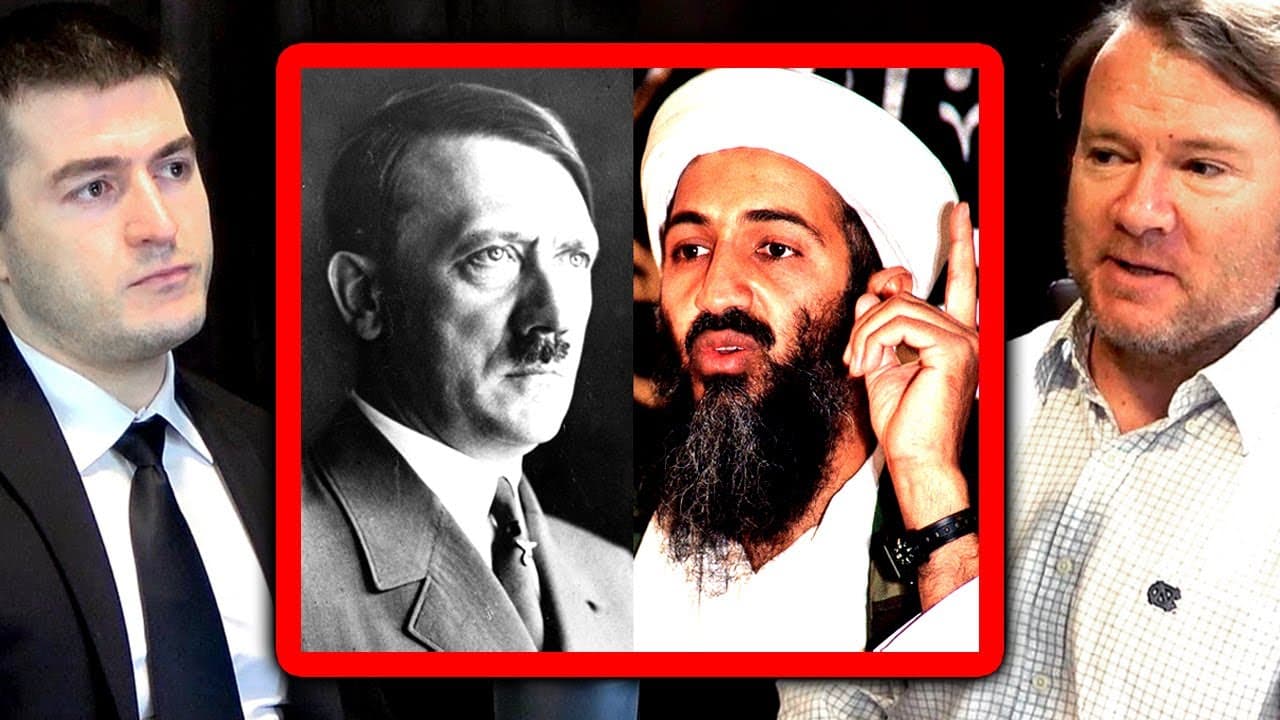
Bin Laden never built a mass movement because his record as a mass murderer limited his appeal among Muslims and others, while his charisma, writing, speeches, and ideas were not strong enough to unite a broad following. Robert Crews and Lex Fridman compare this failure with Hitler’s use of real grievances and emotional scapegoating, then explore the wider ideological and political forces behind violent extremism, reasons to read on for a more nuanced account.
Transcript
you know hitler spoke to he could speak things like inflation right which really existed um but he also appealed to the irrational emotions of germans right he sought out scapegoats you know jews roma um disabled people homosexuals and so on right and that's also there in bin laden too i mean daddy of um you know a an anti-semitism uh the constant ... Read More
Key Insights
- 🤔 Bin Laden's ideology contained elements of anti-Semitism, populism, environmentalism, and the desire to alleviate suffering, showcasing his cosmopolitan thinking.
- 🧑🏭 The motivations behind acts of terrorism extend beyond religious augmentation and can be influenced by geopolitics, inequality, and existential threats.
- 🧑🏭 There is no specific typology to predict who will become a violent extremist, as individuals from diverse backgrounds have been involved in acts of terrorism.
- 💦 Bin Laden's strategy of staying in the shadows and projecting a sense of invisibility contributed to his authority and cultivated a belief in a hidden force working behind the scenes.
- 🧑🦯 The diversity among Muslim communities played a significant role in rejecting bin Laden's leadership, despite pockets of support and instances of non-Muslims wearing bin Laden shirts as symbolic gestures.
- 🥇 The condemnation of 9/11 by numerous scholars and organizations went largely unnoticed, leading to unfair blame placed on Muslims as a whole.
Install to Summarize YouTube Videos and Get Transcripts
Explore YouTube Video Summarizer or Get YouTube Transcript Extractor
Questions & Answers
Q: Why did bin Laden’s ideology never become a mass movement?
Robert Crews says the blood on bin Laden’s hands as a mass murderer consistently limited his appeal among Muslims and others. Lex Fridman also suggests bin Laden lacked the charisma, writing, speeches, and sufficiently compelling ideas needed to unite large numbers of young people around him.
Q: How were Hitler’s and bin Laden’s methods of attracting followers similar?
Hitler addressed real problems such as inflation while appealing to irrational emotions and scapegoating Jews, Roma, disabled people, and homosexuals. Bin Laden similarly invoked genuine suffering in places such as Kashmir and Chechnya while repeatedly targeting “Zionists and crusaders” in what Crews calls a shotgun approach to finding followers.
Q: How did charisma distinguish Hitler from bin Laden?
Fridman argues that Hitler possessed enough charisma to rally a nation to war, whereas bin Laden was not sufficiently charismatic. He suggests that stronger writing, speeches, and ideas might have made bin Laden’s message more viral, illustrating how a destructive leader’s personal charisma can shape history.
Q: Why does Robert Crews describe bin Laden as a cosmopolitan rather than Islamic thinker?
Crews says bin Laden drew from several modern ideologies rather than representing Islamic thought alone. He identifies anti-Semitism, populism, environmentalism, and appeals to relieve human suffering as elements of bin Laden’s thinking, arguing that recognizing this complexity helps separate him from Islam as a whole.
Q: What did bin Laden shirts worn by young people in East Africa signify?
Crews cites Jeremy Prestol’s research on global icons, which observed young people wearing shirts depicting bin Laden, Tupac, and Bob Marley. He interprets these shirts as a partial embrace of the figures’ rebelliousness by some people under particular conditions, not necessarily full support for everything they represented.
Q: Is there a reliable profile for predicting who will become a violent extremist?
Crews says there is no single typology that can predict who will become violent. People connected to the Paris Bataclan murders and London’s 7/7 bombings came from varied backgrounds: some were nominally Muslim, some attended mosques, some did not, and their personal circumstances ranged from criminal histories and social failure to having a wife and family.
Q: What factors besides religion can motivate violent extremism?
Crews argues that explanations must go beyond religious commitment considered narrowly or by itself. He points to geopolitics, inequality, the existential threat of the climate crisis, and other pressures, describing extremist violence as an evil form of political contestation through which perpetrators try to change conditions.
Q: How did bin Laden’s invisibility contribute to his authority?
Bin Laden’s studied practice of staying in the shadows could itself become a source of power. His absence encouraged the belief that someone was secretly working behind the scenes, a dynamic Crews connects to dictatorships and contemporary conspiratorial thinking such as QAnon.
Summary & Key Takeaways
-
Bin Laden, like Hitler, utilized a combination of rational arguments and emotional manipulation to appeal to Germans and seek out scapegoats.
-
Despite his anti-Semitic views and appeal to followers, bin Laden's ideology never became a mass movement, largely due to the limitations of his charisma and the atrocities he committed.
-
Bin Laden's ideas had the potential to resonate with marginalized individuals seeking rebellion, as seen in the popularity of his shirts among young people in East Africa.
Read in Other Languages (beta)
Share This Summary 📚
Summarize YouTube Videos and Get Video Transcripts with 1-Click
Try YouTube Summary with ChatGPT & Claude or YouTube Transcript Generator
Explore More Summaries from Lex Clips 📚



Summarize YouTube Videos and Get Video Transcripts with 1-Click
Try YouTube Summary with ChatGPT & Claude or YouTube Transcript Generator