The next pandemic is inevitable. Are we prepared? | Larry Brilliant | Big Think
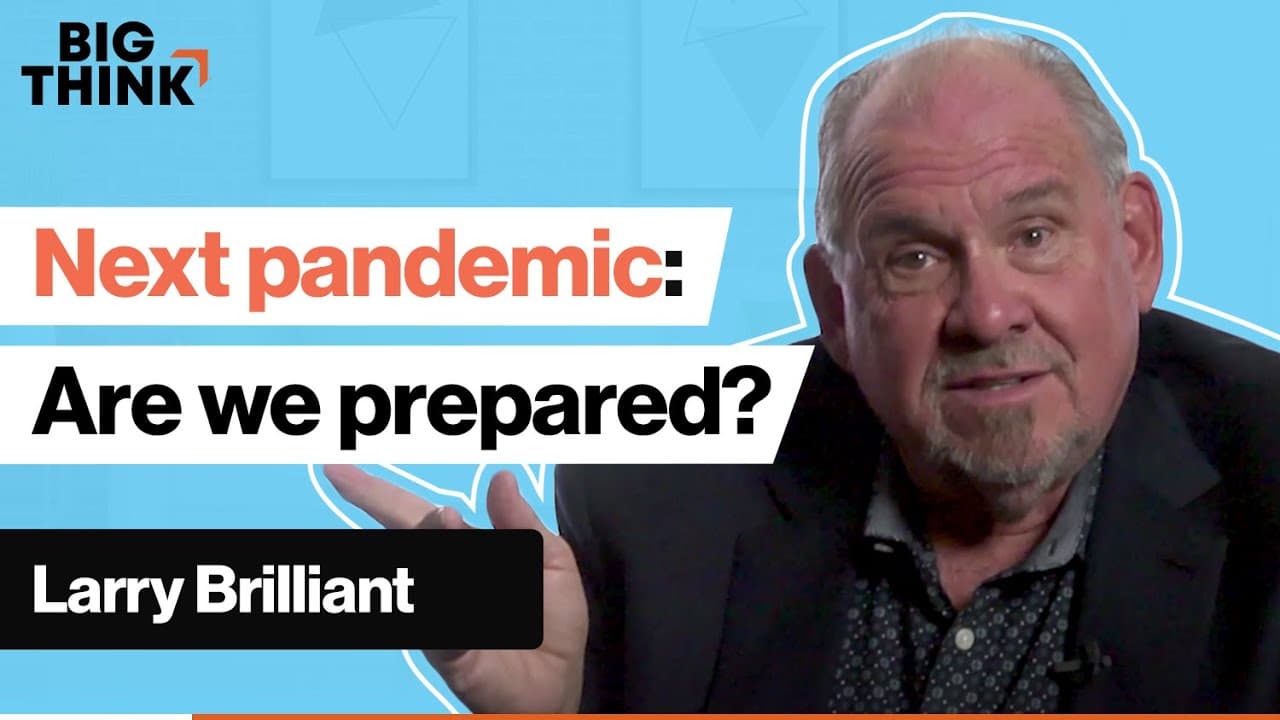
TL;DR
We are not adequately prepared unless governments and international agencies can detect cases quickly, respond immediately, and deploy core public health measures. Larry Brilliant says vaccines and antivirals will not be available in a pandemic’s first few days, making isolation, social distancing, containment, and messaging essential. Ebola also showed how budget cuts contributed to a six-month delay in coordinated action. Read on for the preparedness lessons he draws from that outbreak.
Transcript
LARRY BRILLIANT: It's not a question of if we will have a pandemic, it's a question of when. The odds that something like that happens increases to the extent that we are not prepared that we do not increase our ability to find every case as soon as it jumps from an animal to a human, that we are not able to respond quickly by whatever means we hav... Read More
Key Insights
- 🎚️ Pandemics are inevitable, and the level of preparedness determines their impact.
- 👋 Good public health practices, including isolation and social distancing, are crucial in responding to a pandemic.
- 🧑⚕️ Initial cases of a pandemic often occur in poorer countries with weak public health infrastructure.
- 💇 The budget cuts in pandemic prevention can significantly delay a coordinated response.
- 🇺🇸 The United States needs to prioritize pandemic preparedness by adequately staffing and resourcing it.
- 👀 Even conservative individuals can recognize the importance of pandemic preparedness after watching a realistic representation in movies like "Contagion."
- 🌍 Dealing with pandemics requires international cooperation and the involvement of government and international agencies.
Install to Summarize YouTube Videos and Get Transcripts
Explore YouTube Video Summarizer or Get YouTube Transcript Extractor
Questions & Answers
Q: Are we prepared for the next pandemic?
Preparedness depends on finding every case quickly after a disease jumps from an animal to a human and responding immediately with the available tools. Larry Brilliant argues that governments must staff up for pandemic prevention because a pandemic is a low-probability but highly consequential event.
Q: Why does Larry Brilliant say another pandemic is inevitable?
He says a pandemic is not a question of if, but when. The danger increases when authorities cannot rapidly detect each case or respond as soon as an infection crosses from an animal to a human.
Q: What measures are needed during the first days of a pandemic?
Authorities need isolation, social distancing, containment, and effective messaging. These public health measures are crucial because a vaccine or antiviral will not be available during the first few days.
Q: Where is the first case of a pandemic likely to appear?
Brilliant says the first case is unlikely to appear in New York City or Chicago. It is more likely to emerge in a poor country, far from the capital, where public health infrastructure may be weak.
Q: How did weak public health infrastructure affect the Ebola outbreak?
The first Ebola cases occurred near the border of three impoverished, post-conflict countries without strong public health infrastructure. Those countries asked the World Health Organization to send teams and resources.
Q: How did WHO budget cuts affect the Ebola response?
Around the May World Health Assembly, WHO management was told to cut its budget. Cuts affected pandemic prevention, infectious disease control, and immediate outbreak response, and six months passed before a declaration triggered a coordinated international effort.
Q: How serious could the Ebola outbreak have become?
The outbreak was on a trajectory toward hundreds of thousands of cases. The CDC estimated that it could exceed one million cases before the Obama administration and the United States intervened with resources that included military assistance and food.
Q: Who should be responsible for pandemic preparedness?
Brilliant says pandemic planning and response require government and international agencies. He argues that corporations and foundations in the private sector cannot manage these highly consequential events by themselves.
Summary & Key Takeaways
-
Pandemics are not a matter of if, but when, and our level of preparedness will determine their impact.
-
Good public health practices, such as isolation, social distancing, and containment, are crucial in responding to a pandemic.
-
The first cases of a pandemic are likely to occur in poorer countries, far from major cities, where public health infrastructure may be weak.
Read in Other Languages (beta)
Share This Summary 📚
Summarize YouTube Videos and Get Video Transcripts with 1-Click
Try YouTube Summary with ChatGPT & Claude or YouTube Transcript Generator
Explore More Summaries from Big Think 📚


Summarize YouTube Videos and Get Video Transcripts with 1-Click
Try YouTube Summary with ChatGPT & Claude or YouTube Transcript Generator