5D, Holograms, & DNA: Amazing Hard Drives of the Future
TL;DR
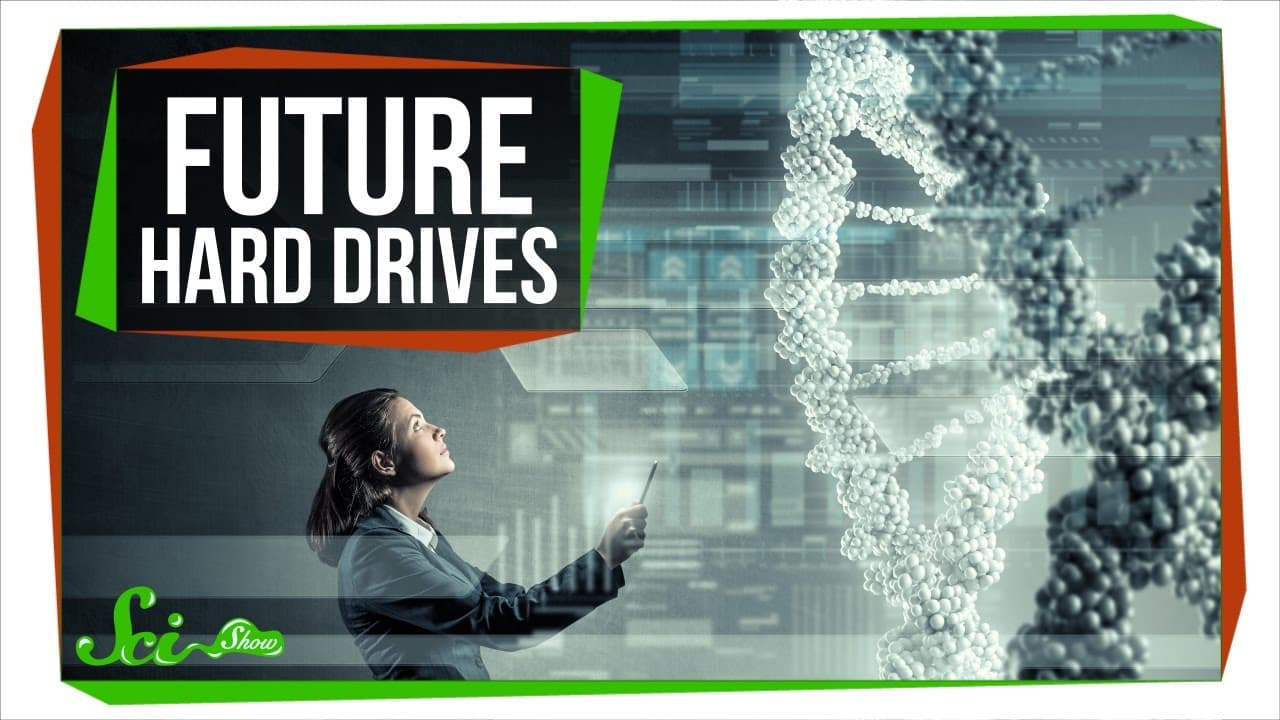
Researchers are developing new ways to store data, including using tiny glass disks that can last billions of years, holographic storage with thousands of patterned layers, and encoding data into DNA.
Transcript
Computers are getting smaller, faster, and more powerful all the time. That’s awesome for a lot of reasons, but it’s creating a problem: most of our computers store data pretty much the same way they have for decades, and that technology is starting to run into fundamental physical limits on just how small and fast it can be. Which is why a lot of ... Read More
Key Insights
- 🐎 Current data storage technology is reaching its physical limits in terms of size and speed.
- 💿 Traditional methods include magnetic patterns on hard drives, physical patterns on optical disks, and transistor switches in RAM.
- 🪛 Solid-state drives (SSDs) are faster and more durable than hard disk drives (HDDs) and are becoming more popular.
- 😎 Researchers are developing innovative methods such as five-dimensional storage using glass disks, holographic storage with multiple layers, and encoding data into DNA.
Install to Summarize YouTube Videos and Get Transcripts
Explore YouTube Video Summarizer or Get YouTube Transcript Extractor
Questions & Answers
Q: How do computers store data without power?
Computers don't permanently store data as 'on' and 'off' patterns. Data is stored as ones and zeros (bits) using different methods, such as magnetic patterns on hard drives or current-blocking transistors.
Q: What are the advantages of solid-state drives (SSDs) over hard disk drives (HDDs)?
SSDs are faster, more durable, and don't have any moving parts that can break. They use different types of transistors that can retain stored data even without power.
Q: What is five-dimensional data storage?
Five-dimensional data storage involves using thumb-sized glass disks with patterns etched into three different layers. Each layer has two different patterns, allowing for five different ways of reading information. These disks can hold a huge amount of data and are very stable.
Q: How does holographic storage work?
Holographic storage uses the interference of light to encode data. Instead of reading one bit at a time, like traditional storage methods, holographic storage can read thousands of bits at once, improving data access speed. It requires specialized equipment and may require changes to computer systems.
Summary & Key Takeaways
-
Computers are limited by the physical constraints of current data storage technology, which is why researchers are exploring newer methods.
-
Data is currently stored in various ways, such as magnetic patterns on hard drives, physical patterns on optical disks, and switches in transistors.
-
Scientists are developing innovative storage methods, including five-dimensional data storage using glass disks, holographic storage with multiple layers, and encoding data into DNA.
Read in Other Languages (beta)
Share This Summary 📚
Summarize YouTube Videos and Get Video Transcripts with 1-Click
Try YouTube Summary with ChatGPT & Claude or YouTube Transcript Generator
Explore More Summaries from SciShow 📚


Summarize YouTube Videos and Get Video Transcripts with 1-Click
Try YouTube Summary with ChatGPT & Claude or YouTube Transcript Generator