What Are the Weirdest Animal Teeth and Their Functions?
TL;DR
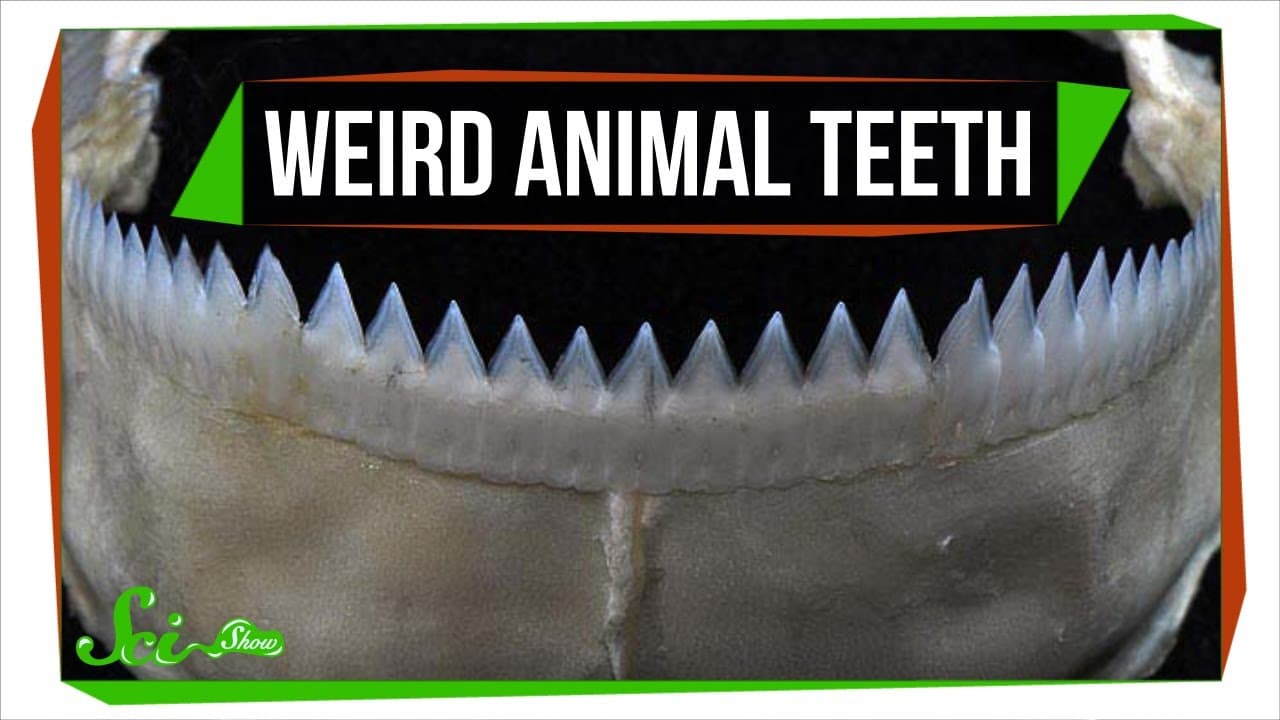
Some of the weirdest animal teeth include crabeater seals' serrated teeth for filtering krill, naked mole rats' independent incisors for digging, cookiecutter sharks' interlocking teeth for removing flesh, and moray eels' pharyngeal jaws for capturing prey. These unique adaptations illustrate how animal teeth evolve to meet specific dietary needs and survival strategies.
Transcript
You might dread going to the dentist, but at least human teeth are fairly straightforward. They line up in rows, stay inside your mouth, and have standard toothy shapes. We have these all-purpose teeth because we have a pretty all-purpose diet. Humans can survive on a wide range of foods, so we don’t have to have any super-specialized teeth. That’s... Read More
Key Insights
- 🦷 Animals have specialized teeth that are shaped by their diet and survival needs.
- 🦷 The teeth of crabeater seals are designed to filter out krill from seawater.
- 🦷 Naked mole rats have unique teeth that they can move independently, and their teeth play a crucial role in various activities.
- 😒 Cookiecutter sharks have interconnecting teeth that they use to remove plugs of flesh from their prey.
- 👻 Moray eels have powerful pharyngeal jaws and teeth that allow them to catch larger prey.
- 🧑🏭 Babirusa pigs have long tusks that act as shields during fights.
- 😵💫 The helicoprion fish had a spiral saw-like structure of teeth that was used to slice soft-bodied prey.
Install to Summarize YouTube Videos and Get Transcripts
Explore YouTube Video Summarizer or Get YouTube Transcript Extractor
Questions & Answers
Q: How do crabeater seals use their strange teeth to survive?
Crabeater seals have interlocking lobes in their teeth that act as sieves to filter out tiny krill from mouthfuls of seawater, allowing them to feed on their primary food source.
Q: How do naked mole rats use their teeth in their daily activities?
Naked mole rats use their teeth not only for digging burrows and gnawing roots but also for moving their babies and carrying food.
Q: Why do the teeth of cookiecutter sharks grow in interconnecting rows?
Cookiecutter sharks have interlocking teeth that function as a unit to remove plugs of flesh from their prey. Their teeth are also replaced as a single unit, and the old teeth are swallowed to reabsorb calcium.
Q: How do moray eels catch their prey without using suction?
Moray eels rely on their powerful bite, enabled by their complex pharyngeal jaws and teeth, to catch their prey. They can launch their secondary jaws into their mouths to clamp down on their prey.
Summary & Key Takeaways
-
Crabeater seals have serrated teeth that act as sieves to filter krill out of mouthfuls of seawater, a crucial part of their diet.
-
Naked mole rats have two pairs of protruding incisors that they can move independently, and their teeth make up a significant portion of their musculature and brain function.
-
Cookiecutter sharks have interlocking teeth that they use to remove plugs of flesh from their prey, leaving behind cookie-sized wounds.
-
Moray eels have powerful pharyngeal jaws and teeth that they can launch into their mouths to catch larger prey.
Read in Other Languages (beta)
Share This Summary 📚
Summarize YouTube Videos and Get Video Transcripts with 1-Click
Try YouTube Summary with ChatGPT & Claude or YouTube Transcript Generator
Explore More Summaries from SciShow 📚


Summarize YouTube Videos and Get Video Transcripts with 1-Click
Try YouTube Summary with ChatGPT & Claude or YouTube Transcript Generator