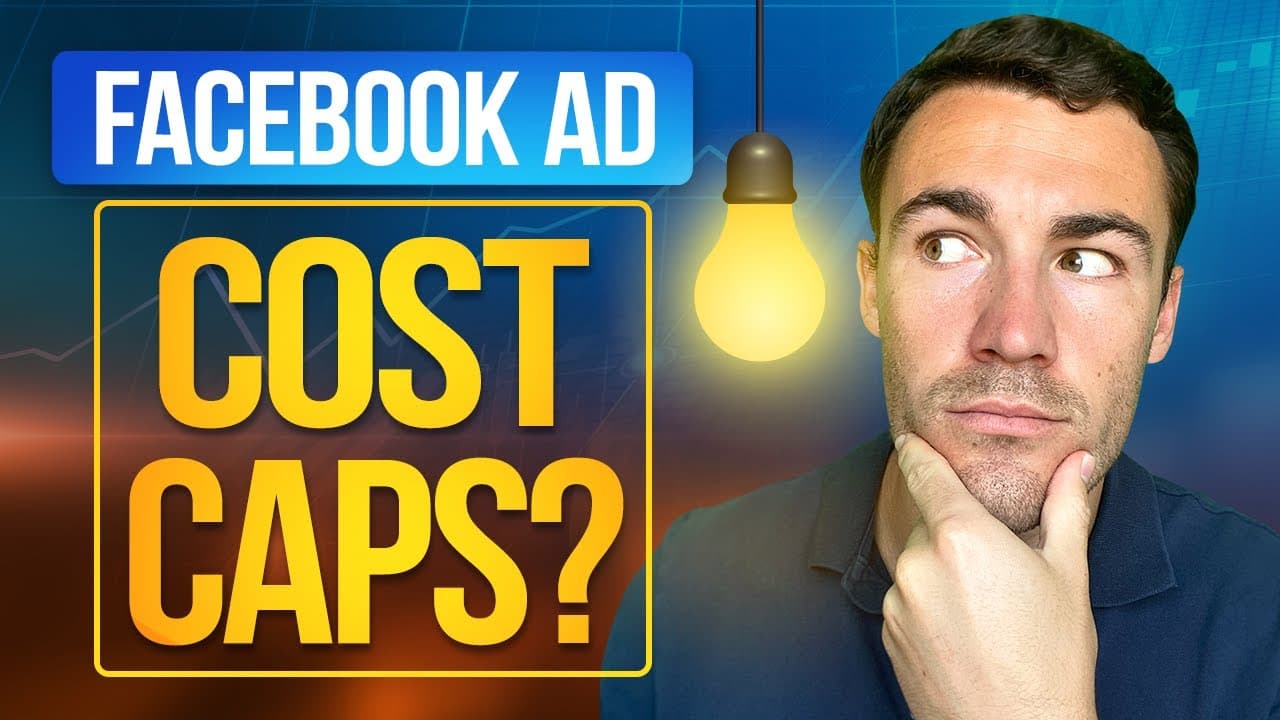
Should You Use Cost Caps in Facebook Ads?
TL;DR
Cost caps in Facebook ads can help stabilize advertising costs by controlling spikes, ensuring profitability. However, they may hinder optimization in new campaigns and lead to longer learning phases. It's best to use cost caps for mature campaigns with established cost data, setting them above the average conversion cost for effective performance management.
Transcript
hi guys it's ben heath from lead guru and in this video i'm going to talk about facebook ads cost caps do you want to be using cost caps are they a good idea if you are going to use them how should you use them i see a lot of people making mistakes with cost caps adding them into their facebook ad campaigns when they shouldn't not using the right w... Read More
Key Insights
- Cost caps can prevent cost spikes in Facebook ad campaigns, helping maintain profitability by controlling costs during fluctuations.
- Using cost caps in new campaigns can hinder Facebook's optimization process, leading to prolonged learning phases and potential underperformance.
- Cost caps are more effective for mature campaigns with established cost data, allowing for better management of cost fluctuations.
- Setting cost caps below average conversion costs can prevent campaigns from running effectively, potentially wasting budget and resources.
- Starting with a higher cost cap and gradually lowering it allows for better assessment of its impact on campaign performance.
- Cost caps should not be used as a tool to lower average costs but to eliminate cost spikes, maintaining stable performance.
- Introducing new ad sets or targeting options should be done without cost caps initially to allow for proper optimization.
- Facebook's cost cap mechanism is not perfect and may turn off campaigns too late or too early, requiring careful monitoring.
Install to Summarize YouTube Videos and Get Transcripts
Explore YouTube Video Summarizer or Get YouTube Transcript Extractor
Questions & Answers
Q: What are Facebook ads cost caps?
Facebook ads cost caps are a tool used to control advertising costs by setting a maximum cost per result, preventing cost spikes during fluctuations. They help maintain campaign profitability by ensuring costs do not exceed a predetermined limit, especially useful in mature campaigns with stable cost data.
Q: When should you avoid using cost caps?
Cost caps should be avoided in new campaigns or when introducing new ad sets or targeting options. In these scenarios, cost caps can interfere with Facebook's optimization process, leading to prolonged learning phases and potential underperformance. It's crucial to allow Facebook to optimize without restrictions initially.
Q: How do cost caps affect new campaigns?
In new campaigns, cost caps can hinder Facebook's ability to optimize effectively, as they restrict the platform's testing capabilities. This can lead to extended learning phases and potentially prevent the campaign from achieving optimal performance, as Facebook cannot fully explore various targeting and creative options.
Q: What is the recommended approach for setting cost caps?
The recommended approach is to start with a cost cap slightly higher than your average conversion cost, typically around 20% above. This allows the campaign to run without immediate restrictions. Gradually reducing the cost cap based on performance helps in finding the optimal level that maintains profitability without hindering campaign execution.
Q: Can cost caps reduce average conversion costs?
Cost caps are not designed to reduce average conversion costs but to manage cost spikes. They help in maintaining stable performance by preventing excessive spending during fluctuations. Attempting to use cost caps to lower average costs can lead to campaigns not running effectively or at all, thus wasting budget.
Q: What are the potential downsides of using cost caps?
Potential downsides include campaigns being turned off too late or too early, leading to inefficient spending. If set incorrectly, cost caps can prevent campaigns from running, especially if set below the average conversion cost. They require careful monitoring and adjustment to ensure they are beneficial rather than detrimental.
Q: How should new ad sets be handled in relation to cost caps?
When introducing new ad sets, it's advisable to initially run them without cost caps. This allows Facebook's optimization process to function effectively, exploring various targeting and creative options without restrictions. Once an average cost is established, cost caps can be introduced gradually to manage costs.
Q: What resources are available for learning more about Facebook ads cost caps?
Resources include webinars and Facebook groups, such as the free webinar on Facebook ad strategies and the Facebook Ads Mastermind Group. These resources provide insights into effective strategies for using cost caps, optimizing campaigns, and learning from other advertisers' experiences to achieve better results.
Summary & Key Takeaways
-
Facebook ads cost caps are designed to stabilize advertising costs by preventing spikes, ensuring campaigns remain profitable. However, they can interfere with new campaigns' optimization, leading to longer learning phases. It's crucial to use cost caps strategically, especially for mature campaigns, to avoid hindering performance.
-
Implementing cost caps requires understanding your campaign's average conversion costs. Setting caps too low can prevent campaigns from running effectively. A gradual approach, starting with higher caps and adjusting based on performance, helps in maintaining campaign efficiency and avoiding unnecessary budget wastage.
-
Cost caps are not a tool for reducing average costs but for managing fluctuations. New ad sets or major changes should initially run without caps to allow Facebook's optimization process to function effectively. Monitoring and adjusting cost caps is essential to ensure they are beneficial rather than detrimental.
Read in Other Languages (beta)
Share This Summary 📚
Summarize YouTube Videos and Get Video Transcripts with 1-Click
Try YouTube Summary with ChatGPT & Claude or YouTube Transcript Generator
Explore More Summaries from Ben Heath 📚

Summarize YouTube Videos and Get Video Transcripts with 1-Click
Try YouTube Summary with ChatGPT & Claude or YouTube Transcript Generator