Why Are Days Getting Shorter on Earth?
TL;DR
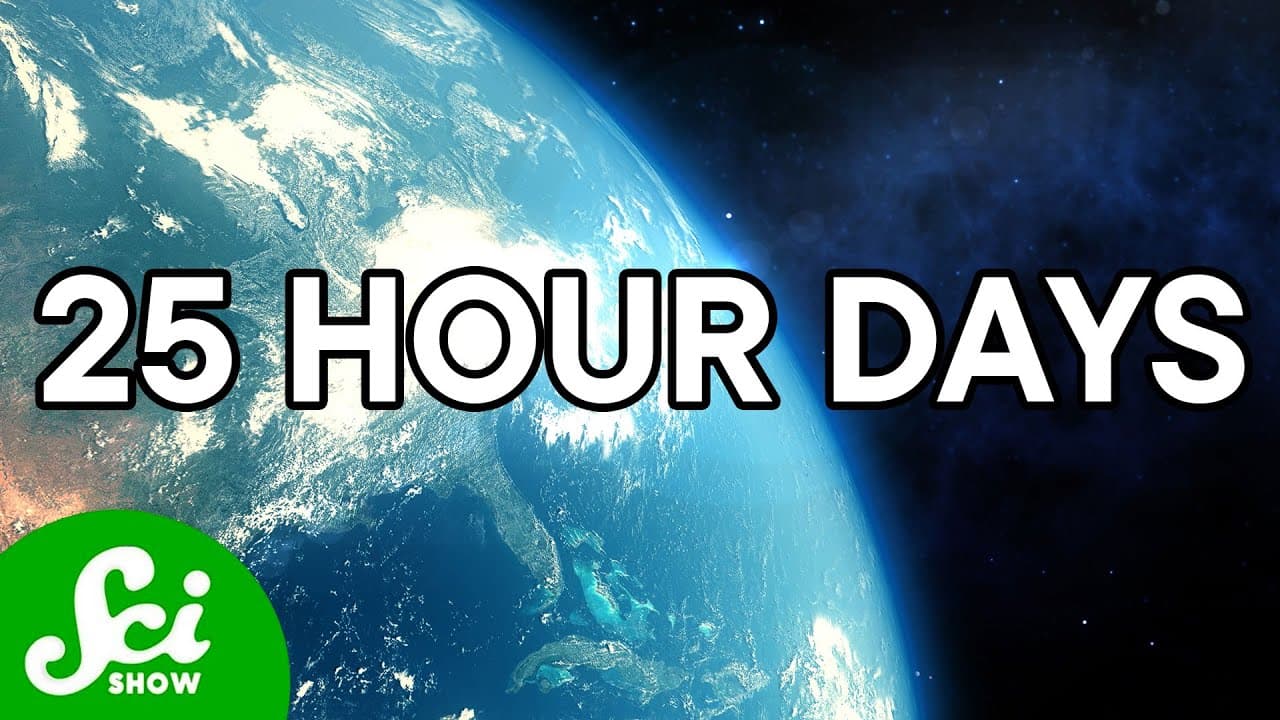
Recent records show the shortest day on Earth was 1.59 milliseconds shorter than 24 hours due to varying rotation speeds influenced by factors like gravitational forces and climate change. While days have generally lengthened over millions of years, recent melting ice caps may be causing shorter days, indicating a complex interplay between natural forces and human impact.
Transcript
Thanks to Linode Cloud Computing for supporting this episode of SciShow. You can go to linode.com/scishow to learn more and get a $100 60-day credit on a new Linode account. [♪ INTRO] Most of us can probably agree that the passage of time has gotten a little weird lately. While it’s been a few years since the COVID-19 pandemic started, it somet... Read More
Key Insights
- 🥳 The length of a day on Earth is not fixed at exactly 24 hours.
- 🥳 Over millions of years, the day has generally been getting longer, but there have been periods of shorter days.
- 🧑🏭 Earth's rotation speed is influenced by various factors, including gravitational forces from the Moon and changes in Earth's mass distribution.
- 🫠 Climate change, specifically melting ice caps, may be contributing to shorter days recently.
- ☠️ The accuracy of GPS systems relies on precise measurements of Earth's rotation rate.
- 🫤 Scientists can use mollusk fossils to estimate day lengths from millions of years ago.
- 🥳 The trend of lengthening days is expected to continue, with days reaching 25 hours in the future.
Install to Summarize YouTube Videos and Get Transcripts
Explore YouTube Video Summarizer or Get YouTube Transcript Extractor
Questions & Answers
Q: How do scientists measure the length of days millions of years ago?
Mollusk fossils provide insight into the length of days by analyzing the thickness of their calcium carbonate layers. Thinner layers indicate shorter days.
Q: What causes the variations in the length of a day over time?
The Moon's gravitational pull slows down Earth's spin over long periods, while shorter-term changes in the distribution of Earth's mass, such as melting ice caps, can also impact the length of a day.
Q: How do changing day lengths affect GPS technologies?
GPS systems rely on the Earth's rotation rate to calculate locations accurately. Minute differences in day lengths can lead to significant errors in GPS calculations, which can have serious consequences for navigation and monitoring natural phenomena.
Q: Will Earth's days continue to get longer?
Yes, the Moon's gravitational influence will continue to slow down Earth's rotation. If the trend of lengthening days seen in the past 1.4 billion years continues, days will eventually reach 25 hours in about 250 million years.
Summary & Key Takeaways
-
The passage of time feels strange, with the COVID-19 pandemic making it seem shorter and longer simultaneously.
-
The Earth's rotation speed causes the length of a day to vary, with the shortest day on record being 1.59 milliseconds shorter.
-
Fossils and environmental ratios suggest that millions of years ago, the average day on Earth was half an hour shorter.
Read in Other Languages (beta)
Share This Summary 📚
Summarize YouTube Videos and Get Video Transcripts with 1-Click
Try YouTube Summary with ChatGPT & Claude or YouTube Transcript Generator
Explore More Summaries from SciShow 📚

Summarize YouTube Videos and Get Video Transcripts with 1-Click
Try YouTube Summary with ChatGPT & Claude or YouTube Transcript Generator