Beau Lotto + Amy O'Toole: Science is for everyone, kids included
TL;DR
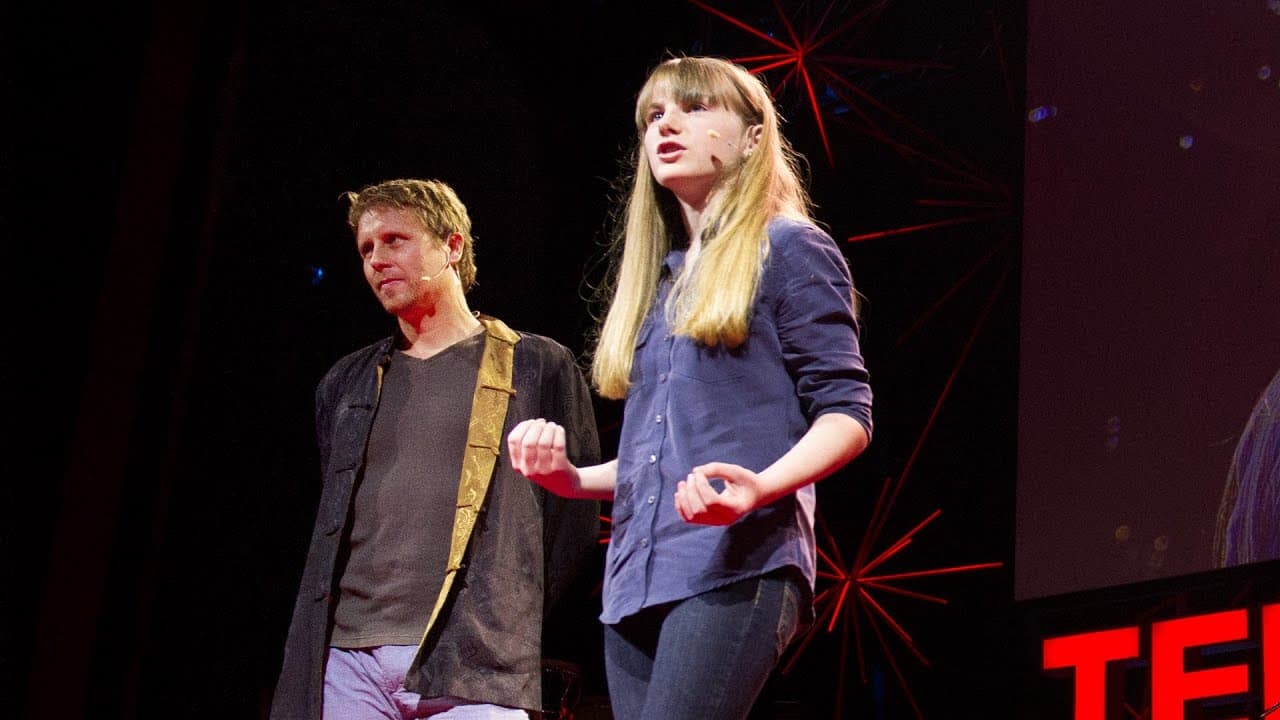
Science is for everyone because asking questions, experimenting through play, observing results, and sharing findings can enable anyone, including children, to discover something new. Beau Lotto worked with 25 children ages 8 to 10 on the Blackawton Bees Project, which challenged assumptions about children’s ability to contribute to science. Read on to see how perception, uncertainty, and play shaped their scientific work.
Transcript
Translator: Joseph Geni Reviewer: Morton Bast Beau Lotto: So, this game is very simple. All you have to do is read what you see. Right? So, I'm going to count to you, so we don't all do it together. Okay, one, two, three.Audience: Can you read this? BL: Amazing. What about this one? One, two, three.Audience: You are not reading this. BL: All right.... Read More
Key Insights
- 👁️ Perception is grounded in our experience, and our brain takes meaningless information and makes meaning out of it based on past experiences.
- 🎭 Uncertainty, which is created by asking questions, is seen as a bad thing, yet it is necessary for innovation and new discoveries.
- 🔬 Science is a way of being and experimenting is a form of play, which allows for adaptability, possibility, social bonding, and intrinsic motivation.
- 🐝 Children can make significant contributions to science and can come up with questions that are significant to expert scientists.
- 📝 The process of science involves asking questions, designing experiments, making observations, and sharing findings.
- 👥 The Blackawton Bees Project, led by children, became the basis for the youngest published scientists in the world and received widespread recognition and acclaim.
- 🌍 Science offers the possibility of seeing the world in a new way, and true science education should give people a voice and enable them to express that voice.
- 💡 Anyone has the potential to discover something new and changing the way we think about science can be easy with the right opportunities and mindset.
Install to Summarize YouTube Videos and Get Transcripts
Explore YouTube Video Summarizer or Get YouTube Transcript Extractor
Questions & Answers
Q: Why do Beau Lotto and Amy O'Toole say science is for everyone, including kids?
They present science as a way of being rather than something defined only by the method section of a paper. In the Blackawton Bees Project, 25 children ages 8 to 10 asked scientifically significant questions and participated in an experiment, showing that children can contribute to science.
Q: What was the Blackawton Bees Project?
The Blackawton Bees Project involved Beau Lotto, Amy O'Toole, and children at a small school in Devon. Its aim was to help the children see science differently and, through doing science, see themselves differently.
Q: What did the children do in the Blackawton Bees Project?
The children began by asking questions and helped develop an experiment involving bees. The broader scientific process described on the page includes asking questions, designing experiments, making observations, and sharing findings.
Q: How old were the children in the Blackawton Bees Project?
The project involved 25 children who were 8 to 10 years old. Beau Lotto chose them because children are experts in play, which he connects directly to scientific thinking.
Q: Why does Beau Lotto connect play with science?
Play celebrates uncertainty, adapts to change, opens possibilities, supports cooperation and social bonding, and is intrinsically motivated. Lotto says these five ways of being are also needed to be a good scientist, and that adding rules to play creates a game, just as an experiment does.
Q: Why is uncertainty important for scientific discovery?
Questions create uncertainty by challenging what people already believe to be true. Although uncertainty can feel dangerous, Lotto argues that doing something new requires stepping into it, and that the best questions create the most uncertainty.
Q: How does past experience affect perception?
Beau Lotto says perception is grounded in experience: the brain takes meaningless information and gives it meaning based on what was useful to see in the past. Because perception underpins what people think, know, and believe, past experience can make it difficult to see differently.
Q: Did the children ask questions that mattered to professional scientists?
Yes. Beau Lotto says five questions produced by the children had formed the basis of scientific publications during the previous five to 15 years, showing that their questions were significant to expert scientists.
Summary & Key Takeaways
-
Perception is grounded in our past experiences and shapes how we interpret the world around us
-
Uncertainty is necessary for new discoveries, and play helps us embrace uncertainty and think creatively
-
Anyone has the potential to make significant contributions to science and discover something new
Read in Other Languages (beta)
Share This Summary 📚
Summarize YouTube Videos and Get Video Transcripts with 1-Click
Try YouTube Summary with ChatGPT & Claude or YouTube Transcript Generator
Explore More Summaries from TED 📚
Summarize YouTube Videos and Get Video Transcripts with 1-Click
Try YouTube Summary with ChatGPT & Claude or YouTube Transcript Generator