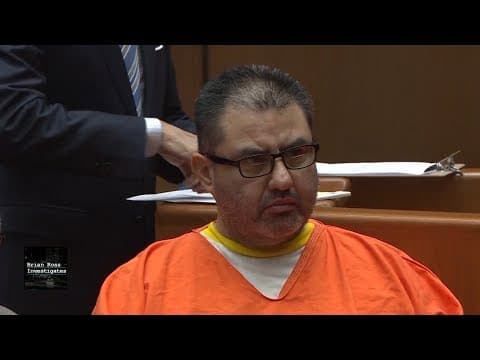
Trial Attorney Feels For Sean Foley, "When Testifying, You Can See How He Is Pouring His Heart Out"

TL;DR
Sean Foley’s voluntary-manslaughter plea was considered a good deal because it reduced his exposure from a murder-two charge to a three-to-six-year sentence with no fine. Although his honest, emotional testimony made one attorney consider another trial, the panel emphasized the risk of substantially more prison time and the time he had already served. Read on for the attorneys’ full plea-deal calculus.
Transcript
[Applause] welcome back so there you have some of the testimony going on I'm trying to do a quick legal research because of course I don't practice in Tennessee but it's a very interesting see how this play out we are joined here of course by Michael we've been talking for some time but we also have Jennifer Brant with us Jennifer welcome for today... Read More
Key Insights
- 🧑⚖️ The defendant's emotional testimony may have influenced the judge's decision to offer a shorter sentence.
- 😄 Defense attorneys believe that accepting the plea deal is a smart move considering the potential for a longer sentence if the case went to trial.
- 😤 The defendant and his legal team likely considered the time already served and weighed the option of a shorter sentence through parole.
- 🛟 The plea deal provides the defendant with a guarantee of release after serving the agreed-upon time, allowing him to start his life anew.
- 🤪 The risks of going to trial and potentially facing a lengthy sentence may have outweighed the possibility of a successful defense.
- 👋 Different states have varying sentence structures and eligibility for good behavior credits, which can further reduce the actual time served.
- 😄 The attorneys agree that accepting the plea deal is a significant victory, as justice was served, and the defendant's freedom was secured.
Install to Summarize YouTube Videos and Get Transcripts
Explore YouTube Video Summarizer or Get YouTube Transcript Extractor
Questions & Answers
Q: Why did the attorneys consider Sean Foley’s plea deal a good outcome?
The voluntary-manslaughter sentencing range discussed was three to fifteen years, while Foley received a range of three to six years. The attorneys viewed that low-end sentence, combined with no fine, as an excellent result compared with the risk of retrying the murder-two charge.
Q: What sentence did Sean Foley receive under the plea deal?
The plea agreement provided a sentence range of three to six years for voluntary manslaughter. The panel noted that voluntary manslaughter was described as a Class C felony carrying a broader range of three to fifteen years.
Q: Why did Sean Foley’s testimony affect the attorneys emotionally?
Jennifer Brant said Foley appeared to be pouring his heart out while testifying and described him as being in a tough situation. Another attorney found him so honest, forthright, and persuasive that part of her wanted to put him back on the stand at trial.
Q: Could Sean Foley be tried again for murder one?
No, the panel said the murder-one acquittal triggered double-jeopardy protection. The unresolved risk was the murder-two charge because the jury had deadlocked on that count.
Q: What risk did Sean Foley avoid by accepting the plea?
He avoided another trial on the murder-two charge and the possibility of substantially more prison time if convicted. One speaker contrasted the plea with rolling the dice on a result that could mean life or twenty to twenty-five years.
Q: How did Sean Foley’s time already served factor into the decision?
The discussion said Foley had been incarcerated since August 2018, amounting to roughly a year and several months at that point. The attorneys suggested he may have calculated that he could serve about another year and a half before release, depending on how the three-to-six-year sentence operated.
Q: Did the plea agreement require Sean Foley to pay a fine?
No. Although the discussion identified a possible fine of up to $10,000, the plea agreement listed the fine as zero dollars.
Q: Who ultimately decides whether to accept a plea deal?
The panel explained that accepting a plea is one of the decisions left entirely to the defendant, just as the willingness to testify is the defendant’s choice. Even if an attorney believes the case can be won at trial, the attorney must follow the client’s decision to take the plea.
Summary & Key Takeaways
-
The defendant was charged with murder, but the jury found him not guilty of murder one and deadlocked on murder two.
-
He then accepted a plea deal for voluntary manslaughter, which carries a sentence range of 3 to 15 years in prison.
-
The defense attorneys believe it is a good deal considering the lower sentence range, while acknowledging the emotional impact of the defendant's testimony.
Read in Other Languages (beta)
Share This Summary 📚
Summarize YouTube Videos and Get Video Transcripts with 1-Click
Try YouTube Summary with ChatGPT & Claude or YouTube Transcript Generator
Explore More Summaries from Law&Crime Network 📚

Summarize YouTube Videos and Get Video Transcripts with 1-Click
Try YouTube Summary with ChatGPT & Claude or YouTube Transcript Generator