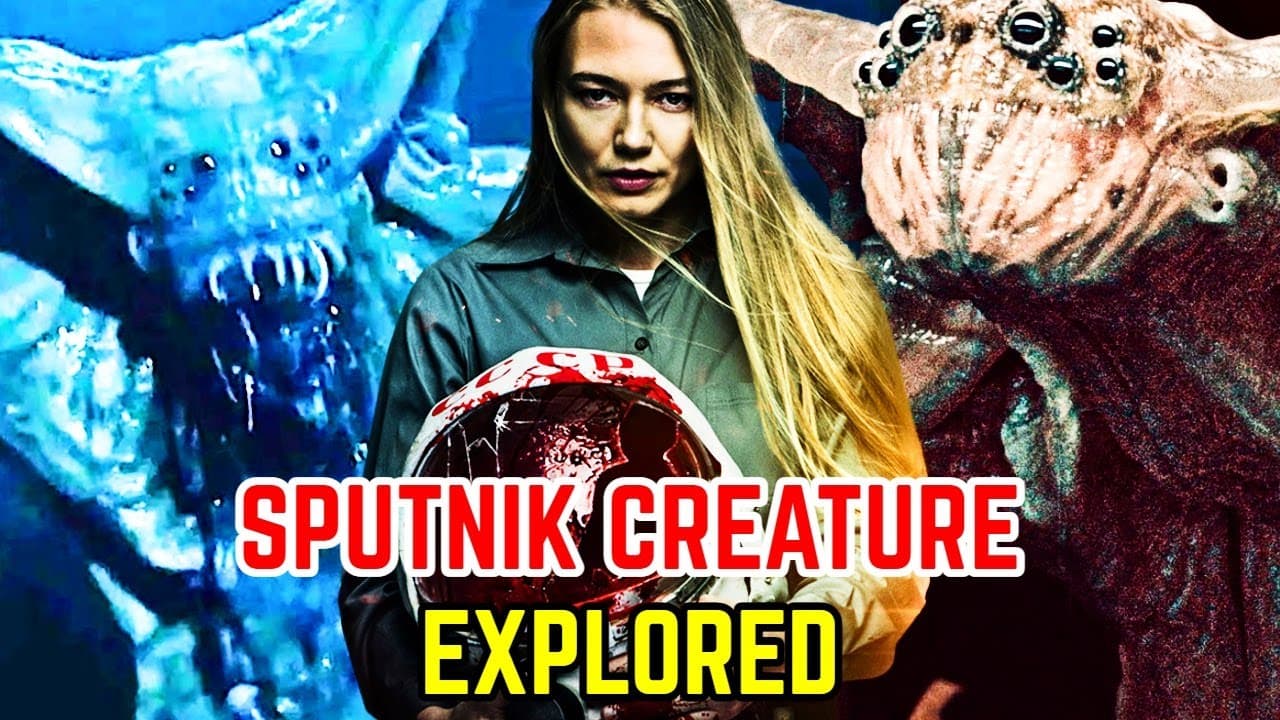
What Is the Human-Eating Xenomorph-Like Parasitic Creature in Sputnik? Origins and Abilities Explained
TL;DR
Sputnik’s human-eating creature is an extraterrestrial parasite that lives in cosmonaut Constantine’s esophagus, emerges nightly, and consumes cortisol released by terrified victims. The alien gains nutrients from Constantine while accelerating his recovery, creating a fully symbiotic bond that makes separation potentially fatal. Its unexplained origin, predatory behavior, disease detection, and intended use as a Soviet super weapon make its complete biology worth examining.
Transcript
welcome back to marvelous videos i'm rylan and today we will be looking at sputnik creature and origins explained excellent gory and nail-biting this is precisely how igor abramenko's feature directorial debut sputnik can be described and while it's true that this russian science fiction horror flick was scheduled to premiere worldwide at the 2020 ... Read More
Key Insights
- A precisely timed emergence: The parasite does not leave Constantine randomly. It exits through his esophagus while he sleeps and regularly appears between 2:40 and 3:10 at night. This repeatable schedule allows the military staff to observe it under controlled conditions, while also demonstrating that its activity is tied to the host’s nightly physical state.
- The host also benefits: Constantine is not merely being consumed from within. While the alien draws nutrients from him, his crash injuries heal with unbelievable speed. That reciprocal exchange distinguishes their connection from a simple infection and explains why removing the creature is much harder than extracting an independent parasite.
- Stress exposes biological sensitivity: Tatyana uses Constantine’s abandoned son to provoke an emotional and hormonal reaction. Her deliberately cruel confrontation is an experiment rather than a diagnosis. The creature’s response reveals that changes in Constantine’s hormone levels affect it, giving her a crucial clue about communication between the two organisms.
- Cortisol is the true nourishment: The alien does not primarily feed on whatever Constantine eats. It frightens captive humans, causing them to release cortisol, and then obtains nourishment from that hormone. Its terrifying appearance and violent hunting are therefore connected to a specific feeding process rather than being presented as purposeless aggression.
- Prisoners become military fodder: Colonel Semidarov supplies live prisoners so the creature can feed inside the facility. The victims are deliberately exposed to the alien because their terror produces the hormone it needs. This arrangement turns observation into organized human sacrifice and reveals how far the project has already moved beyond medical research.
- Disease detection shapes selection: Constantine’s fellow cosmonaut survives without becoming a host because he has cancer, which the alien somehow senses. That detail indicates that the organism can detect disease in a potential host. Tatyana later builds her escape plan around this ability by trying to imitate a similar diseased condition in Constantine.
- The weapon project drives secrecy: Semidarov’s objective is not simply to understand an unprecedented extraterrestrial organism. He wants a super weapon that the Soviet army can control and deploy. That ambition explains the remote facility, Constantine’s quarantine, the hidden prisoners, and the effort to discover a safe method of separation.
- Constantine knows the truth: Tatyana initially believes the cosmonaut is unaware of the organism living inside him. She is appalled to learn that he understands both the creature and its activities. His silence is strategic because he is willing to take extreme measures to escape the facility and return to the son he abandoned.
- Compassion changes Tatyana’s role: Tatyana enters the facility as an investigator commissioned to study Constantine. After discovering the killings and the military plan, she becomes his confidante and eventual escape partner. Showing him the human carcasses forces honesty between them and turns her professional assignment into direct resistance against Semidarov.
- The syringe exploits rejection: Tatyana proposes injecting Constantine with a substance that simulates the disease affecting his fellow cosmonaut. Because the alien rejected that cancer-stricken man, she expects the false disease signal to drive it from Constantine and possibly kill it outside his body. The plan is logical but rests on incomplete knowledge of their dependence.
- Freedom unleashes the predator: Constantine injects himself after Semidarov sends a response team to stop the escape. The creature emerges and kills the entire team, demonstrating why the military considers it valuable as a weapon. Yet the same event also proves that forcing it outside does not make it harmless or controllable.
- Symbiosis defeats clean separation: Constantine collapses after the alien leaves him, while the creature is also heavily injured. Tatyana realizes that their shared biology has become essential to both lives. The discovery overturns the facility’s central assumption that the organism can be safely removed, preserved, and used independently of its human host.
Install to Summarize YouTube Videos and Get Transcripts
Explore YouTube Video Summarizer or Get YouTube Transcript Extractor
Questions & Answers
Q: What is the human-eating Xenomorph-like parasitic creature in Sputnik?
The creature is an extraterrestrial organism that returns from orbit inside Russian cosmonaut Constantine after his spacecraft crashes in Kazakhstan. It lives in his esophagus and emerges while he sleeps, usually between 2:40 and 3:10 at night. It terrifies human victims so they release cortisol, which provides its nourishment. Although it behaves like a parasite, Constantine’s rapid recovery and later collapse without it show that their relationship has become fully symbiotic.
Q: Where did Sputnik’s alien creature come from?
Its precise origin is left largely unexplained. Constantine and another cosmonaut notice something moving outside their spacecraft during their return from orbital research in 1983, before the ship fails during re-entry. After the crash, Constantine is found carrying the organism inside his body. These events establish an extraterrestrial connection, but they do not identify its home, purpose, or method of entering him.
Q: How does the Sputnik creature feed on humans?
The creature feeds on cortisol rather than simply relying on food consumed by its host. Colonel Semidarov provides live prisoners, and the alien reveals itself to intensify their fear. That terror causes the victims to release the hormone the creature needs before it kills them. The process explains why fear is biologically useful to the alien and why the facility’s feeding program requires conscious human victims.
Q: Why does the alien live inside Constantine?
Constantine provides nutrients and a protected place in his esophagus, while the creature contributes to his extraordinary recovery from the crash. The alien normally remains inside him during the day and emerges at night while he sleeps. When it is forced out during the escape, Constantine collapses and the creature is badly injured. Those consequences show why each has become dependent on the other for survival.
Q: Why was the other cosmonaut not infected?
The other cosmonaut was still alive, but he had cancer and did not become a host. The creature had somehow sensed that disease and avoided or rejected him. Tatyana uses this observation to design a possible separation method for Constantine. She prepares an injection that simulates a similar disease because she expects the resulting signal to force the alien out.
Q: Why does Colonel Semidarov want the creature?
Semidarov wants to transform the extraterrestrial being into a super weapon controlled by the Soviet army. He therefore keeps Constantine quarantined and recruits Tatyana to determine how the creature can be separated safely from its host. He also supplies prisoners so the alien can feed while researchers observe it. His objective makes the project’s violence deliberate, since human lives are being exchanged for military control of the organism.
Q: How does Dr. Tatyana try to separate Constantine from the alien?
Tatyana first studies the connection by deliberately stressing Constantine and observing how his hormone levels affect the creature. After learning that the alien detected cancer in the other cosmonaut, she obtains a syringe intended to simulate a comparable disease. Constantine injects himself during their attempted escape, causing the alien to emerge and attack the pursuing response team. The plan fails as a cure because Constantine collapses once the creature is outside him.
Q: Can Constantine and the Sputnik creature survive separately?
The attempted escape indicates that they cannot be separated safely. Constantine initially appears healthier because of the creature, including his unusually rapid recovery from crash injuries. Once the injection drives the alien out, it is injured and Constantine soon collapses. Tatyana consequently realizes that the connection is fully symbiotic, meaning the host and organism have become biologically dependent on one another.
Summary & Key Takeaways
-
The mission returns changed: Set during the Cold War in 1983, Sputnik follows two Russian cosmonauts returning from orbital research after seeing something moving outside their spacecraft. Their ship breaks down during re-entry and crashes in Kazakhstan. Constantine survives and is transferred to a remote military facility, where Colonel Semidarov keeps him quarantined. Psychiatrist Dr. Tatyana Kimonova is recruited because of her unconventional methods, although the colonel initially conceals the real reason for Constantine’s isolation.
-
A hidden passenger emerges: Tatyana discovers that Constantine unknowingly returned to Earth with an alien living inside his body. The creature occupies his esophagus and normally emerges while he sleeps, specifically between 2:40 and 3:10 at night. Colonel Semidarov asks Tatyana to determine how the two organisms can be separated safely. Evidence complicates that objective because the creature obtains nutrients from Constantine, while Constantine makes an extraordinary recovery from the serious injuries caused by the crash.
-
Fear reveals its diet: Tatyana deliberately stresses Constantine by confronting him about the son he abandoned at an orphanage. His hormonal response shows her that the alien is affected by its host’s hormone levels. She then learns that the creature does not survive solely on food consumed by Constantine. Semidarov has been supplying live prisoners, whom the alien terrifies before killing. Their fear releases cortisol, and that hormone provides the nourishment the creature seeks from human victims.
-
The military seeks control: Horrified by the slaughtered prisoners, Tatyana confronts Semidarov and learns that the facility intends to transform the extraterrestrial organism into a controllable super weapon for the Soviet army. Although she outwardly agrees to cooperate, her growing concern for Constantine changes her allegiance. She tells him about the parasite and the military’s plans, then shows him the victims’ remains. Constantine reveals that he already knows about the alien and wants freedom so he can care for his son.
-
Separation proves dangerously impossible: With another facility doctor’s help, Tatyana plans an escape and gives Constantine a syringe designed to simulate the disease detected in his fellow cosmonaut. The injection forces the creature outside, but it kills the response team sent after them. Constantine then collapses, showing Tatyana that neither organism can survive normally without the other. Their relationship is fully symbiotic, so the attempted cure becomes a new danger as Semidarov catches up and brings the injured alien back toward its host.
Read in Other Languages (beta)
Share This Summary 📚
Summarize YouTube Videos and Get Video Transcripts with 1-Click
Try YouTube Summary with ChatGPT & Claude or YouTube Transcript Generator
Explore More Summaries from Marvelous Videos 📚



Summarize YouTube Videos and Get Video Transcripts with 1-Click
Try YouTube Summary with ChatGPT & Claude or YouTube Transcript Generator