What Are Giant Antarctic Sea Spiders and How Do They Live?
TL;DR
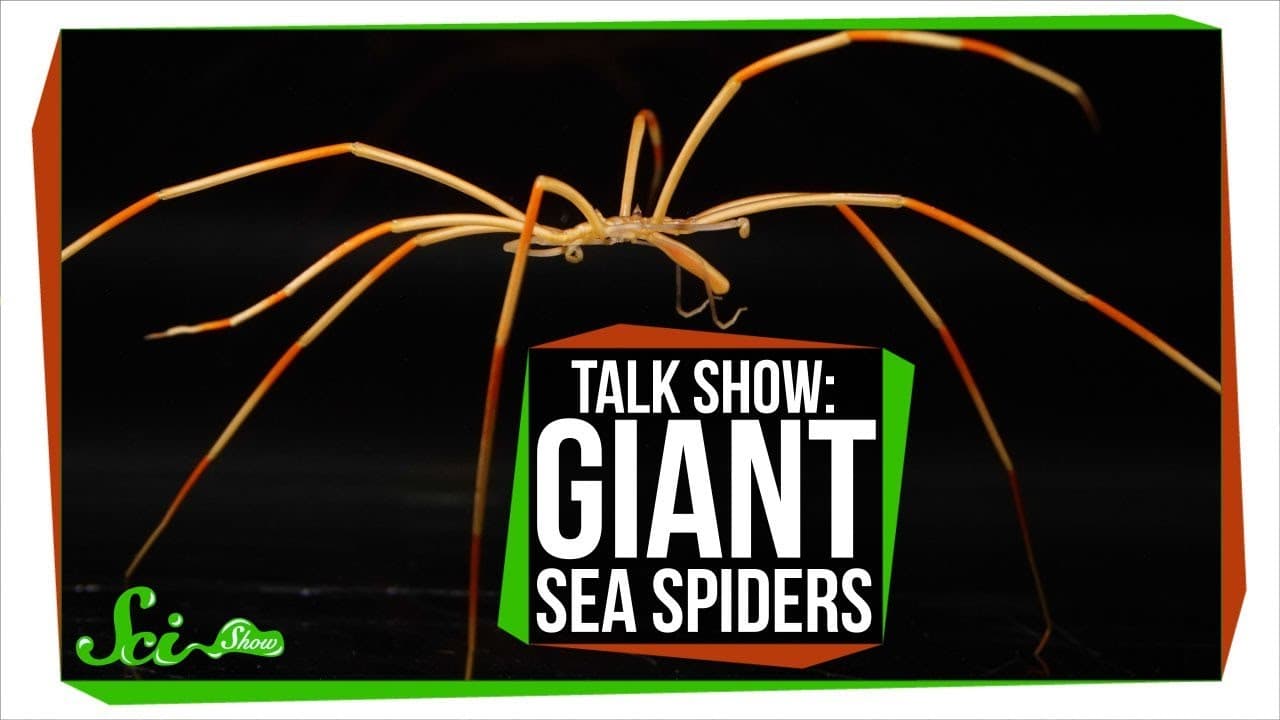
Giant Antarctic sea spiders are unique marine arthropods characterized by their long legs and specialized anatomy. They have evolved adaptations like having their organs in their legs and relying on cold, oxygen-rich waters to sustain their large size, which may help them survive long periods of food scarcity.
Transcript
hello and welcome to the scishow talk show the day on scishow where we talked to some interesting person about some interesting thing today we got art woods associate professor over the university of montana you study little things that are not so little anymore let's just start out tell me what what is it a sea spider it is yeah so what a sea spid... Read More
Key Insights
- 🌊 Sea spiders are marine arthropods that have evolved unique adaptations for living in water, such as having organs in their legs.
- 🕷️ Tarantulas are land-dwelling spiders with specialized mouthparts and unique molting processes.
- 🌊 The giant size of some sea spiders may be due to the abundance of oxygen and slow metabolic rates in cold polar waters.
- 🤢 Both sea spiders and tarantulas have fascinating behaviors, such as the use of specialized appendages for reproduction and self-defense.
- 🚫 Tarantulas are not generally dangerous to humans and their bites are typically harmless.
- 👨🔬 Further research is needed to fully understand the lifespans and molting processes of tarantulas.
- 🤢 The study of unusual organisms like sea spiders and tarantulas can provide insights into evolutionary adaptations and biological mechanisms.
Install to Summarize YouTube Videos and Get Transcripts
Explore YouTube Video Summarizer or Get YouTube Transcript Extractor
Questions & Answers
Q: What are sea spiders and where are they usually found?
Sea spiders are marine arthropods that live in tidal areas and on the continental shelf, feeding on soft-bodied animals. They are often found hiding in algae or underwater plants.
Q: How are sea spiders different from land spiders like tarantulas?
Sea spiders are more closely related to mites and scorpions than to land spiders. They have a longer body structure and unique adaptations for living in water.
Q: Why do sea spiders have their organs in their legs?
Sea spiders have evolved to have most of their organs located in their long legs. This allows for efficient circulation of fluids in their bodies, as their hearts are too weak to pump them effectively.
Q: Are tarantulas dangerous to humans?
While tarantulas are venomous, most species are not dangerous to humans. Their bites are comparable to a bee sting and are usually only harmful to people with allergies.
Q: What are some theories on why sea spiders can grow to be so large?
One theory is that the cold waters of the polar regions, where many sea spiders are found, allow for slower metabolic rates and larger body sizes. Another theory suggests that the high oxygen levels in these waters promote the evolution of larger structures.
Q: How do tarantulas molt?
Tarantulas molt in order to grow larger. They shed their old exoskeleton and form a new one that fits their increased size.
Q: How old can tarantulas live?
The lifespan of tarantulas varies depending on the species, but some can live for up to 20 years or even longer in captivity.
Summary & Key Takeaways
-
Sea spiders are marine arthropods that are often found hiding in algae and preying on soft-bodied animals. They have long legs and unique digestive and circulatory systems.
-
Tarantulas, on the other hand, are land-dwelling spiders with fuzzy bodies and specialized mouthparts. They use their legs for sensing and catching prey.
Read in Other Languages (beta)
Share This Summary 📚
Summarize YouTube Videos and Get Video Transcripts with 1-Click
Try YouTube Summary with ChatGPT & Claude or YouTube Transcript Generator
Explore More Summaries from SciShow 📚


Summarize YouTube Videos and Get Video Transcripts with 1-Click
Try YouTube Summary with ChatGPT & Claude or YouTube Transcript Generator