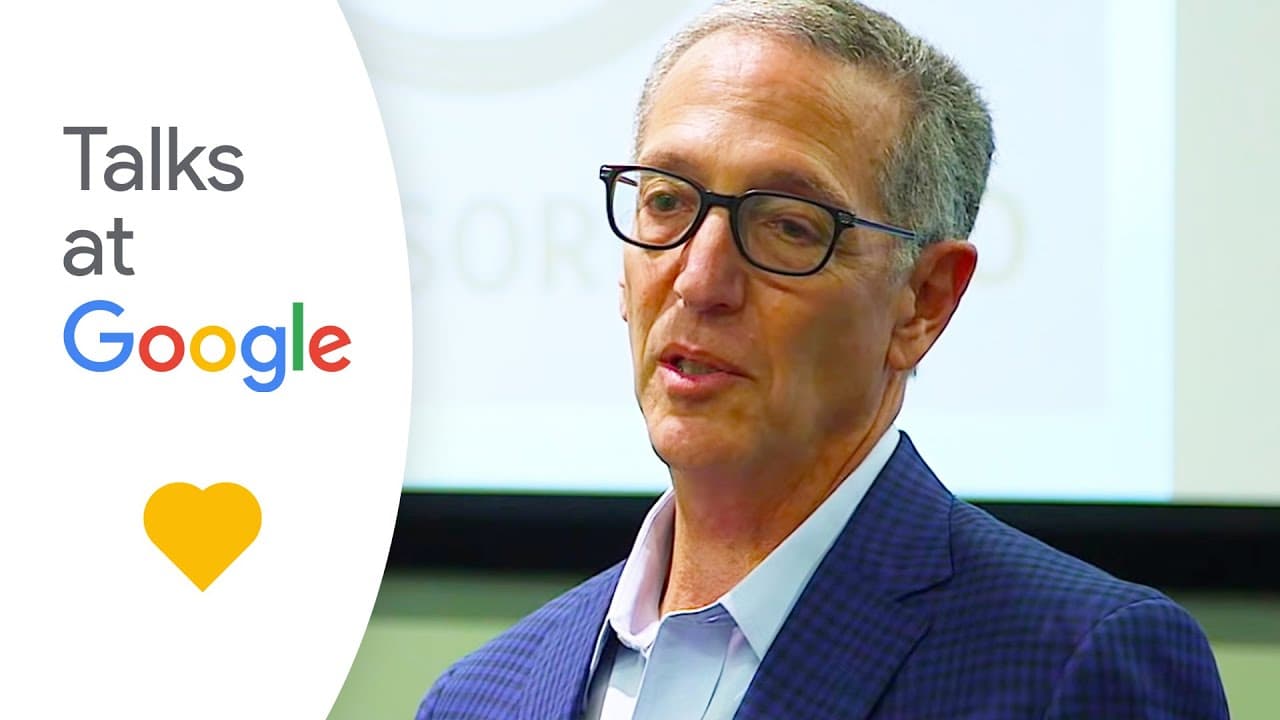
How Can Chronic Pain Be Healed? | Howard Schubiner | Talks at Google
TL;DR
Howard Schubiner argues that healing chronic pain requires considering brain-induced neural pathways and emotions, not only structural abnormalities. He describes a patient whose seven years of low-back pain persisted despite physical therapy, injections, medication, acupuncture, yoga, and an L4-5 fusion. Psychological approaches such as mindfulness and emotional expression may help address pain pathways, making the full discussion worth reading for its alternative framework.
Transcript
[MUSIC PLAYING] SPEAKER: We are very pleased to welcome Howard Schubiner at our talks at Google Seattle. Howard is a doctor. He's an internist at Providence Hospital in Michigan and also a professor at Wayne State University College of Medicine-- HOWARD SCHUBINER: Michigan State. SPEAKER: Michigan State, oh, yeah. HOWARD SCHUBINER: We switched. SPE... Read More
Key Insights
- 🥰 Chronic pain is a widespread issue, affecting more people than diabetes, heart disease, and cancer combined.
- 👨🎨 MRI findings often do not correlate with pain, highlighting the need to consider brain-induced neural pathways as a cause of chronic pain.
- 😑 Psychological interventions, such as cognitive behavioral therapy and emotional expression techniques, have shown promising results in managing chronic pain.
- 👨🎨 Understanding the connection between emotions and pain, and practicing mindfulness, can help individuals better cope with and reduce chronic pain symptoms.
Install to Summarize YouTube Videos and Get Transcripts
Explore YouTube Video Summarizer or Get YouTube Transcript Extractor
Questions & Answers
Q: How does Howard Schubiner explain chronic pain?
Schubiner explains that chronic pain can arise from brain-induced neural pathways rather than structural damage alone. He emphasizes the brain’s power to shape physical experiences and the connection between emotions and pain.
Q: Can chronic pain occur without nerve damage?
Yes. The patient Schubiner describes had normal reflexes, leg strength, sensation, and EMG results despite persistent low-back pain.
Q: Do MRI findings always explain chronic pain?
No. The existing page insights state that MRI findings often do not correlate with pain, supporting consideration of brain-induced neural pathways. In the case presented, an MRI showed degenerative disk disease and a moderate L4-5 disk bulge, but treatments aimed at those findings did not relieve the pain.
Q: Which chronic pain treatments failed in Schubiner’s patient example?
The patient did not improve after physical therapy, spinal and other injections, a TENS unit, duloxetine, gabapentin, opiates, acupuncture, or yoga. An L4-5 fusion and a later SI-joint fusion also failed to resolve his pain.
Q: Does Schubiner say back surgery is proven better than nonsurgical treatment?
No. He states that zero randomized controlled trials show back surgery to be better than exercise, conservative therapy, or another nonsurgical intervention.
Q: How effective are back injections compared with placebo injections?
Schubiner says that meta-analyses comparing back injections with placebo injections found little difference. The patient in his example also received several types of injections without improvement.
Q: Which psychological therapies are commonly used for chronic pain?
Schubiner names cognitive behavioral therapy, mindfulness therapy, and acceptance and commitment therapy as the main psychological approaches. He says none has been shown to outperform the others or relaxation therapy, and their effects are small.
Q: How can mindfulness help with chronic pain?
Mindfulness can help a person detach from pain and accept it without letting it dominate thoughts and actions. According to the existing page content, this may improve tolerance and coping, although Schubiner notes that standard psychological therapies generally have small effects.
Summary & Key Takeaways
-
Chronic pain is often caused by brain-induced neural pathways rather than structural issues in the body.
-
Many treatments, such as surgery and injections, have shown limited effectiveness in managing chronic pain.
-
Psychological interventions, such as cognitive behavioral therapy and mindfulness, can help individuals better cope with and reduce chronic pain symptoms.
Read in Other Languages (beta)
Share This Summary 📚
Summarize YouTube Videos and Get Video Transcripts with 1-Click
Try YouTube Summary with ChatGPT & Claude or YouTube Transcript Generator
Explore More Summaries from Talks at Google 📚


Summarize YouTube Videos and Get Video Transcripts with 1-Click
Try YouTube Summary with ChatGPT & Claude or YouTube Transcript Generator