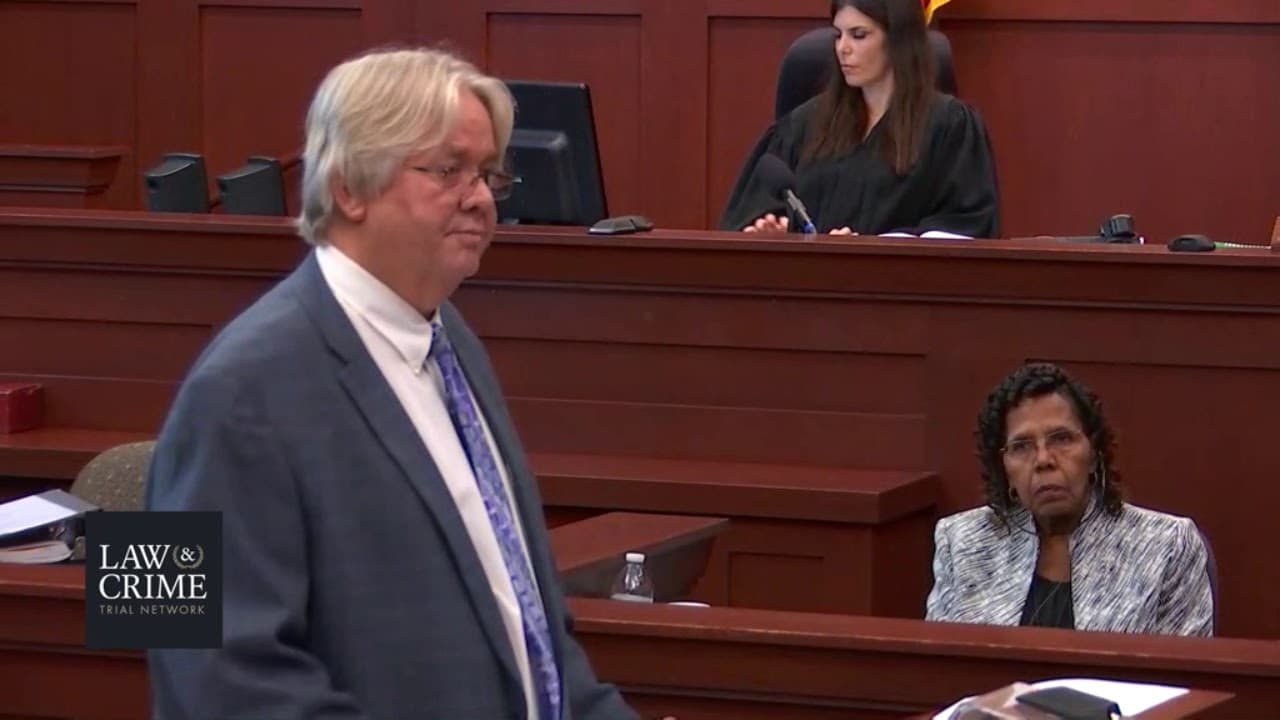
Grant Amato Penalty Phase Defense Closing Argument
TL;DR
Defense attorney presents mitigating factors and argues for a life sentence for Grant Amato, emphasizing his lack of prior criminal history and the influence of a short time period in his life.
Transcript
it's your like--all go right ahead and if there's anything you're gonna want to put on the overhead I can switch it over if you need to you're welcome you may proceed ladies and gentlemen I want to thank all of you for all the hard work and for sticking with us here today I'm homeless at the five o'clock hour so I want to start my closing argument ... Read More
Key Insights
- 🖤 The defense argues against the death penalty, presenting mitigating factors that show Grant Amato's lack of prior criminal history, ability to adjust to prison, and absence of violent behavior.
- 🍔 They emphasize the short duration of the crimes in comparison to Grant Amato's entire life and urge the jurors to consider the positive aspects of his character.
- 🚱 Individual moral judgment and personal values are highlighted, with the defense highlighting that a non-unanimous vote is valid in the penalty phase.
Install to Summarize YouTube Videos and Get Transcripts
Explore YouTube Video Summarizer or Get YouTube Transcript Extractor
Questions & Answers
Q: Did Grant Amato have a history of violent behavior?
No, there is no evidence of any violent behavior in Grant Amato's school records or his time in jail. His lack of a history of violence is a mitigating factor to consider.
Q: How does Grant Amato's age affect the case?
Grant Amato was 29 years old at the time of the crimes, and this age is significant because it correlates with his ability to adjust to the structure of prison without causing problems. This is supported by professional testimony.
Q: Was Grant Amato under the influence of drugs or alcohol at the time?
No, toxicology tests revealed only a small amount of alcohol in his system, indicating no history of substance abuse or alcohol abuse. This is another mitigating factor to consider.
Q: What is the significance of the six-month timeframe mentioned in the closing argument?
The defense highlights that the period of obsession and addiction, which led to the murders, constitutes only 1.68% of Grant Amato's entire life. The defense argues for considering the other 98% of his life and the positive aspects of his character.
Summary & Key Takeaways
-
Defense attorney addresses Mr. Stone's arguments regarding aggravating factors and argues against the death penalty based on the connectedness of the murders and lack of evidence for cold calculation and premeditation.
-
Defense attorney emphasizes the lack of prior criminal history and the positive evaluations of Grant Amato's behavior in jail, arguing that a life sentence without parole would adequately protect society.
-
Mitigating factors such as no history of substance abuse, mental illness, brain injury, or disruptive behavior are presented to show Grant Amato's capacity for adjustment to prison life and lack of dangerousness.
-
Defense attorney urges the jurors to consider their own moral values and individual judgment when making a decision, reminding them that a non-unanimous verdict is legitimate and lawful in the penalty phase.
Read in Other Languages (beta)
Share This Summary 📚
Summarize YouTube Videos and Get Video Transcripts with 1-Click
Try YouTube Summary with ChatGPT & Claude or YouTube Transcript Generator
Explore More Summaries from Law&Crime Network 📚






Summarize YouTube Videos and Get Video Transcripts with 1-Click
Try YouTube Summary with ChatGPT & Claude or YouTube Transcript Generator