How to be Polite in English - | Top Tips for Language Learners!
TL;DR
Politeness in English varies with word choice and tone.
Transcript
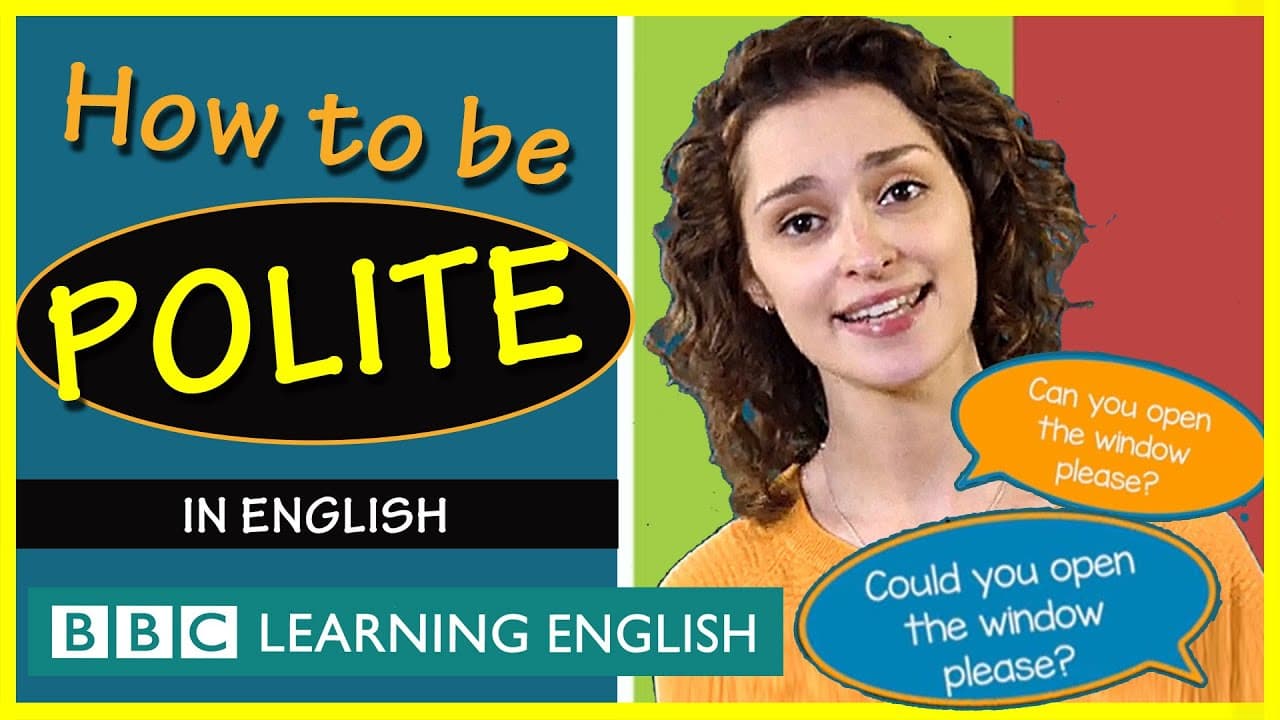
I don't know about you, but I don't like it when people are rude. Politeness is generally very important, especially if you want people to help you with something. If you want someone to do something for you, there are different ways of expressing it in English, depending on how polite you want to be. If I say: "Open the window!" it's quite direct,... Read More
Key Insights
- Politeness is crucial in English, especially when seeking help or cooperation from others. The way requests are phrased can significantly impact their reception.
- Using the imperative form, such as 'Open the window!', is direct and often perceived as an order, which may come across as impolite.
- Adding 'please' to a request, like 'Open the window, please!', adds a layer of politeness but remains relatively direct.
- 'Can you open the window, please?' is more polite than the imperative because it is framed as a question, making it easier for the listener to decline.
- Replacing 'can' with 'could' in requests, such as 'Could you open the window, please?', increases politeness by introducing social distance between the speaker and listener.
- The concept of distance in language can relate to time, reality versus imagination, and social interactions, influencing the perceived politeness of requests.
- Using past forms and modal structures, like 'I was wondering if you wouldn't mind opening the window', can further increase the politeness of a request.
- The tone of voice plays a crucial role in conveying politeness, as the same words can be perceived differently depending on the emphasis and intonation used.
Install to Summarize YouTube Videos and Get Transcripts
Explore YouTube Video Summarizer or Get YouTube Transcript Extractor
Questions & Answers
Q: Why is politeness important in English communication?
Politeness is important in English communication because it facilitates cooperation and assistance from others. Being polite helps to create a positive interaction, making it more likely for others to respond favorably to requests or engage in a constructive dialogue.
Q: How does using 'could' instead of 'can' affect the politeness of a request?
Using 'could' instead of 'can' adds a layer of politeness to a request by introducing social distance between the speaker and the listener. This distance makes it easier for the listener to decline if necessary, as the request feels less direct and more considerate.
Q: What role does tone of voice play in expressing politeness?
Tone of voice is crucial in expressing politeness because it influences how words are perceived. A gentle, respectful tone can make a request sound more polite, while a harsh or demanding tone can make even polite words seem rude or insincere.
Q: How can past forms and modal structures increase politeness in requests?
Past forms and modal structures increase politeness by adding formality and distance to a request. Phrases like 'I was wondering if you wouldn't mind' create a more tentative and respectful approach, giving the listener more freedom to respond without pressure.
Q: Why is it easier to say no to a question than to an imperative in English?
It is easier to say no to a question than to an imperative because questions are inherently less direct and allow for a response. Imperatives, on the other hand, are commands that imply an expectation of compliance, making refusal more uncomfortable.
Q: What is the significance of social distance in polite language?
Social distance in polite language refers to the perceived gap between the speaker and the listener. By increasing this distance through language choices, such as using 'could' or longer, more formal phrases, speakers can make requests feel less intrusive and more respectful.
Q: How can visualizing distance help in understanding politeness?
Visualizing distance helps in understanding politeness by providing a metaphor for how language choices create space between the speaker and listener. This space allows for more comfortable interactions, as requests feel less like demands and more like considerate inquiries.
Q: What are some examples of making requests more polite in English?
Examples of making requests more polite in English include using questions instead of commands, choosing 'could' over 'can', employing past forms and modal structures, and ensuring a polite tone of voice. These strategies help to soften requests and make them more acceptable to listeners.
Summary & Key Takeaways
-
Politeness in English is important for effective communication, especially when making requests. The choice of words and tone can greatly affect how polite a request is perceived.
-
Using questions instead of imperatives, and opting for 'could' over 'can', can make requests sound more polite by introducing social distance, making it easier for listeners to decline.
-
Tone of voice is as important as word choice in conveying politeness. A polite tone can soften direct requests, while an inappropriate tone can make even polite words seem rude.
Read in Other Languages (beta)
Share This Summary 📚
Summarize YouTube Videos and Get Video Transcripts with 1-Click
Try YouTube Summary with ChatGPT & Claude or YouTube Transcript Generator
Explore More Summaries from BBC Learning English 📚
Summarize YouTube Videos and Get Video Transcripts with 1-Click
Try YouTube Summary with ChatGPT & Claude or YouTube Transcript Generator